Autographs are treasured by fans and collectors because they symbolize a personal connection to a star.
Yet the autograph market is filled with counterfeits that put collectors at risk. Verifying authenticity is crucial for both emotional and financial reasons.
This article explains how to confirm genuine signatures through expert methods and careful practices.
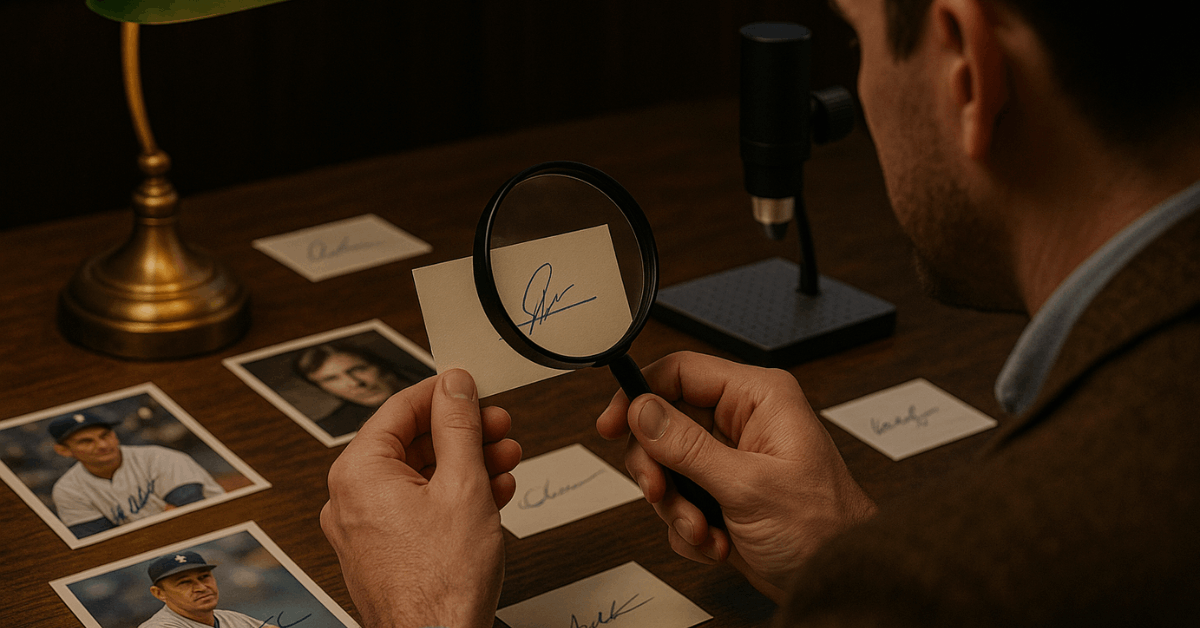
Why Authenticity Matters in Autographs?
Authenticity is the foundation of the autograph market. Without verification, both value and trust collapse.
Emotional Value for Fans
Fans cherish autographs because they create personal bonds. Holding a signed photo or ball feels like holding a piece of history.
If the item turns out fake, that emotional connection is broken. Authenticity preserves the meaning behind ownership.
Financial Value for Collectors
Autographs can be highly valuable investments. A verified signature often sells for thousands, while a fake is nearly worthless.
Collectors risk heavy losses when they fail to authenticate properly. Financial security comes from confidence in genuine items.
Reputation in the Collectibles Market
The market depends on credibility. Dealers and auction houses must prove their items are genuine.
A single counterfeit can damage trust and reputation. This makes authentication an essential standard in the collectibles world.
Common Risks and Forgeries
The autograph market faces constant threats from skilled forgers. Recognizing risks helps collectors stay cautious.
Mass-Produced Autopen Signatures
Some celebrities use autopen machines to replicate signatures. These devices create near-identical patterns on items.
Unscrupulous sellers may pass them off as genuine. Knowledge of this risk helps buyers avoid mass-produced fakes.
Printed and Stamped Signatures
Printed reproductions often mimic authentic ink. Posters, cards, and merchandise may carry stamped versions of autographs.
At first glance, these can look real. Collectors must inspect carefully before purchase.
Warning Signs of Forgery
Collectors should learn common red flags to avoid being misled. Suspicious features often reveal a fake quickly. Key signs include:
- Unusual uniformity where every signature looks identical.
- Prices too low compared to market averages.
- Odd placement of signatures in inappropriate areas.
- Low-quality ink that fades or smudges unnaturally.
Physical Examination of Autographs
A careful physical check is often the first line of defense. Visual details reveal much about authenticity.
Ink Analysis
Genuine autographs show natural flow and pressure. Forgeries often appear shaky or mechanically consistent.
Variations in ink depth and stroke speed are signs of authenticity. Collectors must pay attention to these details.
Paper and Material Checks
The surface an autograph sits on must match its era. Old memorabilia with fresh ink is suspicious.
A signature’s age should be consistent with the material. Checking for mismatched signs is essential.
Signature Style and Flow
Comparing signatures with verified examples is effective. Authentic handwriting shows rhythm and natural motion.
Forgeries often lack fluidity and appear forced. A trained eye can spot these differences quickly.
Certification and Professional Services
Experts provide services that make verification more reliable. Certificates and third-party evaluations give collectors confidence.
Trusted Third-Party Authenticators
Companies like PSA/DNA, Beckett, and JSA are leaders in authentication. Their approval increases both trust and resale value.
These organizations use advanced tools and expert analysis. Collectors widely recognize their certifications.
Certificates of Authenticity
A certificate of authenticity (COA) proves an autograph has been examined. High-quality COAs include tamper-proof features and identification numbers.
Collectors should always confirm the legitimacy of issuers. Weak or generic COAs may be meaningless.
Benefits of Professional Authentication
Professional services offer more than verification. Collectors benefit in several ways, such as:
- Market confidence for buyers and sellers.
- Legal protection if disputes arise.
- Reduced risk of unknowingly buying counterfeits.
- Long-term preservation through documented proof.
Technology in Autograph Verification
Modern technology provides advanced tools for authentication. These methods add scientific support to evaluations.
Digital Scanning and Microscopy
High-resolution scans reveal details invisible to the eye. Microscopy highlights ink layering and pen pressure.
These differences separate genuine signatures from copies. Technology makes subtle inconsistencies clearer.
Signature Databases
Digital archives store thousands of verified examples. Collectors compare potential purchases with known authentic samples.
This method identifies inconsistencies quickly. Online access makes verification more practical than ever.
Forensic Handwriting Analysis
Forensic experts use scientific techniques to analyze writing. They examine stroke order, speed, and rhythm.
This type of analysis is one of the most reliable. It is often used in legal cases involving disputed autographs.
Provenance and Documentation
The history of an autograph can confirm its legitimacy. Provenance adds credibility to collectible items.
Importance of Provenance
Provenance tells the story of how an autograph was obtained. An item with clear history is much easier to trust.
Without documentation, even genuine autographs may lose value. Collectors prioritize items with strong origins.
Collecting Documentation
Documentation can come in many forms. Photos, videos, or event tickets help prove authenticity.
Letters from original owners also provide valuable context. These details strengthen an autograph’s legitimacy.
Strong Proof of Authenticity
Some forms of documentation are especially convincing. Collectors should look for:
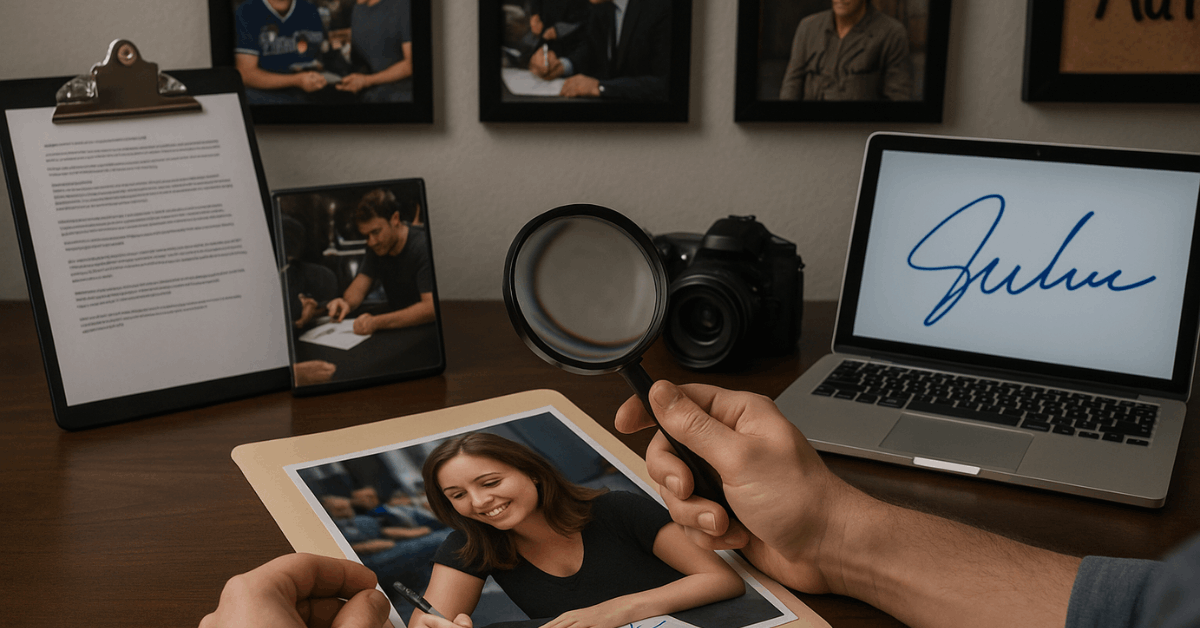
- Event photos showing the signing.
- Video recordings of the autograph being made.
- Owner letters explaining acquisition history.
- Auction records documenting past sales.
Buying Safely in the Market
Collectors can reduce risks by following safe buying practices. Careful choices protect both money and passion.
Avoiding Unverified Sellers
Not all sellers are trustworthy. Reputable dealers and auction houses are safer options. Buyers should avoid unverified online sources. Reputation is a strong safeguard in the market.
Asking the Right Questions
Collectors must demand proof before purchasing. Honest sellers provide certificates and provenance without hesitation. Detailed photos should always be available. A lack of transparency is a warning sign.
Safe Buying Tips
Practical strategies make autograph purchases safer. Collectors should follow steps like:
- Researching market values before buying.
- Requesting official documentation for items.
- Comparing signatures with verified databases.
- Trusting instincts when a deal feels suspicious.
Long-Term Preservation of Autographs
Authentic autographs need proper care to retain their value. Preservation methods protect them from damage.
Safe Storage Materials
Acid-free folders, sleeves, and frames keep autographs safe. Plastic with harmful chemicals should be avoided. Using archival-quality materials is critical. These prevent deterioration over time.
Environmental Control
Light, heat, and humidity cause significant damage. Items should be stored in stable environments. Sunlight fades ink and paper quickly. Controlled storage preserves signatures for decades.
Display vs. Storage
Collectors often display autographs proudly. UV-protected glass reduces damage when on display. For long-term safety, items should be stored securely. Balancing visibility and preservation is the key.
Conclusion – Protecting Value and Meaning
Authenticity is what gives autographs their true value. Forgeries undermine both emotional significance and financial worth.
Collectors who use expert services, technology, and provenance protect their investments.
By verifying authenticity, fans ensure that their autographs remain genuine treasures for the future.