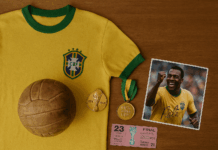
The phrase “match balls from historic games that became relics” captures why certain pieces of football history keep drawing collectors, museums, and fans back.
These footballs were touched at defining moments, traveled from dressing rooms to display cases, and often carry paperwork that proves where they were used.
When a ball is tied to a famous goal, a World Cup final, or a once-in-a-generation upset, it stops being equipment and becomes a capsule of time. The examples below explain how ten well-documented balls crossed that line and why they still matter.
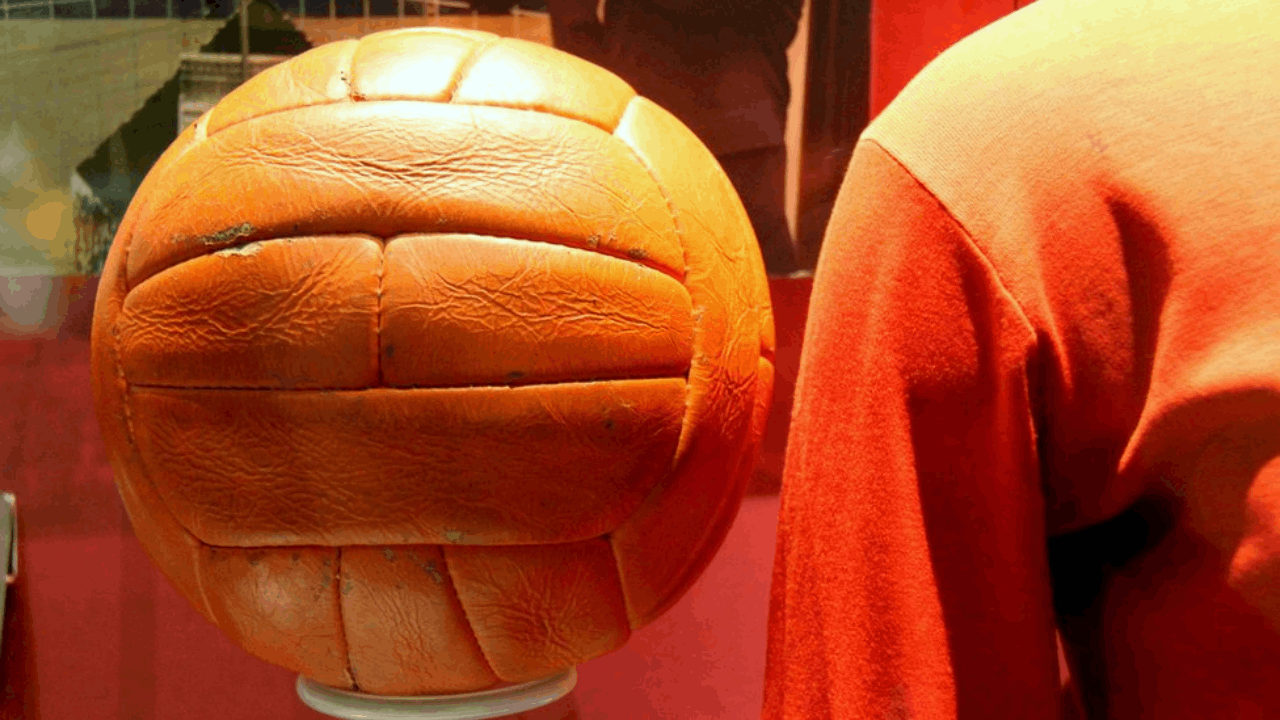
Why Certain Match Balls Become Cultural Artifacts
Understanding how and why a specific ball turns into a relic helps you judge claims and value. The key drivers are the moment on the pitch, public memory, and the strength of the paper trail that anchors the ball to that moment.
Media replays, documentaries, and museum displays keep the memory alive and introduce each artifact to new audiences.
With recognition sustained over the years, demand stabilizes, and the most credible examples become anchors for private and institutional collections.
The Role of Provenance and Public Memory
Provenance converts a used ball into evidence, and broadcast memory keeps that evidence meaningful. A dated inscription, a referee’s affidavit, or a club letter can verify match use and custody transfers.
When the underlying match is famous—because of a controversy, a title, or a dramatic finish—the ball gains cultural gravity. That mix of proof and shared memory is what separates a keepsake from a museum-worthy object.
Top Match Balls From Historic Games That Became Relics
This section gathers ten high-profile examples where the ball has been exhibited, sold at auction, or publicly documented by authoritative sources.

Each entry explains the moment, what makes the ball special, and how its authenticity has been supported. These case studies span World Cup finals, Champions League deciders, and era-defining domestic matches.
Together, they show the patterns that push a simple sphere into the realm of enduring relics.
1966 World Cup Final Ball at the National Football Museum
The Slazenger Challenge 4-Star, used as England beat West Germany 4–2, sits in the National Football Museum collection.
Documentation recounts how Helmut Haller originally claimed the ball and how it returned to England decades later, a story now preserved in the museum’s notes.
Public display keeps the context front and center for new generations of supporters. Its visibility ensures the ball stays synonymous with one of the sport’s most-watched finals.
The 1986 “Hand of God” Quarterfinal Ball
The Argentina–England quarterfinal ball from Mexico City, used for Diego Maradona’s “Hand of God” and “Goal of the Century,” achieved a multi-million-pound sale in recent years.
The seller was the match referee, and the provenance was presented with formal documentation.
The combination of global debate, unforgettable highlights, and a signed chain of custody pushed the ball into headline territory. Few objects demonstrate more clearly how controversy can convert equipment into a cultural artifact.
2010 World Cup Final “Jo’bulani” Game-Used Examples
Adidas produced a gold Jo’bulani specifically for the Spain–Netherlands final in Johannesburg. Game-used balls tied to that match have been cataloged by specialty archives and referenced in technical descriptions of the final-only design.
The distinctive colorway and match identification help collectors verify claims with confidence. That specificity strengthens both the story and long-term collectability.
2014 World Cup Final “Brazuca Final Rio” From Rio de Janeiro
A Brazuca Final Rio used during Germany–Argentina has been publicly offered with documentation indicating competition clearance.
Published estimates and pre-sale materials gave collectors advance notice and supporting images.
When auctioneers flag that a ball was part of the final, they typically provide credentials and internal checks to support the claim. Those elements build confidence and add a market record that future sellers and museums can cite.
2018 World Cup Final Ball From Moscow
After France defeated Croatia 4–2, Telstar 18 Mechta balls attributed to the final entered the market with game-used descriptions.
Listings by reputable memorabilia specialists showed photography, condition notes, and provenance statements.
Multiple referents allow buyers to cross-check panel markings and inscriptions against known examples. The match’s status as a modern classic ensures ongoing interest in credible pieces.
2014 UEFA Champions League Final Ball From Lisbon
The Real Madrid–Atlético Madrid decider in Lisbon produced authenticated match balls that later appeared in licensed sales.
Items described as sourced directly from the matchday teams and backed by certification provided a clean line from pitch to platform.
Because the competition runs an official memorabilia channel, documentation standards tend to be consistent. That structure reduces ambiguity and supports long-term collectability.
2012 UEFA Champions League Final Ball From Munich
The Chelsea–Bayern Munich final generated immediate interest in used balls, with examples documented by dealers and private owners soon after the match.
Public descriptions and image archives reveal how these pieces circulate and how provenance is presented.
When paired with competition-linked sale routes or credible dealer histories, these balls become reliable centerpieces. Transparent custody records continue to strengthen the appeal to fans and institutions.
Manchester City’s “93:20” Title-Winner Match Ball
Manchester City issued an official notice when the match ball tied to Sergio Agüero’s stoppage-time winner against QPR was recovered and returned to the club.
The announcement functions as primary documentation linking the object to one of the Premier League’s most replayed conclusions.
Institutional recovery and acknowledgment create a provenance that is difficult to dispute. The ball now lives as part of the club’s living history rather than a private commodity.
1999 FIFA Women’s World Cup Final Ball
Match-used balls from the United States–China final have appeared with team signatures and auction histories, offering a window into early market demand for women’s football artifacts.
Some examples struggled to meet reserves years ago, a reminder of how categories mature over time.
Today, greater recognition supports higher expectations for verified pieces from era-defining matches. The shift underscores how visibility and cultural momentum affect long-term valuations.
2023 FIFA Women’s World Cup Final Ball
By 2023, interest had risen enough that a ball tied to Spain–England was projected to set a benchmark for the women’s game. Business coverage outlined strong estimates and explained the drivers behind the valuation.
With continued growth, better provenance practices, and rising global audiences, these finals now track the same trajectory seen in the men’s market.
That arc suggests future institutional and private acquisitions will keep pushing well-documented examples forward.
How Collectors Evaluate, Authenticate, and Care for Match Balls
Before money changes hands, serious buyers want to confirm that an item is exactly what it claims to be.

Validation starts with who handled the ball after the whistle, how it left the stadium, and which photos or letters tie it to a specific fixture.
Because finals and iconic games often deploy multiple balls, item-level identifiers such as inscriptions, kit room notes, or stewarding records matter.
Once provenance checks out, conservation practices protect the object for display or future transfer.
Paper Trail, Photo Matches, and Governing-Body Links
A tight paper trail is the fastest path to confidence in a match-used claim. Referee affidavits, club letters, and competition-run sales establish a credible chain of custody that can survive later scrutiny.
Photo-matching of scuffs, panel marks, or unique writing can strengthen the case further when images are high quality and time-stamped.
When a tournament organizer certifies match balls directly, that backing often becomes the cornerstone of the asset’s identity.
Storage, Display, and Materials
Leather and modern synthetics age differently, so storage plans should reflect the ball’s era and construction.
Archival cradles prevent deformation, while UV-filter glazing and climate control mitigate fading and material breakdown.
Older balls should not be over-inflated, and periodic checks of valves and seams help catch early signs of stress. Good photography, notes, and metadata should travel with the object to support future exhibitions or sales.
Context, Storytelling, and Public Access
A ball connected to a famous broadcast moment gains value when viewers can relive that moment nearby. Museum displays and verified online galleries supply trusted context, often publishing notes that researchers can cite in the future.
Club exhibits and official features add another layer by tying the object to institutional memory. When handled well, these channels turn a ball into a shared reference point rather than a private rumor.
Conclusion
You have seen how match balls from historic games that became relics moved from the pitch to permanent relevance. Moments that define tournaments, spark controversies, or deliver title-changing goals give the underlying object lasting power.
With disciplined verification and thoughtful stewardship, you can engage with these artifacts in a way that honors history and preserves value.