Collectors love flawless corners and perfect centering, yet the slips that sneak through the presses often become legends.
Across trading cards and sticker sets, misprints, photo mix-ups, and layout glitches turned throwaways into chase pieces.
Searchers of foofball albums printing errors find that value hinges on story plus scarcity, especially when a correction created two distinct versions in the wild. Modern quality control reduced headline blunders, but historic errors still teach how and why certain anomalies become prized.
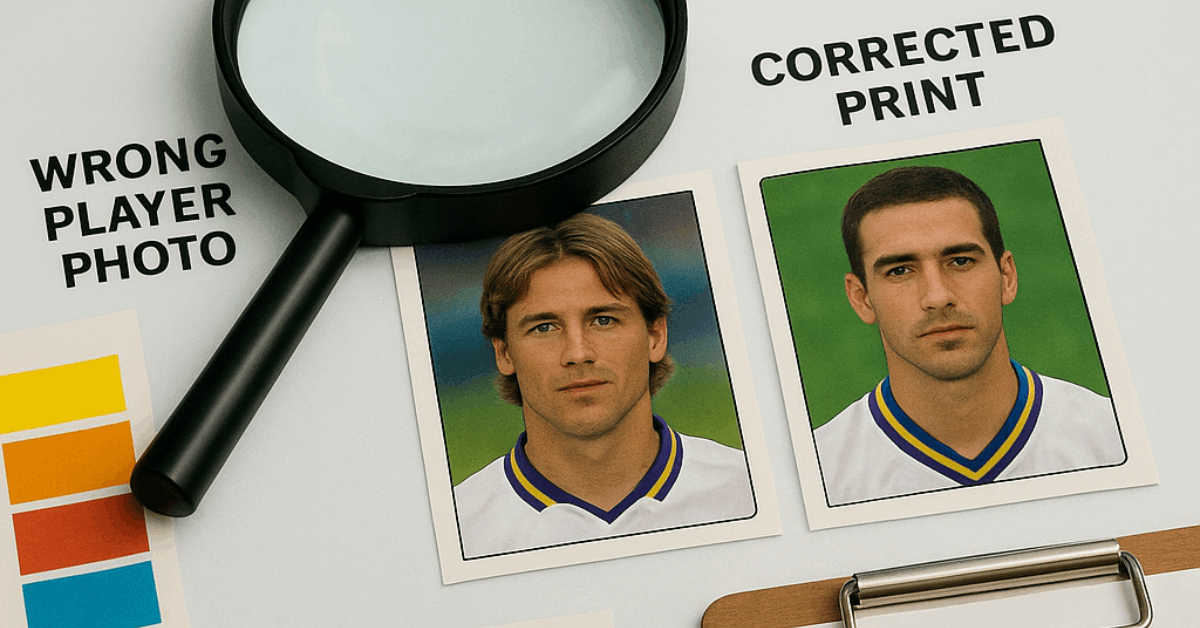
What Counts As A Printing Error In Football Albums
Error, variation, and production defect carry specific meanings that affect desirability.
In hobby usage, an error card or sticker presents unintended wrong information or a production flaw, misspelled name, swapped portrait, or a printing plate defect that knocks out a color. When a publisher never fixes it, guides tag it as an uncorrected error card (UER).
If a fix happens mid-run, two populations emerge, sometimes making a short-printed correction scarcer than the original error. Authoritative definitions in the hobby echo these distinctions and note that rarity can favor either side depending on print timing.
Famous Error Cards That Defined The Hobby
Short context: these touchstone mistakes shaped collector expectations about scarcity, corrections, and “story value.”
Each example illustrates a different path an error can take, left uncorrected, patched multiple times, or quietly fixed while packs were still on shelves.
1989 Fleer Billy Ripken — “Bat Knob” Variations
The original obscenity on the bat knob spawned multiple fixes, black box, whiteout, and scribbles, yet the first, uncensored print remains the hobby’s icon.
1952 Topps Joe Page — Swapped Biography
Early sheets carried teammate Johnny Sain’s biography on Page’s back, creating a recognized rarity in the landmark 1952 run.
1990 Topps Frank Thomas — No Name On Front (NNOF)
A front-side name layer failed on a tiny batch, leaving a blank space where “Frank Thomas” should appear; population data and prices confirm its extreme scarcity.
1988 Topps Football Steve Largent — Wrong Back
Front shows Largent; the reverse carries Brian Bosworth’s back—one of the NFL’s best-known printing mix-ups.
1981 Topps Joe Montana — Name Printed In Yellow
Most rookie copies show white name text; a small run displays yellow due to print alignment, a noted variation pursued by football specialists.
1990–91 Pro Set Hockey Paul Gillis — “Bloody Nose / 37 On Front”
A photo and numbering anomaly exists alongside a corrected version, a case study in how minor-set errors can still become hard chases.
1982 Topps “Blackless”
A press pass ran without black ink on portions of the checklist, removing facsimile signatures and borders across numerous cards.
1989 Score Paul Gibson — Background Cameo
A teammate in mid-wardrobe change appears behind the pitcher; later prints obscured the scene, but the first issue remains a cult favorite.
1969 Topps Aurelio Rodríguez — Batboy Photo
The card pictures Angels batboy Leonard Garcia rather than Rodríguez, a famous identity swap memorialized by the Hall of Fame.
1987 Donruss Opening Day Barry Bonds — Johnny Ray On The Front
A photo of teammate Johnny Ray landed on Bonds’s card; PSA census and auction history underscore sustained demand for the error version.
Why Big Errors Are Scarcer In Modern UK And European Releases
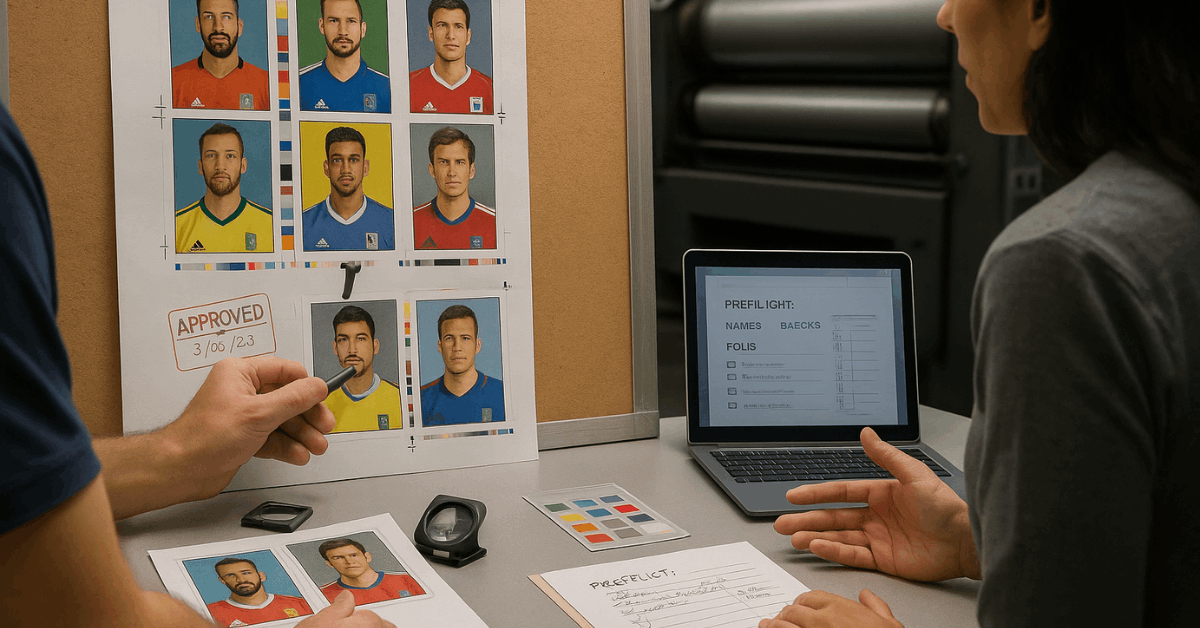
Large publishers such as Panini and Topps now run digital prepress, live color management, and layered approval sign-offs across English and non-English layouts.
Those controls sharply reduce quality control slip incidents like swapped crests, reversed flags, or off-register foils.
Minor quirks still appear, shade shifts, tiny text typos, or micro-miscuts, but sweeping mistakes that once reached mass circulation rarely pass today’s workflows.
Album-Focused Mistakes Football Fans Recognize
Sticker and card albums built around leagues and tournaments tend to surface familiar themes. Photo captioning mistakes create the classic wrong player photo, while misnumbered checklists confuse pack-to-album flow.
A Panini sticker misprint can misalign holographic foils or drop a diacritic in a player’s name.
Some print layers vanish partially, producing faint crests or a name on front missing effect on certain runs. Regional print waves sometimes carry tiny layout differences that collectors treat as an album variation error rather than a true misprint.
How To Spot And Verify Errors In Your Album
Checking systematically avoids false alarms and helps confirm genuine anomalies that merit saving.
- Compare against a trusted digital checklist and one verified physical copy before calling anything rare.
- Inspect color layers under bright light; look for missing black keylines, doubled type, or an obvious registration shift.
- Validate photo identities using official club pages or tournament media guides to catch swapped portraits quickly.
- Confirm whether the mistake was ever corrected; if a fix exists, two populations likely circulate, error and short-printed correction.
Search grading population reports or established forums to distinguish genuine errors from print wear or damage; label it uncorrected error card only when no fix was issued anywhere.
Value, Rarity, And Correction Timing
Market heat follows scarcity plus narrative. When an error is noticed early and pulled for repairs, the first state can be dramatically outnumbered by the fixed version and claim the premium, as seen with several headline cases above.
Conversely, a late fix can flip the script, making the corrected print the tougher find. That dynamic, error vs. correction, population vs. story, explains why some anomalies become blue-chip references and others remain fun footnotes.
Population data and auction records around NNOF Thomas and the Bonds/Johnny Ray confirm how confirmed rarity sustains pricing over decades.
Other Notable Blunders Collectors Still Mention
Hobby threads often revisit huge “face-palm” moments: Al Leiter’s 1988 Topps rookie using Steve George’s photo, mid-’80s–’90s color-layer dropouts, and team-name color toggles that created chase splits.
Identity swaps pop up repeatedly across vintage sets, reinforcing why album and card editors now cross-check names, numbers, and uniforms more rigorously than in earlier eras.
Conclusion
Errors become relics when they tell a clear story, exist in limited numbers, and link to recognizable players or sets.
Football-album collectors can use those same signals, documented anomaly, verified correction history, and measurable scarcity, to decide which misprints to sleeve, submit, or simply enjoy as hobby lore.