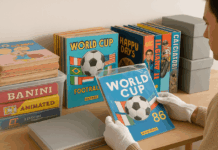
Sticker albums have become one of the most recognizable traditions of every FIFA World Cup.
Since their debut in 1970, they have captured the excitement of the tournament and turned it into a global collecting phenomenon.
These albums are more than just pages of stickers — they represent history, culture, and the shared passion of football fans worldwide.
Origins of Sticker Collecting
Sticker collecting did not begin with the World Cup. It developed gradually through earlier traditions and innovations.
The origins can be divided into two key stages: early collecting practices and Panini’s introduction of the World Cup album.
Early Collecting Traditions
- Collectible cards tied to consumer goods such as cigarettes and candy were popular in the early 20th century.
- These cards often featured sports figures, cultural icons, or movie stars.
- They introduced the idea of collecting, trading, and completing sets.
- This culture laid the groundwork for modern sticker albums.
Panini’s Entry into the Market
- The Panini brothers launched their publishing company in Italy in 1961.
- They started with football-themed stickers that gained quick popularity.
- Their model used small packs of stickers sold separately, encouraging trading.
- By the late 1960s, Panini had perfected this system, preparing for global expansion.
The First World Cup Album – 1970 Mexico
- Panini secured rights to produce the first official FIFA World Cup sticker album.
- The album featured national teams and players, offering fans a way to track the tournament.
- It was sold across Europe and quickly spread internationally.
- This release marked the beginning of a collecting tradition that still exists today.
Expansion Through the Decades
The popularity of World Cup sticker albums grew steadily after their debut in 1970.
Each decade brought unique changes in design, production, and global reach. The following points highlight how the albums expanded over time.
1970s–1980s: Building a Tradition
- The first albums gained strong popularity across Europe and South America.
- Designs were simple, with basic layouts and thin paper.
- Collecting became a shared cultural activity among children and families.
- By the late 1980s, Panini albums were seen as a key part of the World Cup experience.
1990s: Globalization of Panini
- Panini expanded distribution to Asia, Africa, and North America.
- Albums became more colorful and featured higher-quality images.
- Partnerships with FIFA strengthened global branding.
- Collecting became a worldwide phenomenon, not limited to football’s traditional markets.
2000s–2010s: Collecting Craze
- Massive marketing campaigns increased awareness during tournaments.
- The 2002 Korea/Japan World Cup boosted sales in Asia.
- Millions of packs were sold worldwide, supported by TV and retail promotions.
- Collecting evolved into both a children’s activity and a serious hobby for adults.
2020s: Digital Shift and Hybrid Collecting
- Panini introduced official online platforms to collect virtual stickers.
- Fans could swap digital stickers with others across the globe.
- Physical albums remained popular despite the digital alternatives.
- The combination of tradition and innovation kept the albums relevant.
Rare and Valuable Stickers
Some World Cup stickers stand out for their rarity and value. These special items attract both passionate fans and serious collectors.
Their worth is often determined by scarcity, printing history, and the players they feature.
Error Stickers and Misprints
- Printing mistakes such as swapped names, border misalignments, or wrong team logos made certain stickers unique.
- These errors were usually corrected fast, making flawed versions rare.
- Collectors value them highly because they are hard to find.
- Many error stickers have become some of the most expensive in auctions.
Celebrity and Rookie Stickers
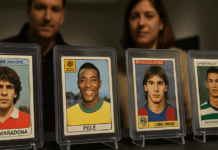
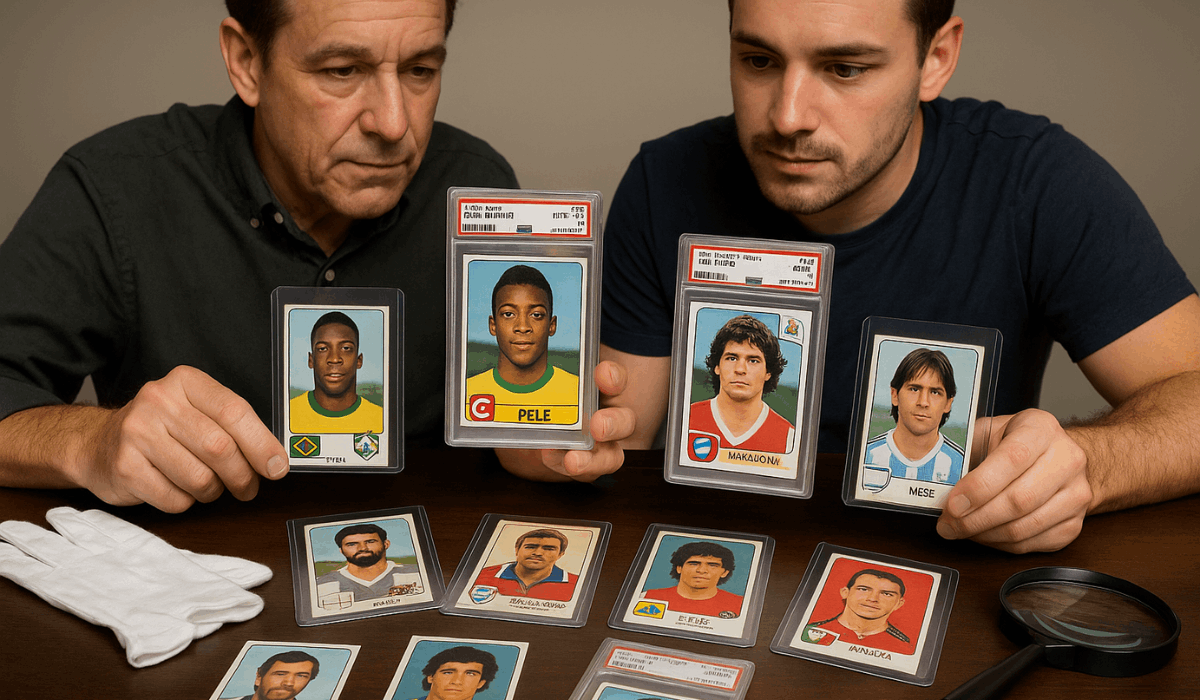
- First appearances of iconic players like Pelé, Diego Maradona, Lionel Messi, and Cristiano Ronaldo are highly prized.
- Rookie stickers mark the beginning of a player’s World Cup journey.
- Fans see these as historic milestones preserved in sticker form.
- Prices of these stickers have steadily increased over decades.
Limited Editions and Regional Exclusives
- Some stickers were released only in specific countries or regions.
- Regional differences, such as alternate portraits, added to their rarity.
- Collectors often seek them to complete global sets.
- Their limited availability makes them valuable in the market.
High-Value Market Collectibles
- Condition plays a big role: mint or graded stickers are worth more.
- Certified authenticity raises confidence and price.
- Some rare stickers have sold for thousands at auctions.
- Many collectors now treat them as both memorabilia and investments.
Regional and Tournament Exclusives
World Cup sticker albums were not always identical worldwide. In several editions,
Panini and local partners produced exclusive stickers or variations tailored to specific countries.
These special issues became highly collectible because of their limited circulation.
Country-Specific Releases
- Some albums included stickers that were available only in certain nations.
- Examples include alternate portraits of players or additional stickers of local stars.
- These versions were often designed to appeal to regional fan bases.
- Collectors outside those countries find them difficult to obtain.
Tournament-Specific Variations
- Panini sometimes produced limited sets tied to regional tournaments or qualifiers.
- These stickers highlighted players who did not appear in the main World Cup album.
- Special releases gave fans more content beyond the global edition.
- Their scarcity has increased demand among international collectors.
Promotional Exclusives
- Exclusive stickers were distributed through brand partnerships, such as with soft drinks or snack companies.
- Some were available only as prizes in contests or promotions.
- Fans had to purchase specific products to access these items.
- Today, these stickers are rare and considered valuable marketing memorabilia.
Impact on Collectors
- Regional and tournament exclusives add variety to collections.
- They create challenges for collectors seeking complete global sets.
- Their limited production boosts both cultural and financial value.
- Many fans view them as proof of Panini’s global reach and marketing strategy.
Authentication and Counterfeits
As World Cup sticker albums grew in popularity, counterfeits began to appear.
Fake stickers and albums created challenges for collectors who wanted genuine items.
Authentication methods became essential to protect the value and trust of the hobby.
Rise of Counterfeits
- Counterfeit stickers often mimic official designs but lack quality in print and paper.
- Unauthorized reproductions are common in high-demand years.
- Some counterfeits are sold cheaply in markets, tricking new collectors.
- The presence of fakes lowers c
- confidence in trading if unchecked.
Authentication Methods
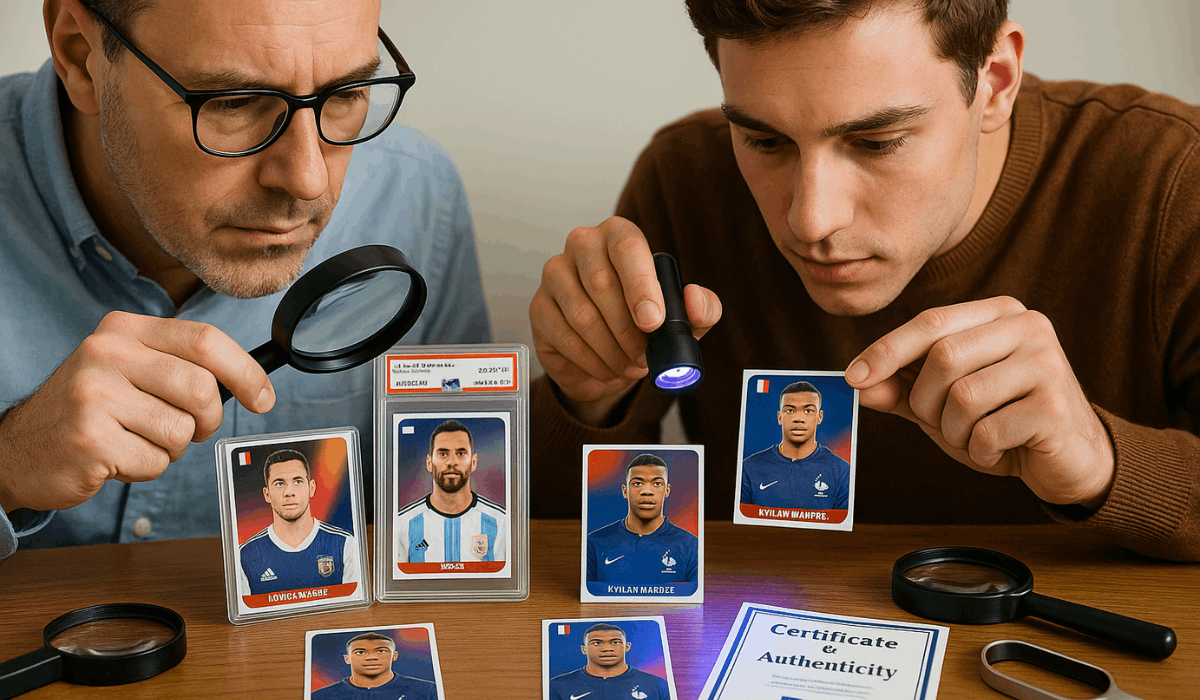
- Genuine Panini stickers include security features such as watermarks and holograms.
- Printing quality, color accuracy, and material are reliable indicators.
- Grading services provide expert evaluation for high-value stickers.
- Certificates of authenticity are often issued for rare or expensive pieces.
Importance of Verification
- Authentic stickers maintain market value and collector trust.
- Counterfeit items reduce the credibility of trading communities.
- Verification ensures investment-grade stickers can be sold safely.
- Collectors who authenticate their stickers can protect their collections long-term.
Role of Grading Companies
- Professional grading assigns condition scores to stickers.
- Encased graded stickers are sealed and tamper-proof.
- This process reassures buyers in auctions and trades.
- Graded stickers consistently sell for higher prices.
To Conclude
World Cup sticker albums have grown from a simple 1970 idea into a global collecting tradition that bridges generations of football fans.
Their history shows how sports, culture, and nostalgia can combine to create lasting value.
Start your own collection or revisit an old one, and be part of this enduring legacy of the beautiful game.