Football is more than just goals and trophies; it is also about identity. Among the strongest symbols are historic football shirts that reflect victories, culture, and defining moments.
Each shirt tells a story tied to legendary players and major events. This article explores 10 iconic World Cup shirts and why they remain unforgettable.
The Importance of Football Shirts in World Cup History
Shirts have always been more than uniforms; they carry national pride. They create instant recognition when a team enters the pitch.
They also remind fans of defining matches and emotional victories. Learning about these shirts shows you how football connects to culture, politics, and design evolution.
Identity and Symbolism
Every shirt represents a nation’s colors and history. Fans attach emotions to the design of their teams. The bond grows stronger during major wins.
A shirt turns legendary when tied to unforgettable achievements. These shirts remind fans of cultural pride. They also symbolize stories beyond the pitch.

Influence of Culture and Technology
Design changes reflect cultural trends and sporting innovation. Advances in fabric shifted how players performed. Politics and global image also shaped many shirt designs.
Teams expressed identity through these details. Fans connected performance with design choices. Together, these elements created timeless symbols.
10 Historic Football Shirts That Marked World Cups
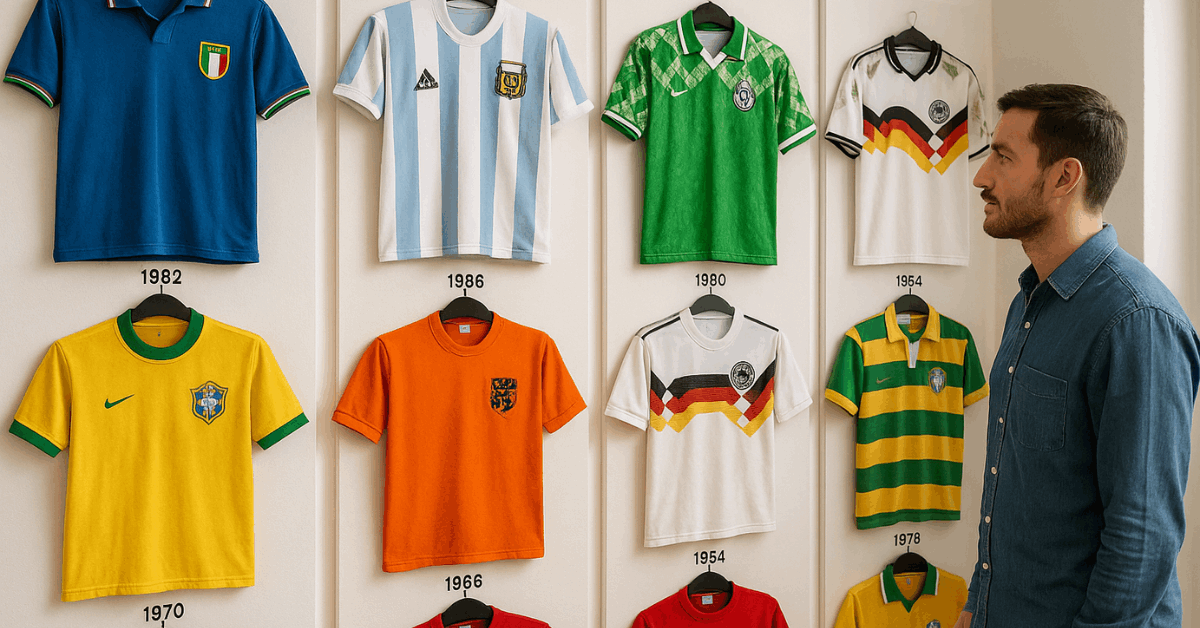
These shirts each tell a unique story that shaped football history. Here are the ten most iconic designs that defined World Cups.
1. Brazil 1970 – The Classic Yellow Jersey
Brazil’s 1970 shirt is one of the most iconic in history. It was worn by Pelé and the team that dominated world football.
The bright yellow became a global football symbol. This shirt remains a standard of excellence and beauty.
Pelé and Global Legacy
Pelé’s influence made the yellow jersey unforgettable. The world watched his final World Cup shine.
The shirt became tied to creativity and dominance. Collectors and fans still value it today.
Symbol of Brazilian Style
This jersey represented flair and skill. It matched the team’s attacking approach. Fans worldwide adopted it as a symbol of joy. Its design remains simple yet powerful.
2. Argentina 1986 – The Diego Maradona Era
Argentina’s shirt in 1986 is linked to Maradona’s legendary tournament. His performances defined the jersey.
The “Hand of God” and “Goal of the Century” cemented it in memory. This shirt represents pride and triumph for Argentina.
Maradona’s Connection
Maradona elevated the shirt beyond sport. His influence in Mexico 1986 marked history. Fans still connect this design with his genius. The shirt became a national treasure.
Cultural Symbol
The striped blue and white reflected national identity. The success gave new power to the shirt. It became part of Argentina’s cultural story. Even today, it inspires loyalty and nostalgia.
3. West Germany 1990 – The Tri-Color Chevron Design
The 1990 West Germany shirt broke away from tradition. It featured bold red, black, and yellow chevrons. This design symbolized change in Europe. It became legendary after their World Cup victory.
Unique Design Impact
This was a fresh approach to shirt design. It combined national colors with modern style. The look stood out across the tournament. Its originality made it memorable.
Symbol of Reunification
The shirt gained more value after political changes. Germany’s reunification gave the shirt deeper meaning.
It represented hope and unity. The shirt became history beyond football.
4. England 1966 – Red Shirt of the Champions
England’s only World Cup victory is tied to a red shirt. It was worn in the final at Wembley. The win gave the shirt historic significance. It still creates strong emotions for English fans.
Wembley Triumph
The shirt reminds fans of the famous final. It symbolizes Geoff Hurst’s hat-trick and the victory. The design itself is simple and classic. Its power lies in history, not decoration.
Lasting Nostalgia
English supporters still honor the shirt. It became a symbol of national pride. Collectors value its connection to 1966. Its memory remains central in football history.
5. Netherlands 1974 – The Orange Revolution
The Netherlands brought new tactics and identity in 1974. Their bright orange shirt became a symbol of “Total Football.” Johan Cruyff and his teammates made it legendary. The shirt changed how fans viewed football culture.
Cruyff’s Role
Johan Cruyff’s leadership elevated the shirt. His skill defined the orange revolution. Fans connected him directly to the jersey. It represented creativity and tactical evolution.
Orange Identity
The shirt highlighted Dutch culture. Orange became globally tied to their team. Even without winning, the shirt stood out. Its legacy continues in every tournament.
6. France 1998 – The Home Glory Jersey
France’s home World Cup in 1998 created history. Their blue shirt became a symbol of victory. Zidane’s performance in the final defined its memory. It represents the rise of French football power.
Zidane’s Final Performance
Two goals by Zidane in the final gave glory. His performance created a link to the shirt.
It symbolized skill, control, and pride. Fans remember this design as a turning point.
National Symbol
The blue shirt unified the country. It became a symbol of diversity and success. France embraced it as part of their identity. Its influence continues in modern kits.
7. Italy 1982 – The Blue of Triumph
Italy’s 1982 shirt is tied to resilience. The team, led by Paolo Rossi, shocked the world. Their blue shirt became linked to redemption. It remains a classic in football memory.
Paolo Rossi’s Heroics
Rossi’s goals turned Italy’s campaign around. His impact made the shirt iconic. Fans saw it as a story of survival. It symbolized determination and glory.
Tradition of Azzurri
Italy’s blue shirt holds cultural meaning. In 1982, it gained new value. The design was simple yet powerful. It became part of national pride.
8. Spain 2010 – The Red of Victory
Spain’s first World Cup win came in 2010. Their red shirt symbolized dominance through tiki-taka football. The team’s success made the shirt historic. It represents a golden generation of players.
Tiki-Taka Style
Spain’s possession game defined the shirt. It represented precision and teamwork. The shirt became linked to elegance. Fans connected it to dominance on the pitch.
First World Cup Win
The shirt marked Spain’s breakthrough. It represented national joy and relief. Fans embraced it as a turning point. It remains a celebrated jersey.
9. Cameroon 2002 – The Sleeveless Controversy
Cameroon’s 2002 shirt broke tradition. The sleeveless design shocked FIFA and fans. It was banned after controversy. Despite this, it became a historic shirt.
Bold Innovation
The sleeveless look showed creativity. It pushed limits in design. Fans saw it as a statement. The shirt stood out despite restrictions.
Symbol of African Expression
This shirt highlighted African identity. Cameroon used it as cultural pride. It showed how design challenges rules. Its story adds to World Cup history.
10. Croatia 1998 – The Checkered Debut
Croatia’s debut World Cup in 1998 brought attention. Their red-and-white checkered shirt stood out immediately. The team’s third-place finish gave it fame. It became a symbol of their new identity.
Distinctive Design
The checks were bold and unique. No other shirt looked similar. It became an instant marker of Croatia. Fans valued its originality.
Cultural Representation
The design is connected directly to Croatian heritage. It symbolized national strength and tradition. The shirt remains iconic for its boldness. It continues to represent Croatia worldwide.
Modern Legacy of World Cup Shirts
Historic shirts remain relevant today. They influence new designs and inspire fans. Collectors pay high prices for originals. Each shirt holds cultural and emotional weight.
Influence on Modern Kits
Brands reuse old designs in modern kits. Fans demand classic looks. Clubs and nations profit from nostalgia. Shirts remain part of the football economy.
Emotional Connection
Fans link memories to shirts. They represent joy and heartbreak. Players also hold them with pride. The emotional power makes them timeless.
Conclusion: Shirts That Carry History
World Cup shirts are more than fabric; they are history. These historic football shirts reflect victories, identity, and global change.
Each shirt tells a story tied to unforgettable players and moments. Future World Cups will continue to produce new shirts that inspire the next generation of fans.