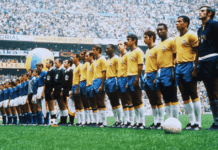
Iconic digits on a jersey rarely earn status by accident. Legendary shirt numbers emerge when extraordinary players deliver defining moments, positional traditions reinforce meaning, and clubs curate heritage through retiring or reserving numbers.
Media narratives and fan imitation then lock the association between a number and a style of greatness.
Treat numbers as living symbols: they carry history, expectation, and a player’s brand in equal measure, exactly why “legendary shirt numbers” still command attention worldwide.
What Turns A Shirt Number Into A Legend
Status grows through overlapping forces rather than a single cause. First, an iconic wearer imprints skills and memories onto a digit, think Pelé, Maradona, and Messi, transforming the 10 into shorthand for playmaking genius.
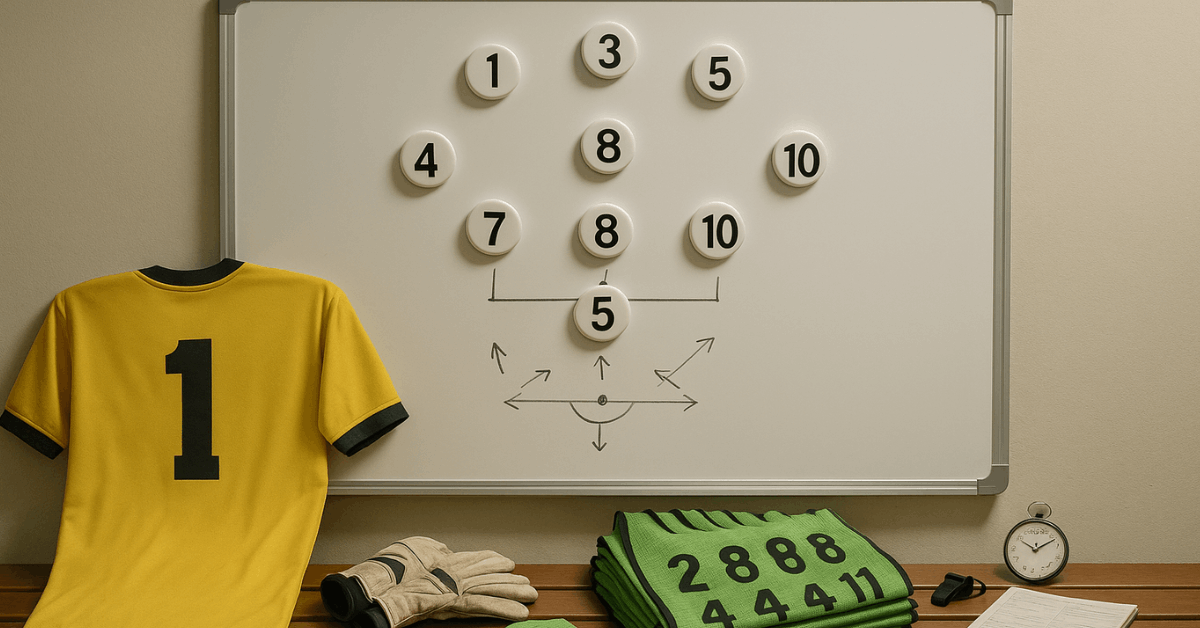
Next, tradition ties certain numbers to roles, so the 1 signals the goalkeeper, the 9 a finisher, and the 10 a creator.
Clubs amplify significance by retiring, reserving, or ceremonially passing numbers to heirs, while fan culture and media keep stories circulating across generations.
A Brief History Of Shirt Numbering
Early experiments surfaced in England in 1928 but stalled; some teams even tried colored socks and patterned caps for identification.
Momentum shifted in the 1933 FA Cup Final when Everton wore 1–11 and Manchester City wore 12–22, giving structure and visibility to every position. Everton’s center-forward William Ralph “Dixie” Dean donned the first Cup Final 9 and then stacked it with goals, hardwiring the 9 to striker mythology.
Over time, the practice spread internationally, anchoring numbers to formations and roles, then evolving as tactics changed.
Traditional Roles And The Classic 1–11 Map
Roles were once tightly coupled to a single formation, which fixed meanings in supporters’ minds. That clarity made numbers a quick code for responsibilities and helped broadcasters and fans scan matches efficiently.
- 1: Goalkeeper as the first name on the sheet, reinforcing the goalkeeper number 1 tradition.
- 2–3: Full-backs on the right and left, defensively reliable and positionally disciplined.
- 4–6: Central spine—center-backs and holding midfielders depending on the system used.
- 7–11: Attacking unit—wingers, creators, and the center-forward wearing the 9.
- 10: Creative hub, the playmaker orchestrating tempo and final passes.
How Modern Football Rewrote The Map
Contemporary squads use fixed “squad numbers” registered for a season, decoupling digits from week-to-week positions. Tactical diversity—4-3-3, 3-5-2, or 4-2-3-1—further blurs old patterns, so a deep-lying playmaker might wear 5, while a winger prefers 17 or 47 for personal meaning.
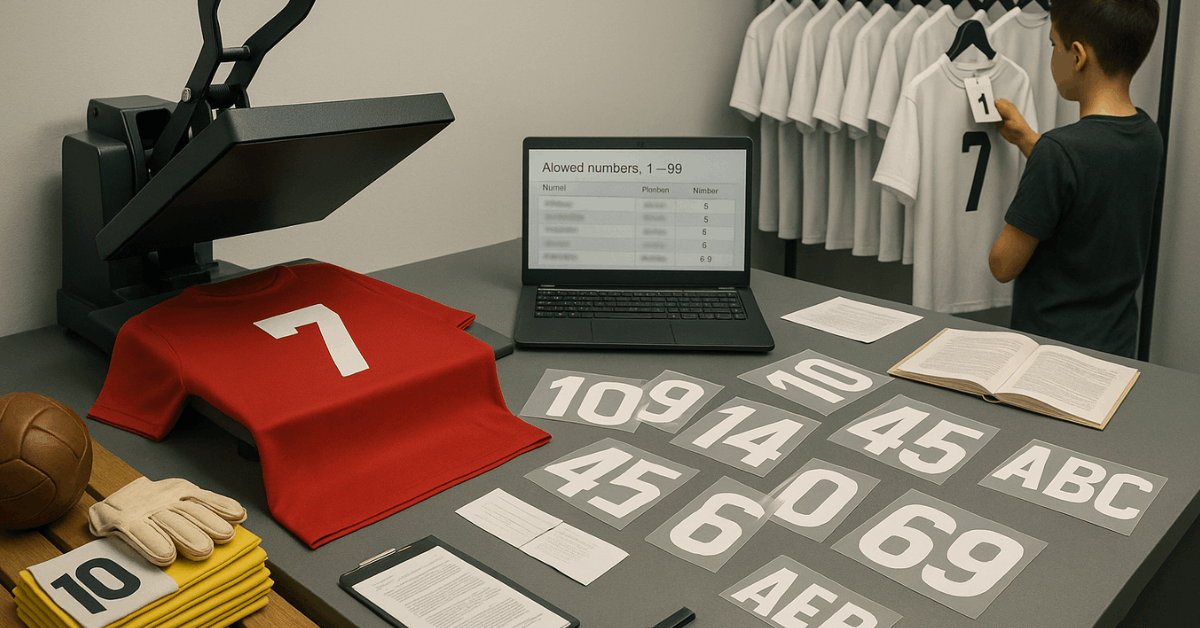
Regulatory baselines typically allow 1–99, with competition manuals specifying exact ranges and registration rules; this flexibility opened space for personal stories and marketable identities.
Examples abound: Phil Foden honoring family with 47, Mario Balotelli picking 45 because 4+5 equals 9, and goalkeepers like Cristiano Lupatelli briefly opting for 10 to invert convention.
Case Studies: Iconic Numbers And Wearers
A handful of digits carry expectations that transcend teams and eras. Treat these as “legacy numbers,” where the wearer inherits pressure along with prestige.
Fans anticipate a certain swagger or responsibility the moment these shirts change hands, which is why clubs often plan transitions carefully.
Secondary meanings also exist across cultures, 13 is treasured in Germany, while 14 evokes artistry in the Netherlands, showing how local history reshapes global symbols.
Number 10
Pelé’s 1958 World Cup assignment elevated an already special role into global royalty, later magnified by Diego Maradona, Zinedine Zidane, Ronaldinho, and Lionel Messi.
Creative command, final-third fluency, and match-tilting vision keep the 10 as football’s enduring shorthand for genius. Many federations and clubs still treat the 10 as a responsibility rather than a perk, sustaining the iconic number 10 meaning.
Number 7
Speed, invention, and end-product define the 7 at elite clubs. The lineage stretches from George Best and Eric Cantona to David Beckham and Cristiano Ronaldo, turning a winger’s number into a global brand emblem.
That history explains why number 7 is famous among attackers seeking both flair and leadership signal value.
Number 9
The 9 remains the finisher’s badge: movement between posts, ruthless timing, and penalty-box craft. Heritage traces back to Dixie Dean and later to clinical modern strikers, cementing an expectation that the 9 should decide matches.
Number 1
Gloves, organization, and last-line authority make the 1 a statement as much as a slot on the sheet.
Lev Yashin’s aura and modern greats like Gianluigi Buffon and Manuel Neuer kept the standard sky-high, reinforcing long-standing awe around the role.
Number 14 And National Variants
Johan Cruyff turned 14 into a Dutch icon, while Thierry Henry made 14 feel electric in England, widening the canon beyond 1–11.
Cultural twists matter elsewhere: Germany’s reverence for 13 stems from Gerd Müller’s exploits and later stars, illustrating how local legends bend global norms.
Club Policies: Retiring, Reserving, And Passing On Numbers
Some institutions freeze digits to honor greatness. AC Milan retired 6 for Franco Baresi and reserves 3 for members of the Maldini family, protecting a lineage tied to defensive mastery.
Inter have honored icons by retiring numbers, while Ajax informally avoided reissuing 34 after Abdelhak Nouri’s tragedy, demonstrating how compassion can shape numbering customs.
Other traditions “pass on” prestigious shirts, common in Australia’s AFL and present in some football academies, where coaches award a revered number to a deserving successor to signal trust and continuity.
Unusual And Memorable Choices
Individual expression fuels the modern numbering story. Bixente Lizarazu selected 69 to mirror birth year, height, and weight numbers.
Hicham Zerouali wore 0 at Aberdeen after a special exemption aligned with his nickname, “Zero.”
Ivan Zamorano famously placed a plus sign between 1 and 8 at Inter to evoke his beloved 9. The thread running through each case is narrative power: once a crowd recognizes the story, the number becomes a conversation piece that can outlive a player’s prime.
Fan Culture And Player Branding
Supporters buy identity as much as fabric, and numbers anchor that identity. Children choose digits to emulate idols, creating feedback loops where demand keeps specific shirts evergreen across seasons.
Professional brands grow around numbers, CR7 being the marquee example, linking endorsements, social channels, and merchandise under a single shorthand.
That dynamic sits at the heart of player branding and shirt numbers strategy for modern stars and marketing teams.
Quick Factors That Elevate A Number
Clear expectations help evaluate why some digits escalate from common to legendary.
Numbers tied to match-defining roles or jaw-dropping moments rise fastest, especially when clubs and media amplify the story. Treat the following as a fast filter when judging a number’s aura.
- Iconic wearer delivered trophies, records, or unforgettable plays.
- Positional tradition aligns the digit to high-impact duties.
- Club curation retires or reserves the shirt for heritage.
- Fan adoption turns the number into a symbol and slogan.
- Media narratives keep highlights and myths constantly visible.
Conclusion
Shirt numbers carry history, defined by elite performances, positional customs, and deliberate club stewardship. When choosing or evaluating a digit, consider heritage, expected responsibilities, and the story supporters will embrace.
Fans, media, and merchandising then reinforce meaning, turning one season’s choice into a multi-generational identity. Anchor your number in performance first, because sustained impact outlives hype and keeps the legacy credible.