You collect for history, not just for checklists. Some stickers were printed in smaller runs or circulated only in one country.
Decades later, few survived in high grade. Those survivors became cultural artifacts with real auction records.
Here is a clear guide to the standouts, why they are scarce, and how to evaluate them without hype.
Why “Limited Prints” Became Relics
Sticker issues were often regional. Early domestic sets reached fewer buyers than global World Cup albums.
Many stickers were peeled and pasted into albums, so mint copies are rare.
Third-party grading now documents how few high-grade examples exist, and auctions confirm demand with public prices.
For context, the first Panini World Cup album appeared in Mexico in 1970 and set the template for modern collecting.
The Benchmark: 1979 Panini Calciatori Diego Maradona #312
This is the hobby’s reference point for a “limited-survival” relic. It is a domestic Italian release from 1979.
In April 2021, a PSA 10 sold for $555,960 at Goldin Auctions, a verified public sale.
PSA’s database shows only one known PSA 10 and very small numbers at the top grades, which confirms scarcity in pristine condition. T
Maradona’s rookie-era sticker combines an iconic player, a home-market issue, and a low surviving gem population. That is a textbook recipe for a relic.
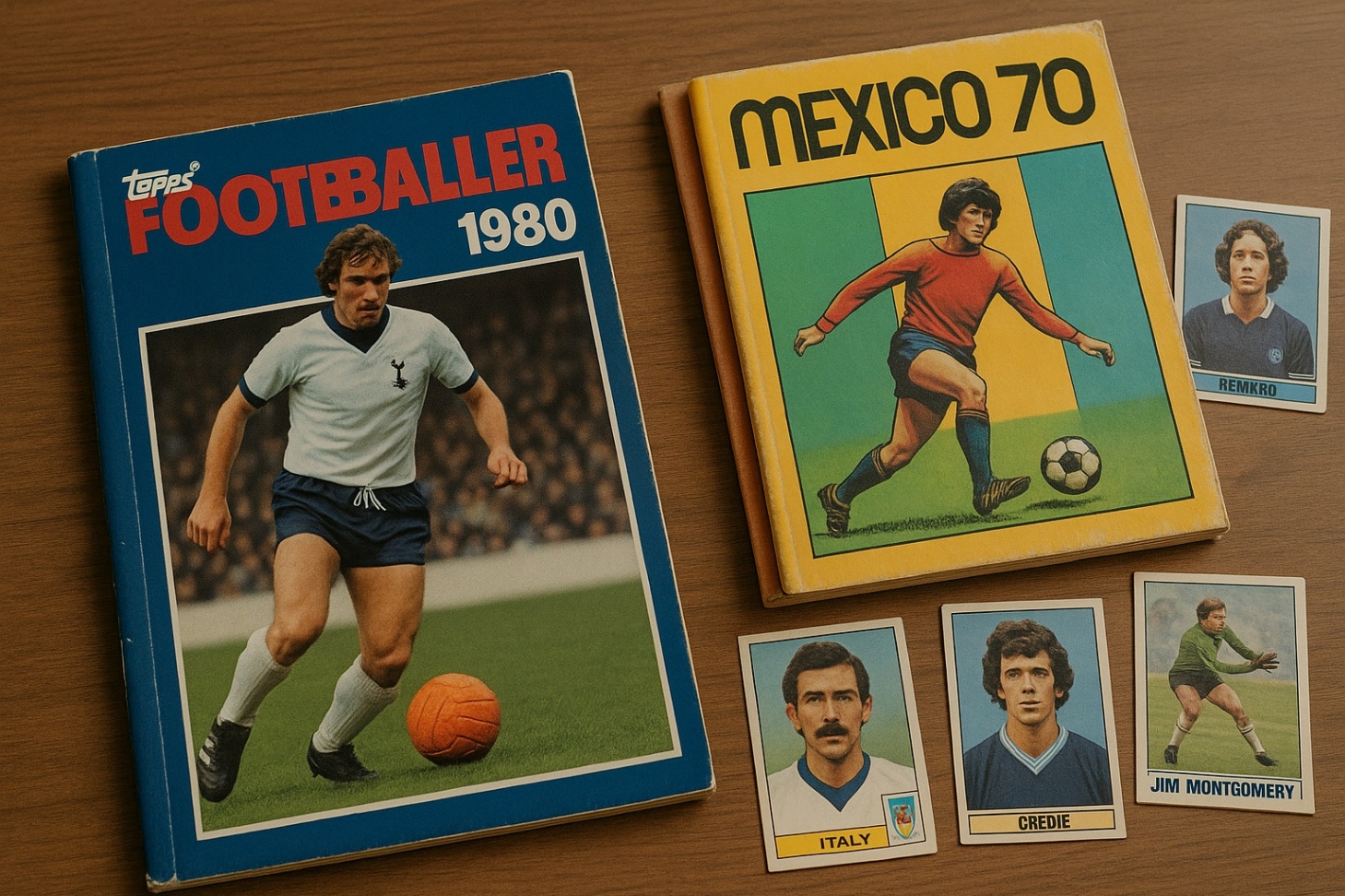
A First World Cup Milestone: Mexico 1970 Album
Panini’s first World Cup sticker album launched in 1970. It helped define the global craze and remains a historic anchor for the category.
The album’s age and the habit of gluing make complete, clean examples desirable.
Auction houses have sold early albums with spirited bidding; for example, a 1970 example drew international bids at a UK saleroom in late 2023.
Early World Cup material has cross-generational appeal and limited high-grade survival, even if exact print counts are unknown.
Zinedine Zidane’s Domestic Debut: 1991–92 Panini Foot ’92 #43
Foot ’92 was a French domestic release. Zidane appears as a young Cannes midfielder.
PSA’s Auction Prices Realized shows dozens of tracked sales and a six-figure cumulative total for the card, while population data confirms relatively modest graded supply.
This is a classic example of a regional sticker that matured into a blue-chip relic.
Regional origin plus a global legend equals durable demand. Many copies were stuck into albums; high-grade loose examples command premiums.
Cristiano Ronaldo’s Home-Market Sticker: 2002–03 Panini Futebol Portugal #306
Ronaldo’s early Panini sticker was issued in Portugal.
PSA’s records track the market with total auction counts and value, and individual Goldin lots show real hammer prices.
As with other domestic issues, clean copies are difficult, especially unpeeled.
A domestic-only release from a GOAT-tier player with decades of global fan interest sustains demand even in down cycles.
Kylian Mbappé’s First Sticker: 2016 Panini Foot Ligue 1 #504/505
Mbappé’s debut sticker comes from France’s Foot set, paired with Corentin Jean. PSA and Goldin document graded sales, including PSA 10 results.
While newer than the 1990s icons, Foot is still a domestic product, and high-grade examples have proven liquid.
Modern star, regional release, and early-career issue. It shows how “limited distribution + condition” still drives premiums today.
What “Limited” Means in Practice
You rarely get official print-run numbers for vintage stickers.
- Distribution scope. Many early sets were confined to one country or league. World Cup sets (post-1970) had a broader reach, but still faced regional supply differences.
- Use-case attrition. These were meant to be stuck into albums; mint loose examples are scarcer by design.
- Population data. PSA population and Auction Prices Realized (APR) show how few high-grade survivors exist and what they sell for.
- Public auctions. Goldin and other houses provide verifiable sale results that anchor valuations.
How to Verify Authenticity and Condition
Third-party grading (PSA/BGS/SGC) authenticates and assigns a condition. Check population reports to gauge scarcity at each grade.
Look for clean surfaces, sharp corners, and original, unpeeled backs for loose stickers. Album-mounted pieces are less valuable unless the market recognizes the format.
High-profile rookies attract reprints and fakes. Match fonts, halftone dots, and dimensions against verified exemplars in trusted databases before you buy.
Auction catalogs and grading serial numbers create a paper trail. Prefer listings with high-resolution images and certification numbers you can verify.
Storage to Preserve Value
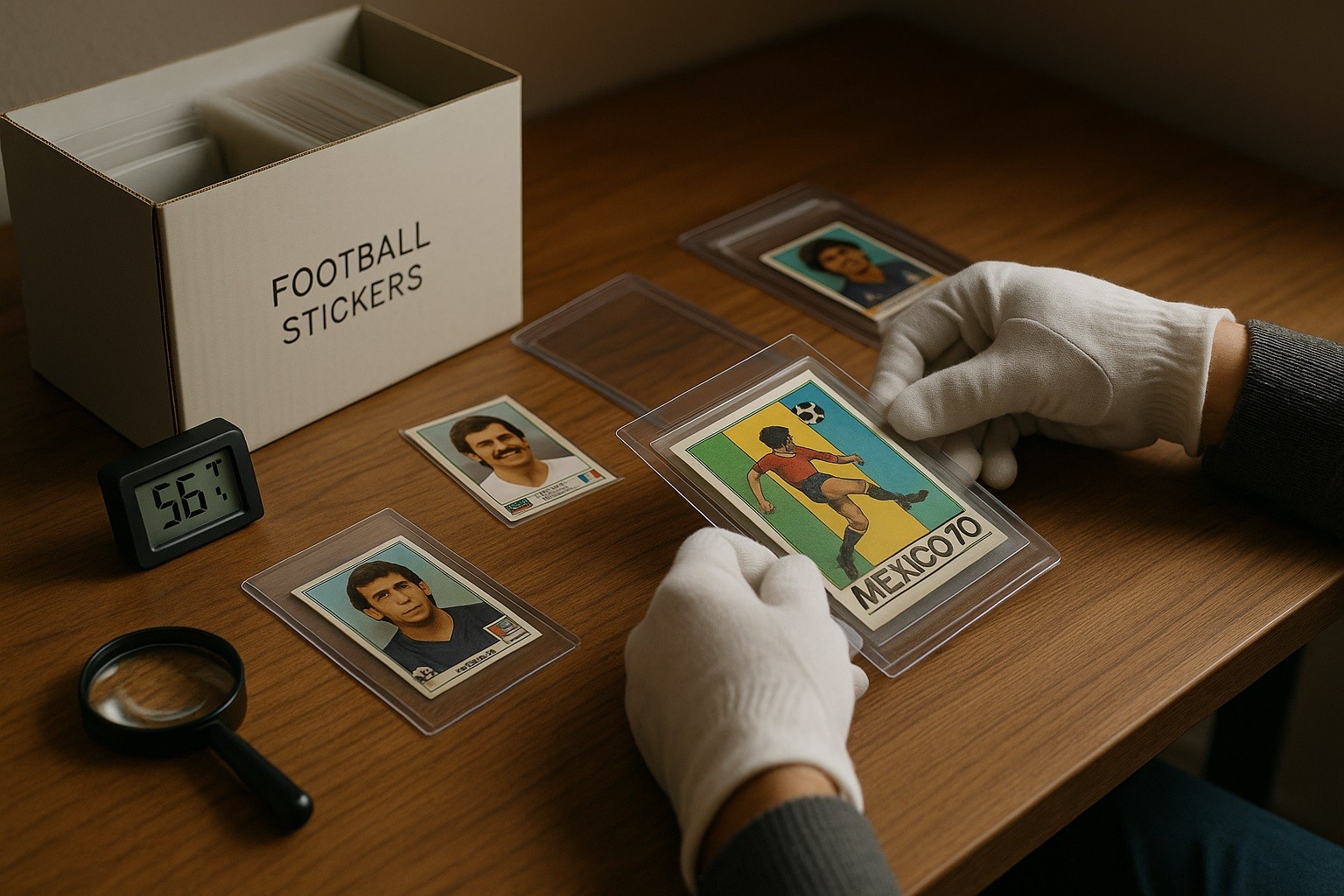
Stabilize around 18–21 °C and ~50% RH. Paper products are sensitive to moisture and heat.
Use archival-safe, acid-free materials. Store graded slabs upright in a dark cabinet.
Avoid direct sunlight to prevent fading.
Cotton gloves and minimal handling reduce edge wear and surface marks.
Common Myths to Avoid
“Every Messi 2014 World Cup sticker is worth a fortune.” Most modern mass-market World Cup stickers are common. Only the highest grades or special variants move the needle, and public guides show modest prices for typical graded examples. Verify with transparent price trackers rather than anecdotes.
“Error stickers are always gold.” Some misprints sell well, but the market is inconsistent and depends on demand for the specific error. Treat forum chatter as anecdotal and confirm with hard auction data.
Why Acquire These Relics?
- Documented scarcity: Early/domestic stickers were stuck into albums. High-grade loose survivors are few. PSA/BGS populations confirm it. Scarce supply supports prices.
- Cultural significance: Maradona ’79, early Zidane/Ronaldo, Mexico 70—all tie to defining eras. You’re buying sports history, not a fad.
- Liquidity with receipts: Blue-chip stickers have public auction comps. That makes entry/exit easier than niche collectibles with opaque pricing.
- Asymmetric upside: Condition rarity (e.g., PSA 9–10) can behave like a “small cap” with outsized moves when demand spikes around anniversaries, documentaries, or World Cups.
- Diversification: Paper soccer ephemera doesn’t move perfectly with modern trading cards, sneakers, or crypto. It can balance a broader alt-collectibles basket.
- Global demand: Football is universal. Interest isn’t confined to one country, which widens the buyer base when you sell.
- Provenance and verification: Grading serials and auction catalogs creates a paper trail. That reduces fraud risk versus raw “internet finds.”
- Enjoyment and display: They look great framed or slabbed. The “collector dividend” (daily enjoyment) is real, even if prices are flat for a while.
Bottom Line
Focus on regional issues, early-career appearances, and documented high-grade scarcity. Confirm with population data and auction records, not hearsay.
The hobby’s true relics show the same pattern: narrower original distribution, heavy album usage, and very few pristine survivors.
That is why they became relics—and why careful verification and storage are your best edge as a collector.