Football in Brazil is more than a sport; it defines national character. The phrase football as a pillar of Brazilian National Identity shows its link to culture and unity.
From local fields to world arenas, football shaped Brazil’s image at home and abroad. This article explores history, culture, politics, and society in football’s role as identity.
Origins of Football in Brazil
The beginnings of football in Brazil trace back to the late 19th century. What started as an elite game soon became a sport for the masses.
Football did not start as a mass sport in Brazil. It was first introduced in the late 19th century by British expatriates and young Brazilians who studied abroad.
Early matches were played within elite schools and clubs, creating a sense of exclusivity. Over time, football spread to working-class communities, breaking class barriers.
- Early games were organized in São Paulo and Rio de Janeiro.
- Charles Miller, a Brazilian of British descent, was key in introducing the sport.
- Clubs quickly formed, bringing together diverse groups of players.
- By the early 20th century, football became a common activity for all social classes.

Football and Nationalism
National identity and football soon became inseparable. The state recognized the unifying power of football and used it to strengthen patriotism.
In the 1930s and 1940s, Getúlio Vargas promoted football as part of his nationalist agenda. Victories and defeats on the field carried national meaning, linking sport with pride.
- Football matches were used as political tools.
- The national team became a symbol of unity.
- World Cup participation reinforced international recognition.
- Football victories created collective celebrations across Brazil.
The World Cup Legacy
Brazil’s journey through the World Cup shaped both victory and resilience. The tournament became central to the nation’s global image.
Brazil’s Early Experiences
World Cup participation gave Brazil visibility and pride. The 1950 Maracanazo defeat was a national trauma, remembered as a painful moment.
Yet, it shaped resilience and fueled future success. Football began to define Brazil’s global identity.
Brazil’s Golden Era
The 1958, 1962, and 1970 World Cup victories created national heroes. Pelé became a worldwide symbol of talent and joy.
These wins made football central to Brazil’s story of excellence. Generations still look back at these titles as moments of unity.
Brazil’s Five Titles
Brazil remains the only nation with five World Cup titles. Each victory reinforced the bond between football and national pride.
The achievements confirmed Brazil as the “land of football.” The World Cup remains a powerful narrative of identity.
Icons and Heroes of Brazilian Football
Players became more than athletes; they became cultural figures. Pelé, Garrincha, Socrates, Ronaldo, and Neymar represent different eras of pride.
Each carried the responsibility of national hope during tournaments. Their stories inspire identity, resilience, and joy.
- Pelé embodied excellence and international recognition.
- Garrincha represented struggle and resilience.
- Ronaldo showed recovery after setbacks.
- Neymar symbolizes modern football culture in Brazil.
Race and Social Inclusion in Football
Football played a major role in breaking racial barriers. Afro-Brazilians found recognition through success on the pitch.
The sport gave visibility to marginalized communities and changed perceptions of identity. Still, debates about racism remain active today.
- Early players of African descent faced exclusion.
- Stars like Pelé broke barriers and reshaped identity.
- Football gave representation to Afro-Brazilian culture.
- Stadiums became places where racial pride was celebrated.
Football and Brazilian Culture
Brazilian culture is inseparable from football traditions. Music, festivals, and art have all embraced the sport.
Cultural Expressions
Football connects naturally with samba and Carnival. Stadium chants resemble the rhythm and energy of street celebrations.
Cultural events often merge with football celebrations. These traditions reinforce football’s place in daily life.
Stadiums as Cultural Temples
Stadiums are more than sports arenas; they are cultural symbols. The Maracanã in Rio de Janeiro is known worldwide.
Fans see stadiums as sacred spaces of unity. Matches there become national rituals.
Football in Art and Media
Films, songs, and literature consistently include football. Writers and musicians capture the passion of the sport.
Artistic portrayals show football as part of everyday Brazilian stories. Football serves as cultural expression beyond the pitch.
Political and Social Influence of Football
Governments often used football to promote agendas. During dictatorships, victories were framed as national triumphs.
Football unified Brazilians during times of crisis. However, manipulation of football for political gain sparked criticism.
- Political regimes celebrated victories to legitimize authority.
- Famous matches became part of political narratives.
- Fans experienced unity despite political tension.
- Football sometimes overshadowed social struggles.
Economic Dimension of Football
Football is both passion and industry in Brazil. Clubs generate major revenue, and players represent valuable exports.
Many athletes leave to play abroad, strengthening Brazil’s global reach. Yet, inequality in leagues remains an issue.
- Local clubs drive community pride and economy.
- International transfers create opportunities for players.
- Football remains a source of national revenue.
- Financial scandals reveal structural weaknesses.
Brazil’s Global Image Through Football
Brazil’s international reputation is built on football. Victories and hosting tournaments shaped the nation’s global identity.
Brazil as the Land of Football
The world views Brazil as synonymous with football. This reputation serves as soft power in international relations.
Brazil is admired for creativity and talent on the pitch. Football has become a global cultural brand.
The 2014 World Cup
Hosting the World Cup was a proud yet controversial moment. Brazil showcased infrastructure and passion for the sport.
However, protests against costs highlighted social inequality. The event revealed both pride and conflict.
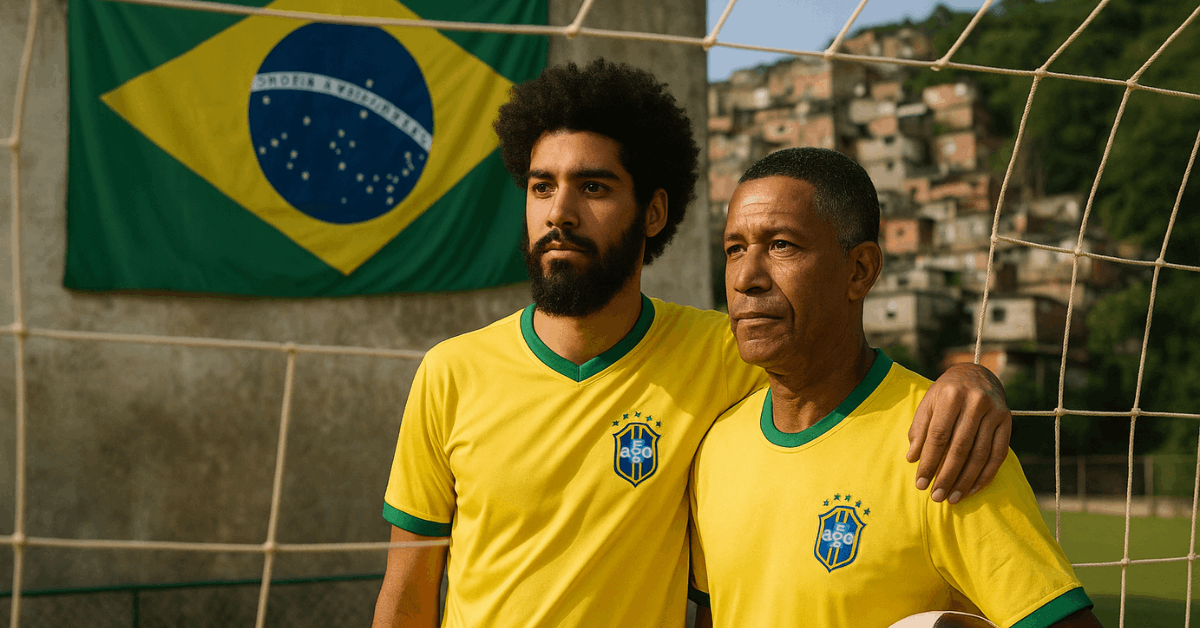
Football and Community Identity.
Local clubs hold strong influence over communities. Rivalries such as Flamengo vs. Fluminense or Corinthians vs. Palmeiras fuel pride.
Grassroots football in favelas builds opportunities for youth. Women’s football is expanding representation in recent years.
- Clubs shape regional identity and culture.
- Rivalries deepen passion and tradition.
- Community fields inspire young players.
- Women’s teams broaden the meaning of football identity.
Football in Modern Brazilian Identity
Football continues to adapt to globalization and media. Social media allows players to connect directly with fans.
Younger generations see football as entertainment and career aspiration. The sport remains a unifying force across Brazil.
- Technology shapes fan experiences.
- Global brands influence local clubs.
- Youth integrate football into digital culture.
- Identity remains rooted in passion for the game.
Challenges in Brazilian Football
Despite its influence, football faces challenges. Corruption scandals damaged trust in institutions.
Inequality between clubs weakens competitiveness. Some argue football dominates culture too heavily.
- Corruption in governance remains a concern.
- Economic disparity affects small clubs.
- Players face national pressure at every tournament.
- Debate continues on football’s dominance in identity.
Final Thoughts: Football as Brazil’s Living Symbol
Football will always be tied to Brazil’s story of identity. The phrase football as a pillar of Brazilian National Identity reflects both history and culture.
Victories, defeats, heroes, and rituals have shaped Brazil’s national pride. Despite challenges, football remains a living symbol of unity and representation for future generations.