Football’s greatest post-goal moments turn raw emotion into images that live forever in collective memory. This list explores the most creative goal celebrations ever seen, focusing on why each idea worked and how it spread across the world.
The celebrations chosen here appear regularly in official highlight packages, federation retrospectives, and museum programs. Their persistence across platforms shows that creativity in sport can be documented and verified just like statistics.
Together they map how a brief performance can echo through decades and inspire new variations.
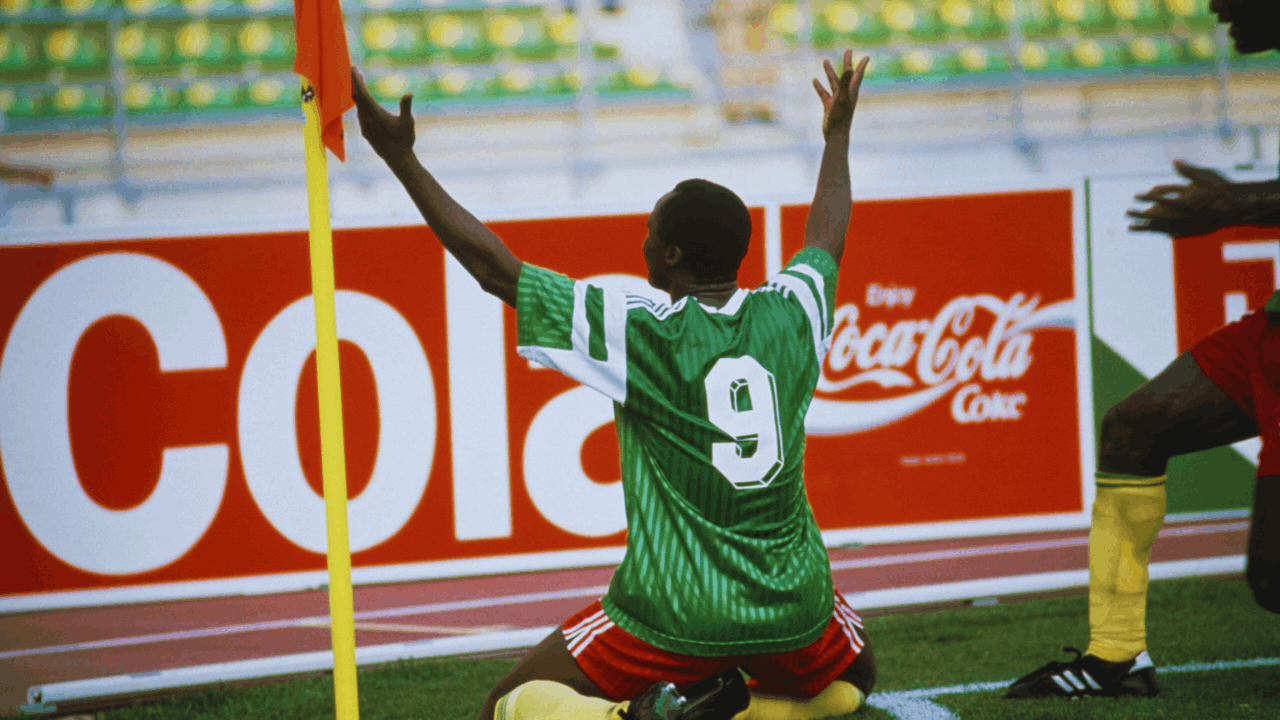
Roger Milla’s Corner-Flag Dance (Cameroon, 1990)
Roger Milla’s joyous steps around the corner flag at the 1990 World Cup reframed the touchline as a stage. The rhythm and smile translated across languages, making celebration itself the headline as Cameroon stunned the tournament.
His routine felt spontaneous yet perfectly framed for television, which helped it become endlessly replayable. Creativity here came from turning a functional field marker into a prop for a nation’s delight.
The dance also widened the lens on African football by linking athletic success to cultural expression. Supporters could copy the move without any equipment, and broadcasters could center it in replays without extra context.
That accessibility helped the dance become a shorthand for underdog belief and exuberant style. Decades later, the corner flag still invites choreography because Milla proved it could hold a spotlight.
Bebeto’s Baby-Cradle Tribute (Brazil, 1994)
Bebeto rocked his arms as if holding a newborn, and teammates joined in to mark a life milestone on the world stage. The gesture was simple, legible, and immediately human, connecting family joy to competitive triumph.
Because anyone could mimic it, the move jumped from stadiums to playgrounds within days. Its creativity lay in emotional clarity and the way private happiness became a universal football language.
The cradle also demonstrated how a celebration can communicate without words or national translation. Viewers understood the meaning instantly and felt invited into the player’s personal narrative.
That combination of intimacy and spectacle strengthened the bond between squad and supporters. In subsequent tournaments, many players saluted family moments precisely because this template showed the power of sincerity.
Marco Tardelli’s Primal Scream (Italy, 1982)
Marco Tardelli sprinted with fists pumping and face contorted, a portrait of victory stripped to pure feeling. There were no props, choreography, or premeditation, only a surge that matched the scale of a World Cup final.
Photographers captured the expression mid-motion, turning a soundless image into a timeless roar. The creativity was in radical minimalism, proving unfiltered emotion can be the most cinematic act of all.
Because it lacked a rehearsed routine, the image invited endless retellings in print and documentary form. Editors could freeze the frame and still convey the entire arc of the match and the moment.
Fans remember the goal through the celebration, not the other way around, which is rare and revealing. That inversion teaches that authenticity can defeat any more elaborate stagecraft when the stakes are at their highest.
Paul Gascoigne’s “Dentist Chair” (England, 1996)
After a dazzling goal at EURO ’96, Paul Gascoigne reclined as teammates sprayed water, parodying a pre-tournament tabloid story. By flipping controversy into comedy, he reclaimed the narrative with timing that matched the nation’s live TV gaze.
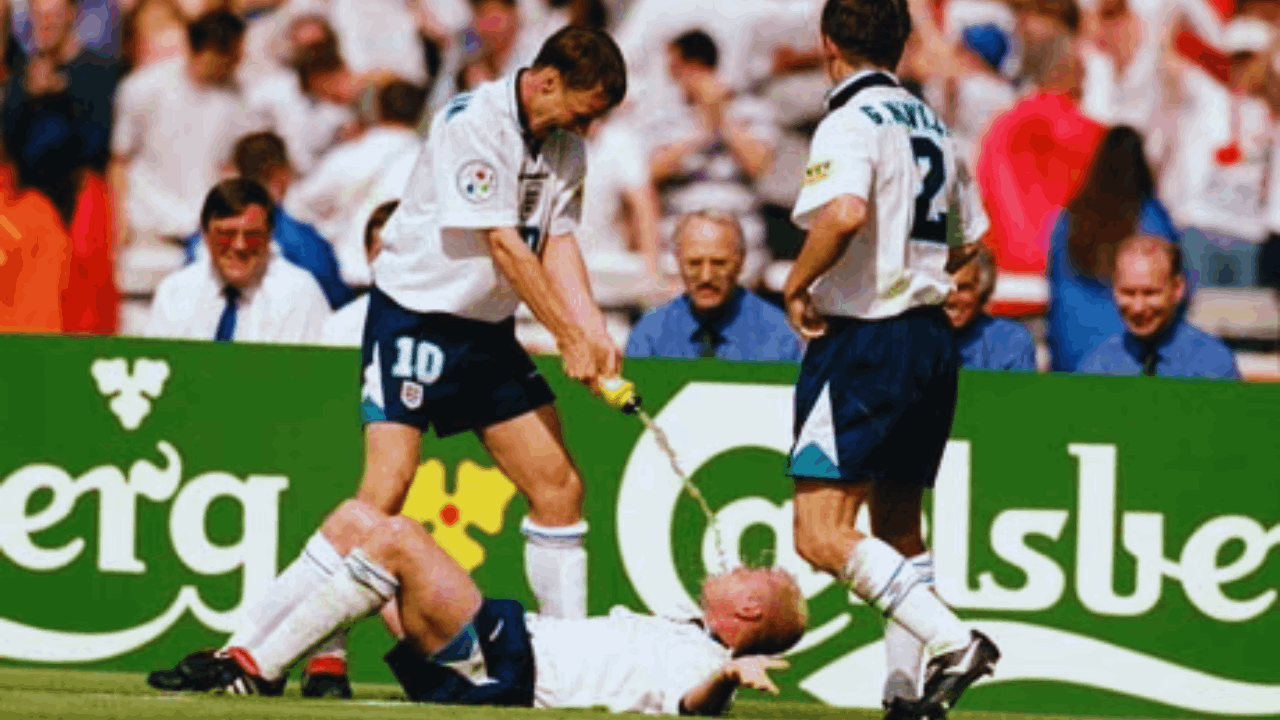
The celebration stitched wit to skill, anchoring a highlight that still defines the tournament’s spirit. Its creativity sprang from self-aware theater executed in the exact second the joke would land.
The routine also underlined how celebrations can act as public relations in miniature. A playful reference, delivered at speed, can neutralize noise and recast a headline in the player’s voice.
Crowds recognized the reference instantly and applauded the transformation of criticism into laughter. That alchemy turned a match clip into cultural memory and set a template for future tongue-in-cheek tributes.
Peter Crouch’s “Robot” Dance (England, 2006)
Peter Crouch leaned into playful awkwardness, unveiling a robotic dance that contrasted delightfully with his towering frame. Because the movement was goofy and repeatable, it became a signature fans awaited and imitated.
He revived it across years, proving a celebration can be a brand when the performer owns the bit. The creativity came from self-parody, timing, and a move readable from the back row of any stand.
The “robot” also thrived because broadcasters could show it in full without cutting away. Its clean silhouette worked in wide shots and phone screens, which made sharing effortless.
Children copied it at training, and opposing fans recognized it instantly, which widened its reach. By controlling the punchline, Crouch showed how a lighthearted persona can amplify a scorer’s identity.
Brandi Chastain’s Jersey-Swinging Release (USA, 1999)
Brandi Chastain ripped off her jersey after the decisive penalty in the Women’s World Cup Final and dropped to her knees in catharsis. The pose became an instant emblem of ambition, pressure, and relief in women’s sport.
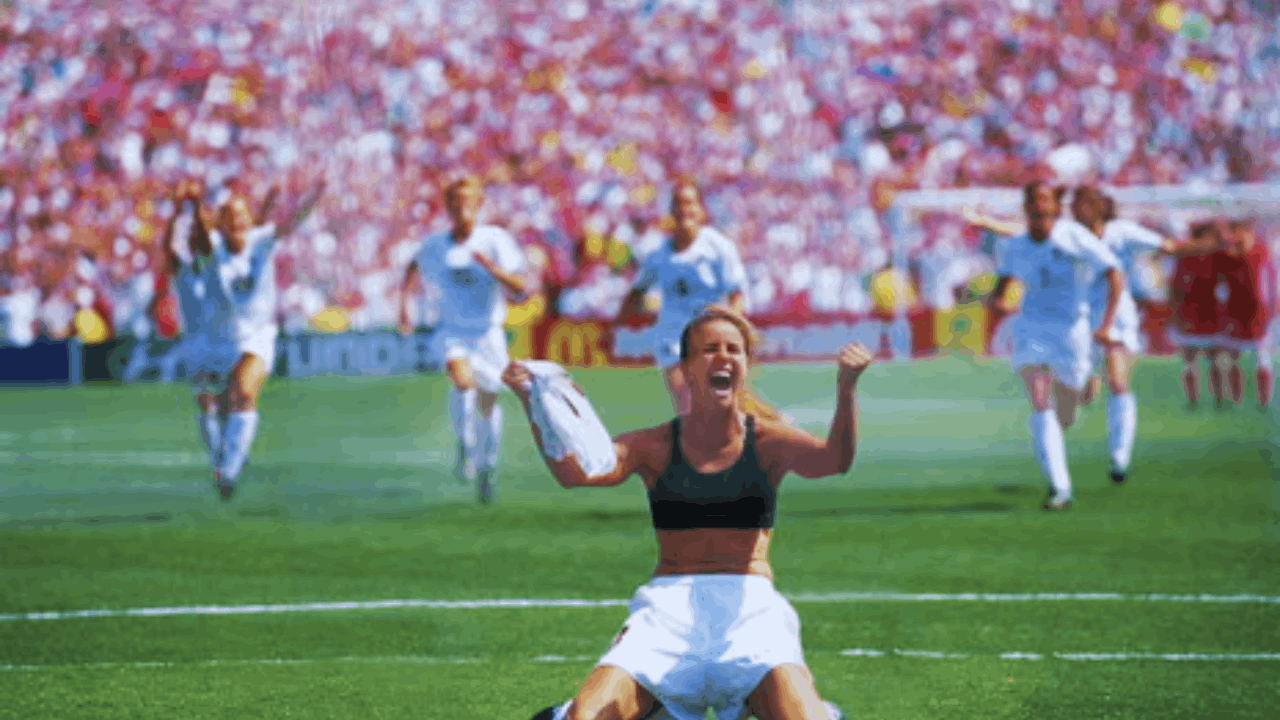
It challenged visual norms while remaining a pure, honest response to a career-defining moment. Creativity here meant breaking the frame of expectation and turning triumph into an icon of empowerment.
The photograph from that instant entered newspapers, school projects, and later museum walls as a lesson in possibility. Because the setting was a final, the image carried institutional weight beyond a single match.
Young athletes saw themselves in the posture of victory and the acceptance of emotion. The result was a celebration that traveled as both a sports memory and a cultural milestone.
Cristiano Ronaldo’s “Siuuu” Leap and Pose
Cristiano Ronaldo’s celebration combines a mid-air spin, a broad landing stance, and the shouted syllable fans echo back to him. The sequence is modular and unmistakable, which is why it scales from local clips to global broadcasts.
Over time it evolved into a signature that arenas anticipate and mirror in unison. Its creativity rests on minimal choreography with maximum audio-visual punch and instant attribution.
Because it is repeatable on demand, the move also functions as a live feedback loop with supporters. The sound becomes part of the stadium soundscape, and the silhouette becomes part of the club’s highlight language.
Sponsors and broadcasters can frame it cleanly, keeping associations tight and consistent. Few celebrations tie sound, shape, and star so neatly, which is why it remains durable.
Erling Haaland’s Meditation Pose
Erling Haaland chose stillness after explosive goals, sitting cross-legged to signal calm amid chaos. The contrast between power and poise photographed perfectly, turning a moment of quiet into a generational calling card.
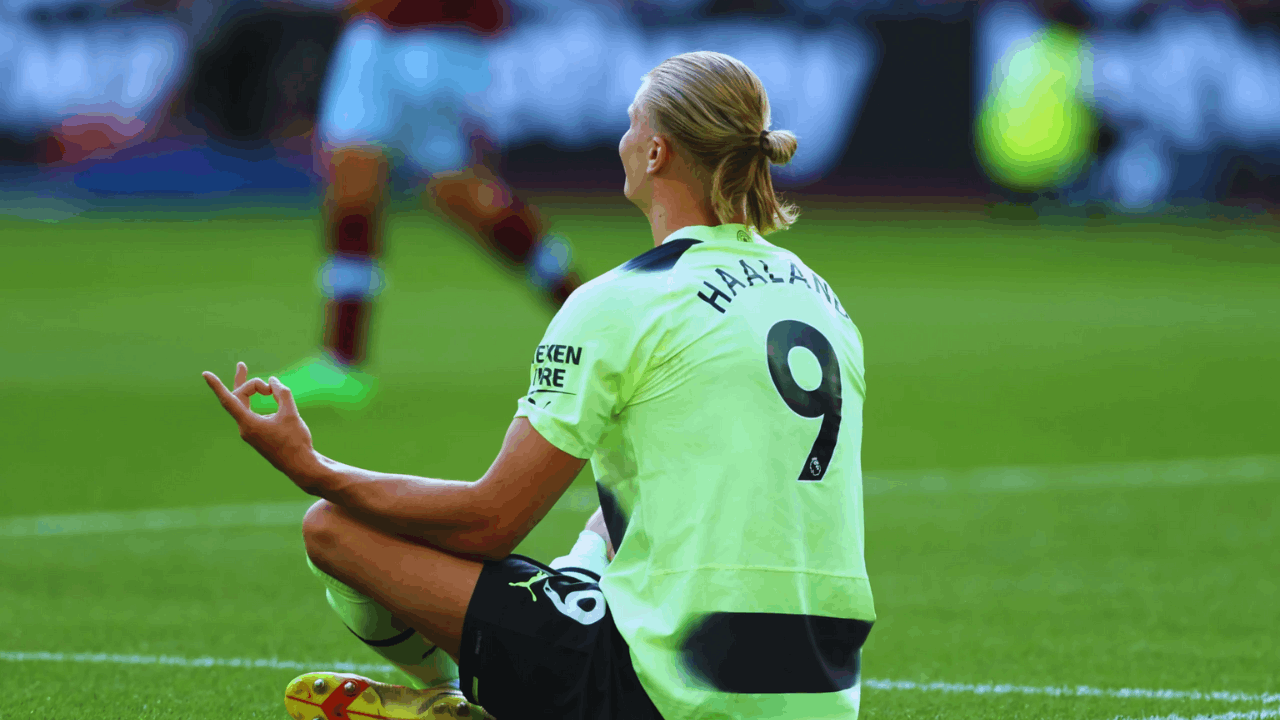
Mindfulness as message felt modern, and the silhouette worked as a clean graphic across media. Creativity arrived through restraint, using silence as spectacle in a space usually filled with noise.
The pose also suggested focus on process rather than pure celebration, which resonated with younger viewers. Coaches and commentators could discuss mentality without leaving the highlight reel, creating a bridge between performance and psychology.
That educational undertone gave the gesture staying power beyond novelty. As a result, the motif keeps resurfacing whenever a rising scorer wants to project control.
Stjarnan’s Full-Team Theater (Iceland, 2010s)
Iceland’s Stjarnan staged choreographed vignettes that transformed celebrations into tiny sketches with ensemble timing. Players “reeled in” a teammate like a fish or formed a human bicycle, treating the pitch as a playful set.
These routines demanded rehearsal, trust, and comic beats aligned to live sport’s unpredictability. The creativity was collective, proving choreography can thrive without draining spontaneity from the game.
Because the ideas relied on group coordination, they turned any scorer into a director among friends. The club embraced creativity as a brand, and media outlets amplified the novelty far beyond domestic audiences.
Opponents rarely reacted negatively because the tone stayed affectionate rather than mocking. Over time, the team’s reputation demonstrated that community humor can coexist with competitive seriousness.
Mario Balotelli’s “Why Always Me?” Reveal (Manchester City, 2011)
Mario Balotelli lifted his shirt to unveil a line that answered weeks of headlines with a wink. The message was short, readable, and perfectly synced to a derby broadcast’s close-up grammar.
Because it required no movement, the image froze into a meme the instant cameras found him. Its creativity lay in premeditated simplicity and the power of five words to frame an entire match.
The reveal also displayed the theatrical sense to anticipate a moment and stage-manage its afterlife. It showed that planning can coexist with spontaneity if the execution feels true to character.
Fans and commentators repeated the line more than the scoreline, which proves its narrative force. The lesson is that a single line, well timed, can outlast a thousand chants.
Conclusion
These vignettes show how a score can instantly become performance, memory, and cultural signal. The canon of the most creative goal celebrations ever seen spans dances, poses, jokes, and primal releases that audiences never tire of revisiting.
Each endures because idea, timing, and camera met in perfect alignment and left nothing to explain. As the game evolves, the next unforgettable celebration will again be the one that feels inevitable the moment it happens.