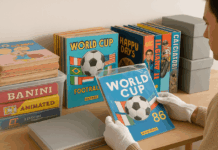
Collecting football sticker albums is a regional tradition as much as it is a global hobby.
Scarcity usually came from short print runs, fragile paper, or publishers that disappeared.
Below is a documented tour of notable regional albums and why many collectors now treat them as rarities.
Italy’s “Calciatori”: The National Series That Birthed a Collecting Culture
Panini’s Calciatori began in the 1961–62 season and became the baseline for league-focused albums.
Early issues are sought after due to age and incomplete survival rates.
Public histories confirm the series’ origin and annual continuity, making early intact examples especially desirable among collectors.
World Cup albums often dominate headlines, but Calciatori shows how a domestic league set can become a regional classic.
Peru’s Navarrete: Local Publishers and Limited Runs
In Peru, the collecting scene has long included Editorial Navarrete, which produced football albums for World Cups and domestic themes from the 1970s onward.
A Mexico 1970 album circulating among Peruvians at the time was not a Navarrete product—evidence of how regional access and reprints varied.
These distinctions matter to collectors who track original local issues vs. later reproductions.
Contemporary reporting on Peruvian collectors also underscores the tradition of hunting older Navarrete or local sets.
Chile’s Salo: A National League Time Capsule
Chile’s publisher Salo issued albums tied to the Campeonato Nacional and to club campaigns in the late 1990s and 2000s.
With Salo no longer operating, surviving albums—especially complete ones—regularly circulate among collectors and specialist resellers.
Listings and specialist stores document titles like “Fútbol 98 / Campeonato Nacional (Salo, 1999)” and other league-year sets.
Because Salo’s issues captured domestic squads in specific seasons, they function as snapshot archives of Chilean football.
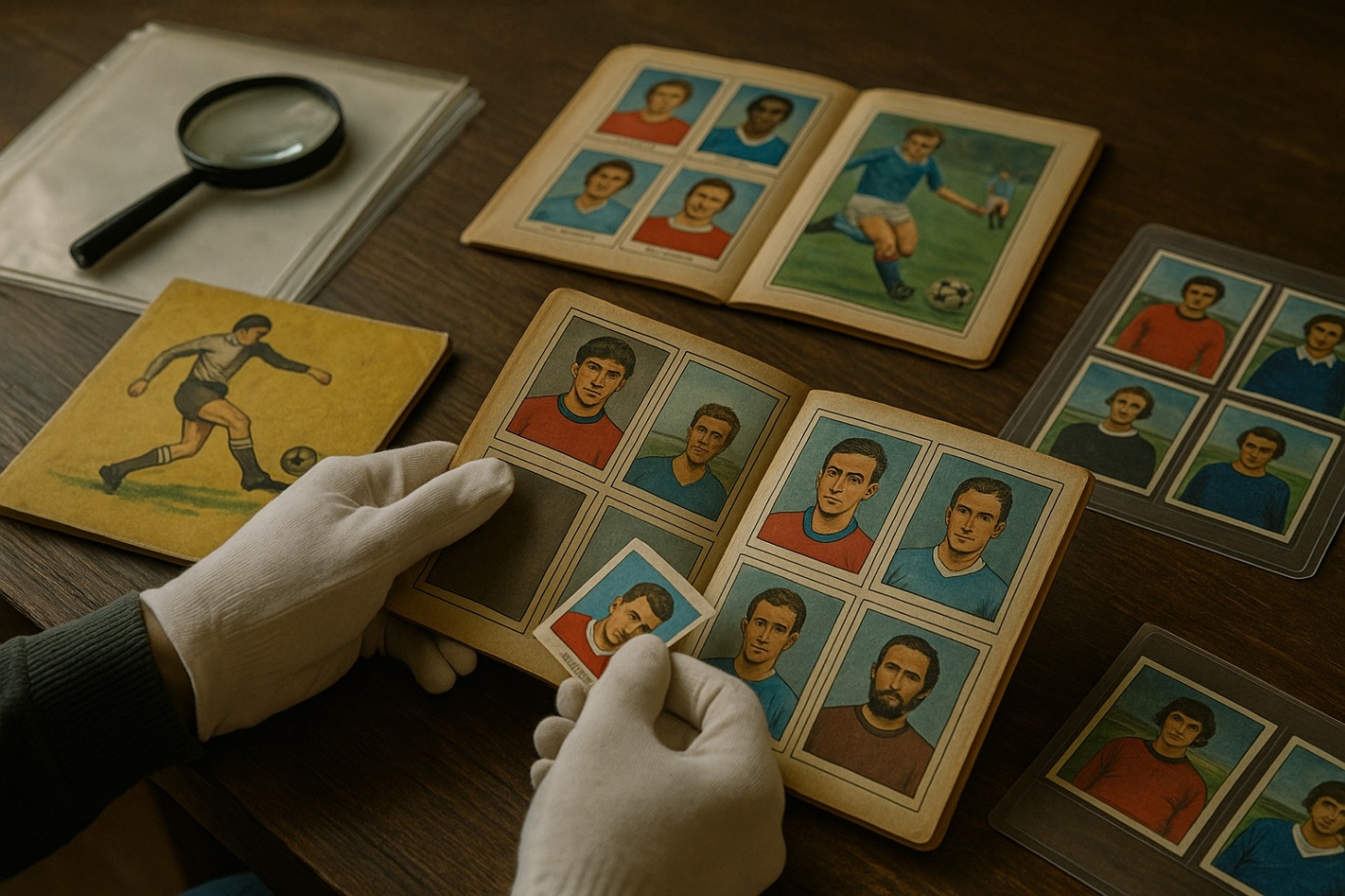
United Kingdom’s FKS: Regional Publisher, Rnduring Scarcity
Before Panini fully dominated the UK, FKS Publishers produced “The Wonderful World of Soccer Stars” and other albums (1967–1982).
Documentation from collector sites details that stickers were printed in Spain while albums were often printed in England, leading to interest specialists.
Independent retrospectives also show how FKS albums doubled as season chronicles (e.g., recaps of European competitions in 1969/70), tying their appeal to a British football context.
The content depth, coupled with condition attrition, explains ongoing collector interest and pricing for complete, clean copies.
Argentina: Beyond Panini—Local Themes and Singular Icons
The 1990s album “Aprende a jugar fútbol con Diego Maradona” (Ultra Figus), a didactic 200-sticker set built around skill instruction by Maradona.
Reporting traces how the concept was developed with “Maradona Producciones,” highlighting its distinct format and cult appeal among collectors today.
Mainstream Panini issues tied to Argentina 1978 remain widely known, but collectors are careful to distinguish originals from reprints or replica editions.
That distinction—original versus later reproduction—is critical when assessing rarity and value for the Argentine market.
Regional Variations and Print Differences: Mexico 1970
World Cup albums can have regional variants and edition differences that affect scarcity.
The Panini Mexico 1970 album, for example, is well-documented in FIFA’s official collecting portal and by hobby guides.
Collectors note edition-level nuances (e.g., “International/UK” versions) that ripple through availability and pricing in different markets.
Knowing which version one owns—and whether it was distributed locally at the time—often determines whether the item is common or a regional rarity.
Why Regional Albums Become Rare
Across Latin America and Europe, publishers issued local or country-specific albums that later turned into hard-to-find pieces.
Short runs and fragile formats
Local publishers typically printed modest quantities, and albums were used by children, glued, and carried around, reducing the survival rate.
Overviews of FKS and histories of early Panini reinforce the attrition story: many albums survive, but few are intact and clean.
Publisher closures and rights changes
When companies like Salo closed, no new stock entered the market. As decades pass, complete albums with all stickers become scarcer.
This dynamic is visible in current specialty listings for older Salo sets and Chilean league albums.
Regional distribution gaps
In countries where an official World Cup or league album was not widely distributed in real time, surviving copies in that region can be unusually rare.
The Mexico-70/Peru notes illustrate how local markets sometimes relied on alternative albums, shaping what later counts as a “local rarity.”
How Collectors Authenticate and Appraise
Check for Panini, FKS, Salo, Navarrete, or other imprints on the back cover or title page. Use trusted checklists or galleries that document year-by-year albums.
Original paper stock, print smell, and period typography can differ; official guides and experienced collectors warn against conflating replicas with originals.
Albums with neat placement, minimal writing, and intact spines command premiums.
Use long-running collector resources and historical write-ups to confirm year, page counts, and typical sticker totals.
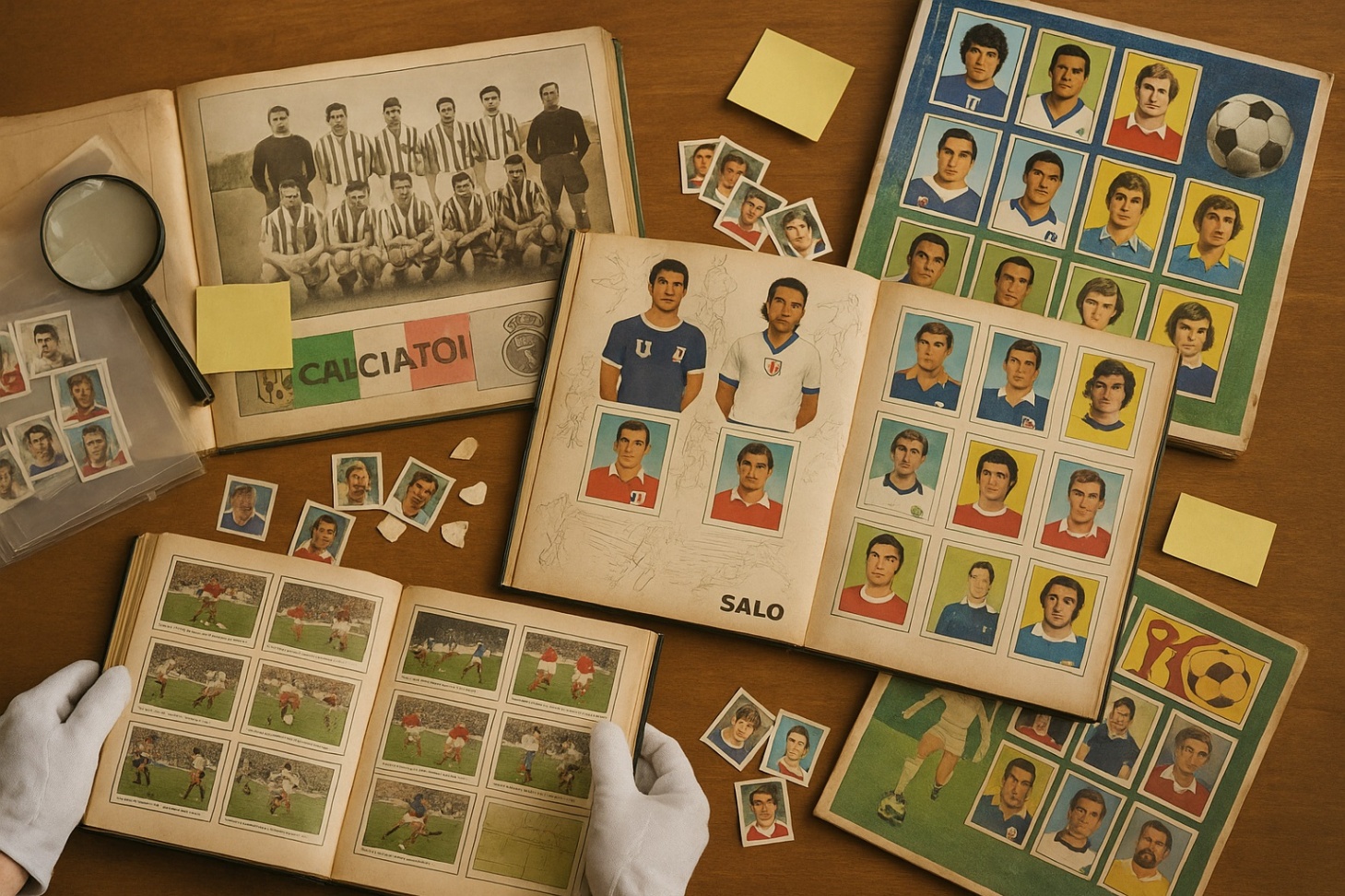
Practical Tips for Building a Regional Rarity Set
- Document provenance. Keep scans of covers and key pages. Record purchase dates and sellers to help future appraisal and resale.
- Favor completeness and authenticity. When possible, choose albums complete with original stickers from the period; verify that pages and inserts match known checklists.
- Network locally. In markets like Peru or Chile, specialist groups and shops still surface regional items; these communities often know the telltale signs of reprints or non-period issues.
- Condition over speed. Many of these albums appear sporadically. Waiting for a better-preserved copy is often the right call, given how much condition affects long-term value—especially for FKS and early Panini.
Bottom Line
Regional football albums turn into rarities when local printings, publisher histories, and distribution quirks converge.
Italy’s Calciatori established the league-album template; Peru’s Navarrete and Chile’s Salo stamped national identity onto the format.
Knowing which edition you hold, how it was distributed, and whether it’s an original, complete copy is the difference.