You see the finished album and the shiny foils. Behind it sits a tight, industrial workflow.
It starts years before the first pack hits a kiosk. It ends when you place the last sticker.
Here is how the World Cup album actually comes together, step by step.
The Concept and The Rights
You need a license before you print a single crest. Panini has produced official World Cup albums since 1970.
The company negotiates image and branding rights with FIFA. Those contracts unlock player portraits, team logos, kits, and tournament marks.
Planning begins well ahead of the tournament. Editors outline set size, teams, and special subsets.
The checklist guides capacity planning, materials ordering, and distribution targets. Everyone works backward from this master list.
Getting The Images Right
You cannot fill pages without consistent headshots and clean art. The result is a clean, consistent portrait set that fits the album grid.
Federations supply official photos. Panini also runs controlled shoots to standardize lighting and framing.
The goal is uniformity across countries and positions. You want a fixed crop, a neutral background, and the current kit.
Image editors do practical tweaks only. They balance exposure. They correct the color. They align crops to a template.
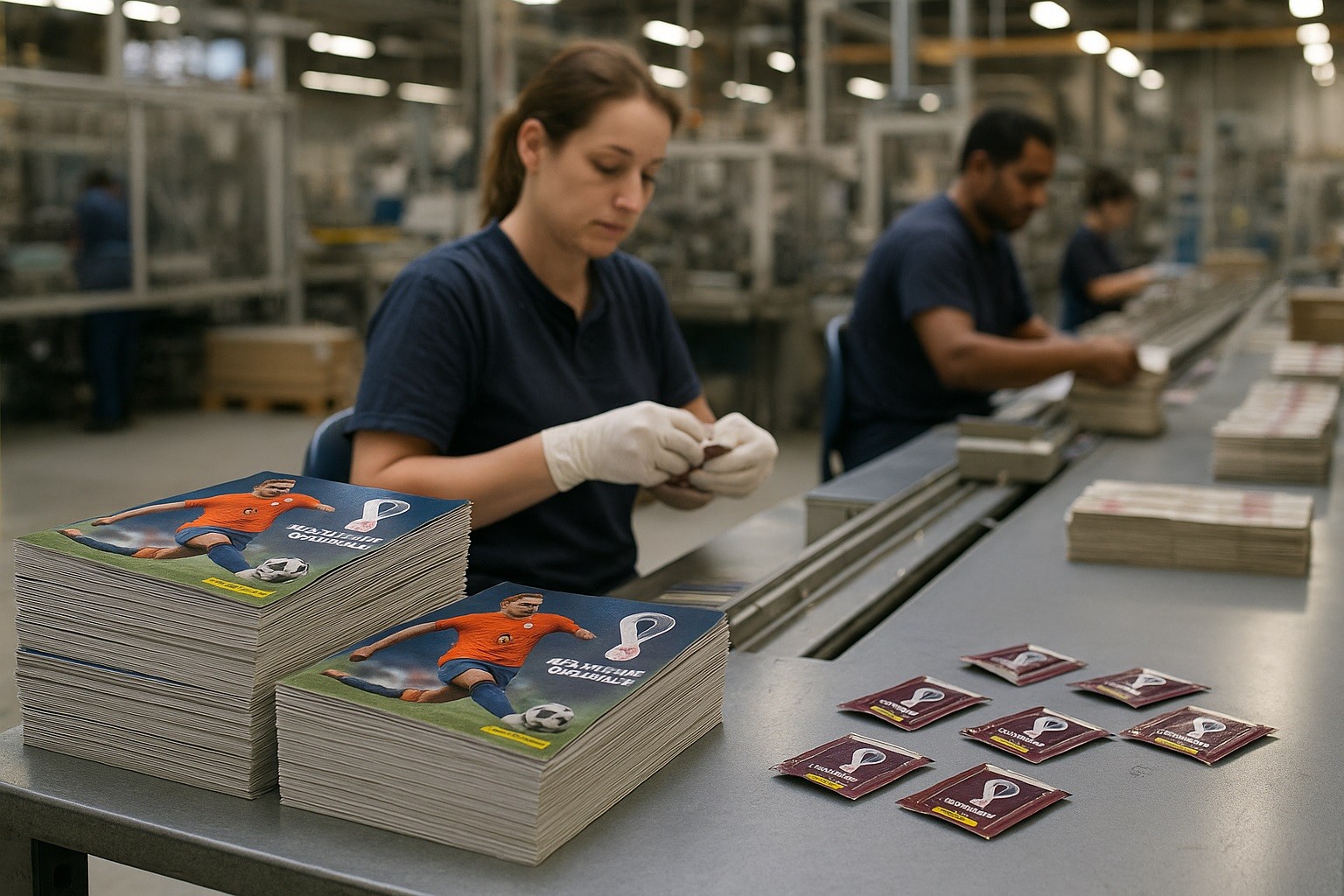
From Files to Paper: Printing at Scale
World Cup cycles demand industrial capacity. Once the files lock, the prepress team imposes sticker images onto large sheets.
Printers run long hours at peak. Paper selection is strict. The stock must hold color, resist curling, and cut cleanly.
Color management is constant. Operators track density with spectrophotometers. They check for banding, moiré, and misregistration.
Printing does not happen in one place only. Headquarters in Italy anchors planning. Regional facilities handle local demand when needed.
The Cut and The Collation
Cutting turns sheets into individual stickers. Guillotines or rotary cutters slice along guide lines. Tolerances are tight.
A fraction of a millimeter matters for border symmetry. Misaligned cuts get rejected to protect the collector experience.
Sensors count the feed. The machine seals five stickers per pack. Randomization is designed, not improvised.
They spot-open cartons for verification. Any anomaly triggers a line stop. The process is repetitive by design. Stability is the goal.
Albums, Subsets, and Set Architecture
A modern album includes each qualified team, a team logo foil, a team photo, and a fixed number of player portraits.
There are sections for tournament venues, official emblems, and special inserts. The structure matters. It sets your chase plan and trade lists.
Foils add complexity with different films and stamping dies. They require separate runs and a longer setup. Schedules account for this bottleneck.
Managers stagger foil production to feed packout without starving the baselines. Poor sequencing would leave pallets short on inserts.
How Many Packs, and Where Do They Go
Shipments ramp months before the tournament. Distributors forecast by region using historical sales, population, and retail coverage.
They lock preorders with chains and kiosks. They hold safety stock for early surges. They also plan replenishment windows during group stages.
Boxes are labeled by market. Language on wrappers follows local rules. Prices vary by country and currency. Logistics partners book capacity on trucks and planes.
Customs paperwork travels ahead to reduce clearance delays. Timing is precise. A missed window during tournament hype costs real volume.
What Happens When Demand Explodes
Hot cycles create shortages. Retailers sell out. Resellers raise prices. Social media accelerates the spike.
Adults who collected as kids join in again, and kids recruit parents. The system can catch up, but print lines and foil bottlenecks limit instant expansion.
Public attention changes everything. Stories about lines, swap meets, and empty stores push more people to try the product.
That increases pressure on distribution. Wholesalers prioritise long-standing accounts. Small shops wait longer.
Quality Control and Authenticity
Factories run constant checks: print, cut, count, seal. Boxes trace to batches. Retailers receive labeled cartons with dates and lot numbers.
If you plan to resell or trade at scale, keep your outer packaging. It helps confirm authenticity and storage conditions.
Counterfeits exist in any mass collectible market. The defense is simple. Buy from authorized retailers. Inspect print quality and cut.
Why the Album Still Wins in a Digital Age
Checklists live on your phone now. Communities trade online. But the core ritual is physical.
Opening a pack connects you to the tournament schedule. You meet others at swap spots or in local groups.
The product is built around that habit: five per pack, randomized collation, a large set, and a narrow seasonal window.
The album layout gives you a shared language for trading. That loop keeps the brand strong across generations.
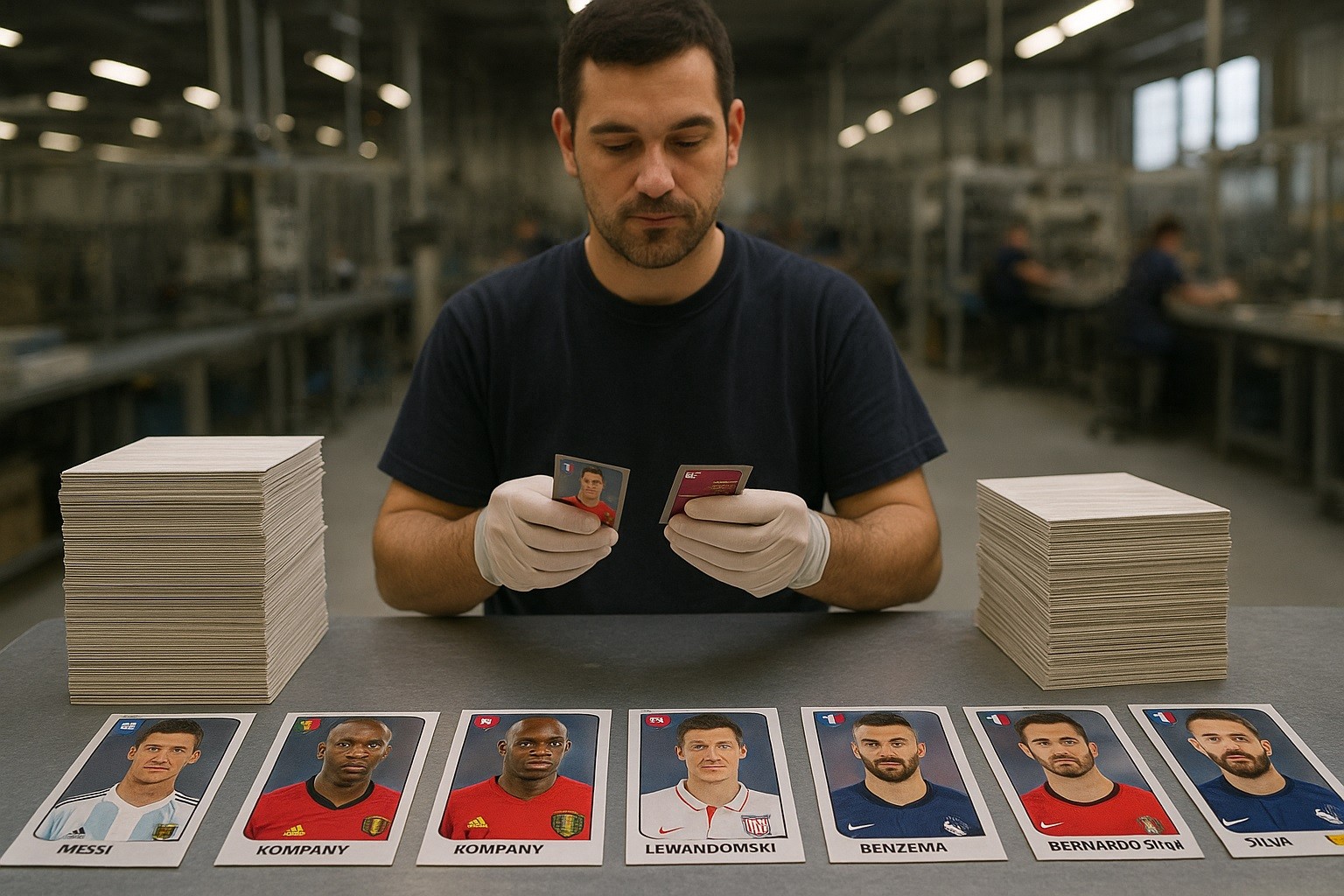
The Human Factor on The Factory Floor
Look at any inside-the-plant coverage and you see the same core steps.
- Stacks of cut stickers.
- Operators at feed stations.
- Quality technicians sampling packs.
- Pallets wrapped for shipment.
It is repetitive, timed, and exacting. People keep the rhythm while machines keep the count.
Experienced operators spot problems fast. Training and checklists back them up, but attention makes the difference.
Conclusion
You are not just buying paper. You are buying a coordinated manufacturing run tied to a global sports calendar. The license frames the project.
The image pipeline sets the look. Printing, cutting, and engineered mixing create the chase.
Distribution and demand shocks decide how easily you find packs. Trading and “missing sticker” services close the loop.