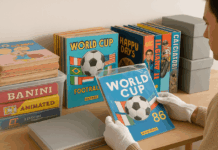
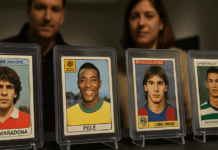
Collecting and swapping football stickers is a simple ritual with a long memory.
Children and adults meet at school gates, park benches, and weekend swap meets to trade duplicates and chase the last missing badge or striker.
The habit crosses borders and generations. It blends play, math, social rules, and fandom into one activity that keeps returning each tournament year.
Origins and Why The Habit Stuck
Modern sticker culture traces strongly to Panini in Modena, Italy.
The company popularized numbered albums in the early 1960s and turned tournament cycles into global collecting seasons, especially from the 1970 World Cup.
The appeal is clear: a complete set offers a tangible record of a tournament; the chase creates daily excitement; swapping builds community.
The format is predictable and easy for young collectors to follow. Each album page lists slots by number. Each packet brings five unknown players or crests.
Customes
Special “shinies” or club/national badges add status and scarcity.
On playgrounds in the UK and beyond, children even share shorthand—“swapsies” for duplicates and “shinies” for rare reflective stickers.
These terms reflect a shared vocabulary built in schools and parks.
School Playgrounds: Rules, Rituals, and Micro-Markets
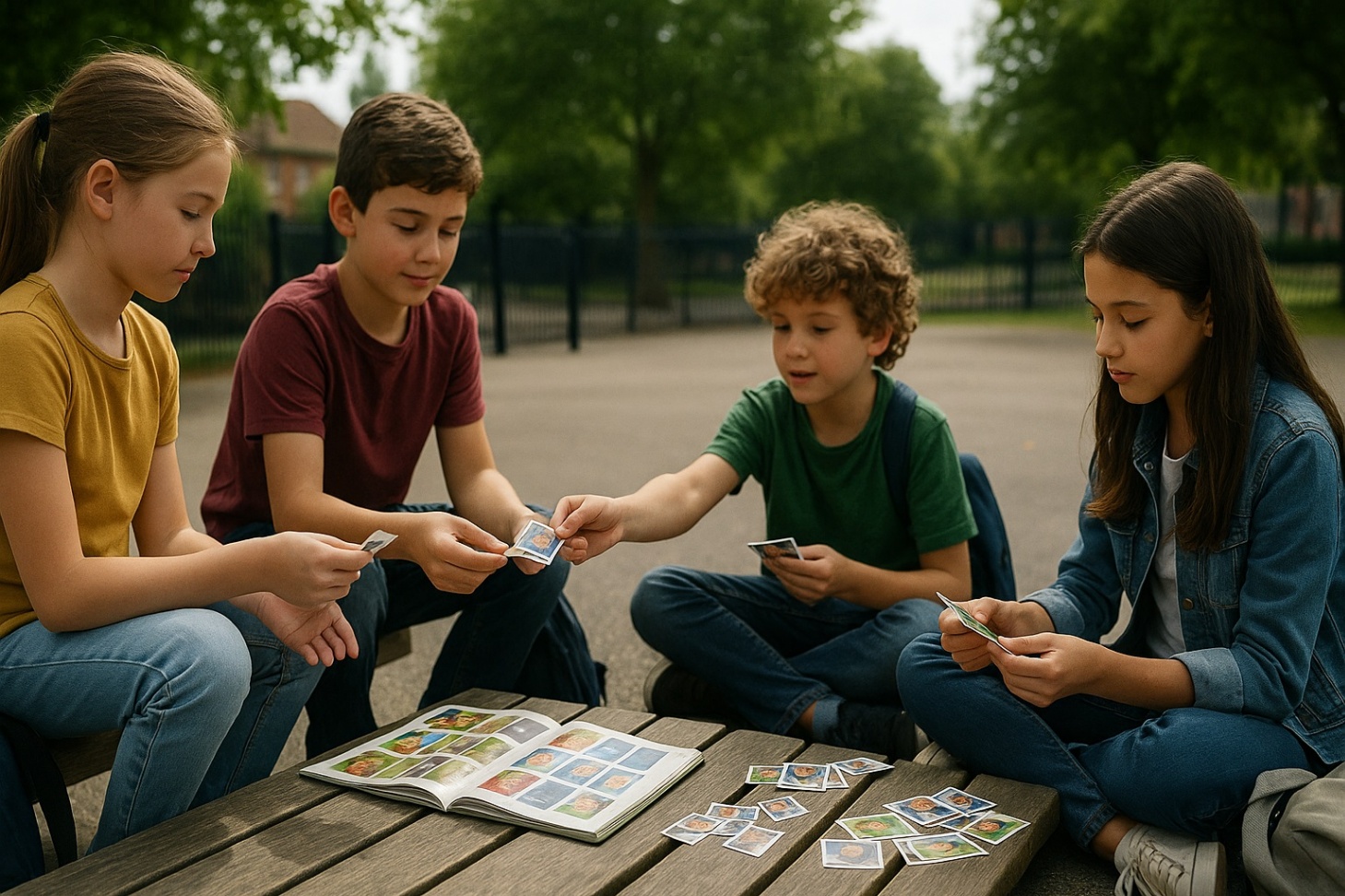
Children sit in a circle, open packets, sort by number, and then run rapid-fire checks of each other’s extras using a call-and-response pattern—“got, got, need.”
This ritual speeds trading and reduces conflict.
Over time, informal prices emerge: shinies or star forwards can command two or more “normal” stickers.
Even very young traders learn supply and demand dynamics from these exchanges.
Playgrounds also create norms
Some schools designate a “swap corner” to limit disruption. Others ask older pupils to supervise.
In certain years, schools have restricted or banned sticker trading when arguments, thefts, or class-time distractions spike.
While bans have been more widely reported with other collectibles such as Pokémon, similar reasoning has influenced school responses to football stickers as well.

Friction With Licensing and School Policies
Sticker culture sometimes bumps into formal rules.
In the 2000s and 2010s, UK legal rulings and coverage highlighted how image rights and emblems can affect what products reach pupils.
As well as occasional school or league-level actions that changed what could be sold or swapped.
These episodes did not end collecting; they show how a child-led pastime intersects with adult-run systems of licensing and school discipline.
The Math Behind the Mania
Why are swaps necessary? Probability. Without trading, you hit duplicates quickly and face a steep cost curve to finish a set.
During 2018, a Cardiff University mathematician estimated that a solo collector would need about 967 packets—roughly 4,832 stickers—to complete the album.
With a group of 10 friends swapping systematically, the average cost per person drops to roughly £250.
Swapping is not only social; it is the rational way to finish.
Parks, Plazas, and Pop-Up Swap Meets
Outside school hours, trading moves to public spaces: plazas in Latin America, town squares in Europe, and community parks worldwide.
During major tournaments, online groups and local clubs coordinate weekend swap meets.
Parents bring children and bundles of duplicates; older collectors arrive with organized lists and elastic-banded stacks.
The scene is cooperative and competitive at once—everyone wants to complete sets, but the only way to get there sensibly is to trade.
Digital Layers Without Losing The Paper Heart
Digital options now sit alongside paper.
FIFA’s official site and app have hosted Panini’s Digital Sticker Album in recent cycles, registering millions of users and hundreds of millions of virtual stickers.
These digital albums mimic the swap logic through online communities.
Yet the paper ritual remains strong: opening physical packets with friends and swapping at a desk or park bench keeps its hold.
Money, Marketing, and the Ethics Debate
Sticker culture also raises questions for parents and educators.
Cost
Packet prices have risen over the years, and the probability math can shock families new to the hobby.
The same 2018 estimate that made headlines—around £773.60 for a solo completion—sparked discussion about budgets and expectations.
This is why school communities often encourage trading tables and missing-list strategies.
Logos and Sponsorships
Research has noted high exposure to gambling logos on youth football products and media, despite legal limits on advertising betting to children.
Collectors do not usually notice this during a swap, but it remains part of the environment around the hobby and feeds policy debate in some countries.
Broader Trading-Card Market Professionalized
Sports collectibles have become a large sector with licensing battles and corporate consolidation.
Football stickers overlap with this market, but keep a distinctive, grassroots culture anchored in schools and parks.
What Children Learn While Swapping
Sticker swaps are low-stakes lessons in numbers and civics. Children tally duplicates, sort by teams, and keep running totals toward completion.
They practice negotiation: offering fair trades, declining politely, and honoring agreements.
They build small institutions—queues at a swap table, priority for younger collectors, or “one shiny for two normals” exchange rates.
When schools provide gentle structure rather than blanket bans, these sessions can channel energy into cooperation and basic numeracy.
Why Does The Tradition Keep Returning
First, tournaments create time-boxed goals. There is a start date, a release day, and a clear finish line.
Second, the product design is simple and social; a numbered checklist makes progress visible and tradable.
Third, the setting—playgrounds and parks—offers regular, predictable gatherings where trading thrives.
As media profiles note, this combination has outlasted waves of digital entertainment.
Practical Tips For Healthy Collecting
Families and schools often look for balance. A few practical norms help:
- Set a weekly budget and track progress with a list. This keeps spending clear and makes trading more targeted. Math-based estimates show why lists matter.
- Encourage structured swap times and places. A “swap corner” at break or a Saturday park meet keeps it social but orderly—an approach seen in many communities during World Cups.
- Use groups—offline and online—ethically. Local meetups and official digital swaps build fairness and inclusion when adults model it and kids follow clear rules. FIFA and Panini’s digital platforms illustrate how online swaps can complement in-person trading.
- Be mindful of logos and messaging. Research has documented gambling branding in youth football media; parents and schools can discuss what sponsorship means and set simple guidelines.
Conclusion: More Than a Hobby
Sticker trading endures because it is social, teachable, and tied to football’s biggest moments.
In schools, it builds small economies and friendships. In parks, it becomes a weekend ritual that bridges generations.
The shared process keeps the culture alive each time a new album lands.