Football sticker frenzies look spontaneous, but they usually follow clear patterns of supply, distribution, and human behavior.
In recent World Cup cycles, rapid sell-outs and empty shelves have been documented from Buenos Aires to Birmingham.
Understanding why certain stickers vanish helps you plan better—and separates real scarcity from hype.
Demand Shocks Around Global Tournaments
Sticker demand is highly seasonal. Launch windows for major tournaments compress buying into a short pre-kickoff period, creating sudden spikes at retail.
For example, in Argentina, ahead of the 2022 World Cup, kiosks ran out of packets within hours of delivery, and wholesalers started rationing boxes.
In parts of Italy and Spain, collectors queued before opening time during the first two weeks of release, wiping out daily allocations by midday.
These demand waves can drain inventory even when national supply is increasing, because most buyers tend to crowd into the same two- to four-week window.
Example
A city kiosk receives four boxes (400 packets) on a Friday.
Ten collectors—each planning a weekend swap—buy 30–50 packets apiece, and two resellers take a full box each.
Stock is gone before the afternoon school rush arrives, creating the impression of “no supply” even though hundreds of packets landed that morning.
Distribution choices and “where” stock lands
When manufacturers broaden channels, long-standing retailers may receive fewer boxes at launch.
That pushes collectors toward whichever outlets got the early allocations.
If your usual kiosk receives one box while a hypermarket across town gets a pallet, you’ll see a “shortage” locally even as overall supply is fine.
Limited “direct” bundles or timed drops allow early buyers and bots to capture a large share quickly, leaving local shelves bare for days.
Example
A national distributor prioritizes large chains for week-one visibility.
Neighborhood kiosks get trickle shipments (one box every few days), while a big-box retailer offers “limit 20 packets per customer”.
But still sells through in a weekend because families add packets to grocery runs.
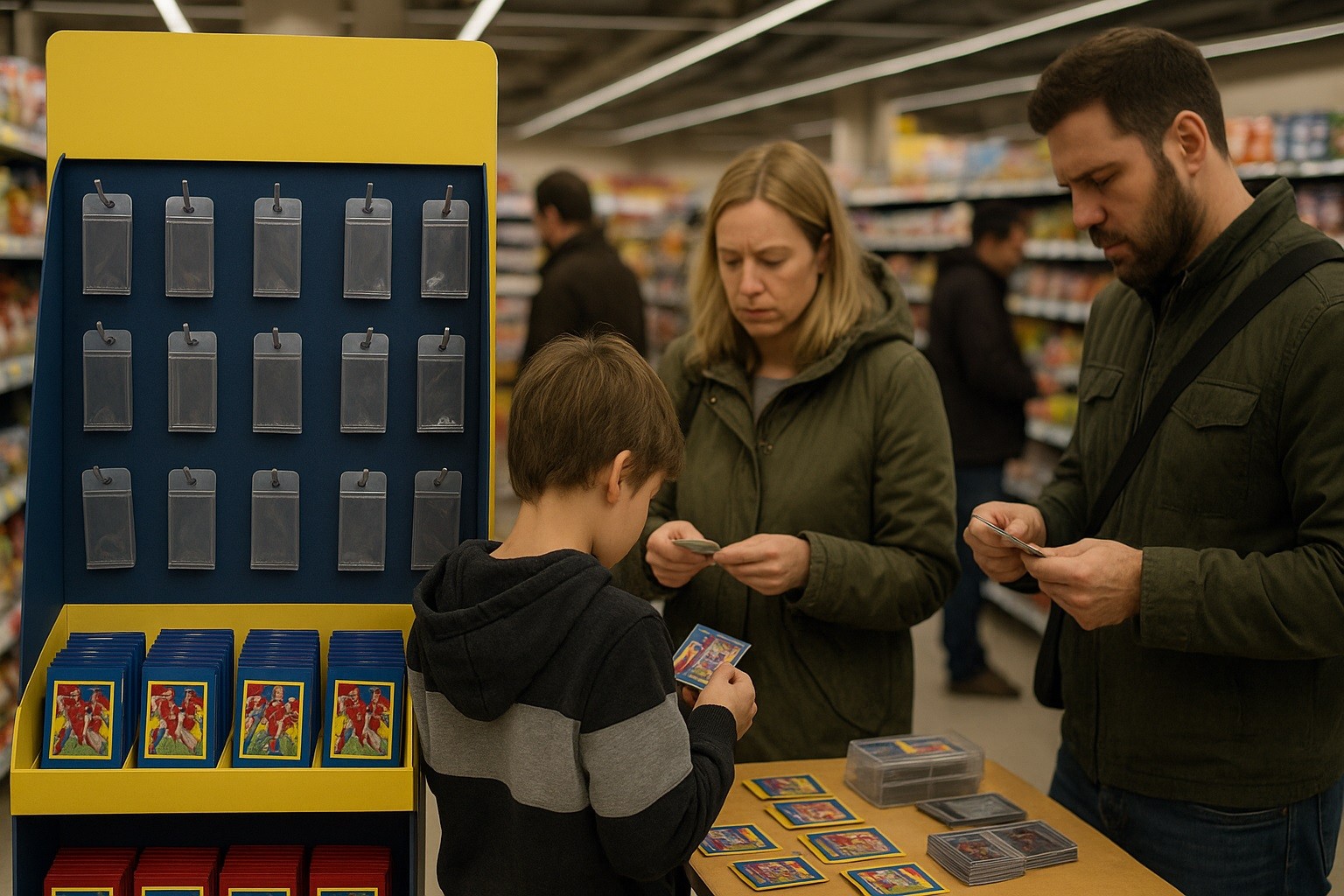
Product Design That Creates Chase
Sticker sets are built to be collectible—not just complete. Two design choices can accelerate sell-outs.
Parallels and inserts
Some releases include limited-edition versions of base stickers (e.g., color parallels like blue, red, green, purple, or even a black 1/1).
Completionists and flippers chase these, buying deeper and faster than casual collectors.
One or two local “whales” ripping cases can wipe out a small store’s week-one allocation.
“Extra” or action stickers
Randomly inserted action shots or special foils (for example, roughly 1 per ~100 packets) act as a built-in lottery.
Even if base print quantities are generous, the chase element pulls demand forward because collectors open more, earlier.
“Rare” Versus “Hard To Find”: What The Publisher Means
Collectors often suspect that stars are printed less. For World Cup stickers, the publisher says each player is printed in the same quantity.
Perceived rarity, however, comes from market behavior.
Fans keep extra Lionel Messi or Kylian Mbappé stickers as keepsakes, send them for grading, or trade them only for outsized returns.
That reduces circulation and makes star stickers feel rarer at playgrounds and trading meets.
Example
In a schoolyard swap, ten kids have spare full-backs and goalkeepers, but only one will trade a spare Messi—if he gets three or four team shields back.
The sticker isn’t factory-short; it’s socially scarce.
Basic Economics: Scarcity Amplifies Value
Scarcity cues—“limited,” “sold out,” “rare pull”—don’t just reflect the market; they shape it.
Once a set is framed as scarce or time-limited, buyers accelerate purchases and hoard duplicates.
You see faster sell-through, sudden price jumps on secondary markets, and fewer packets available at the official price.
Example
A local influencer posts a video: “Last box at Store X!” Within an hour, three followers drive over and clear the shelf.
The remaining buyers assume a drought and start overpaying online, reinforcing the cycle.
Local Frictions: Pricing, Markups, and Retail Incentives
Local pricing disputes can aggravate sell-outs.
If the official pack price is thin, they might ration packets, bundle them with magazines, or divert boxes to outlets that move more volume.
When retailers anticipate secondary-market premiums, some hold back stock for weekend drops or limit packets per customer.
Behaviors that make products “disappear” at the advertised price, even if the total supply hasn’t collapsed.
Example
A corner shop quietly sells single packets at the counter but reserves full boxes for “regulars.”
To everyone else, the product seems unavailable; to the inner circle, it’s abundant.
Counterfeits and Quality Control: Noise in the System
When counterfeit packets or unofficial “look-alike” albums appear, serious collectors shift to trusted channels: official webshops, big retailers, or well-known kiosks.
That concentrates demand and drains legitimate stock faster.
Quality scares can have a similar effect, prompting buyers to open more (to find “clean” copies) or to cherry-pick from the few outlets.
Example
After a rumor spreads about fake packets at a flea market, a local Facebook group recommends two verified shops.
Both sell out their week’s allocation in a single afternoon.

The Compounding Effect of Social Dynamics
Swapping culture is crucial to stickers—but it can also remove desirable items from circulation.
If star stickers are kept as mementos or sent for grading, fewer enter swap pools.
Viral clips of big pulls, “pack battle” live streams, and “complete-in-24-hours” challenges add a “buy now” push.
Together with parallel hunts and channel exclusives, these social dynamics concentrate early sales into the first weeks, increasing the odds that shelves go empty.
Example
A local café hosts a Sunday swap. Two collectors showcase albums that are already 90% complete by day three, creating FOMO.
Newcomers buy aggressively on Monday and Tuesday, accelerating a run on packets across nearby shops.
Practical Takeaways For Collectors
- Buy early from multiple channels: Don’t rely on a single outlet. Combine your neighborhood kiosk, a supermarket chain, and the official online store.
- Distinguish genuine scarcity from chase mechanics: Inserts and parallels create demand spikes without necessarily changing base sticker availability.
- Plan a swap strategy: Organize early swaps to reduce duplicate hoarding.
- Use post-launch completion tools: After the rush, official “missing sticker” services can fill holes at controlled prices.
- Beware of secondary-market heat: If you collect for enjoyment, cap your spend and ignore speculative chatter.
- Verify authenticity and condition sources: Prefer sealed cases and reputable sellers if counterfeits or poor collation are reported locally.
Bottom Line
Stickers “disappear” when tournament-timed demand collides with channel allocations, chase-driven product design, and local pricing behavior.
The headline names often feel rare, not because they’re short-printed, but because fans keep them out of circulation.
With a clear plan and realistic expectations, you’ll spend less, finish faster, and enjoy the hunt a lot more.