Football is the most popular sport worldwide and carries major cultural and political weight. The link between football and world politics shows its role in diplomacy, national identity, and global influence.
Governments utilize football to manage conflicts, foster unity, and advance their agendas. This article explores history, diplomacy, identity, globalization, and governance to explain football’s political role.
Historical Background of Football and Politics
Football has always been linked to national and political narratives. From colonial contexts to Cold War tensions, governments recognized its influence.
Early matches often symbolized struggles for independence or ideological dominance. Political leaders quickly learned football could unify or divide populations.
Football in Colonial and Post-Colonial Times
During colonial eras, football was introduced by European powers and became a tool of both assimilation and resistance. Colonized nations adopted the sport to assert identity and resist imperial dominance.
After independence, football victories became symbols of sovereignty. Success in international tournaments often represented more than athletic ability—it was political affirmation.
Football in the Cold War Era
The Cold War saw football as an extension of ideological conflict. Matches between Eastern and Western blocs carried symbolic meaning.
Governments invested heavily in teams to demonstrate superiority. Sporting victories were portrayed as victories for political systems. This rivalry elevated football into a powerful diplomatic stage.
Football as a Tool of Soft Power
Nations use football to project global influence. Hosting tournaments or achieving international success helps shape perceptions abroad.
Leaders often celebrate victories as political achievements. Football allows states to showcase culture, development, and unity.
Hosting Mega Tournaments
World Cups and continental tournaments are strategic tools for political image-building. Hosting gives nations visibility on a global stage and strengthens national pride.
Countries like South Africa, Brazil, and Qatar used these events to project influence. Such investments often aim to secure long-term political capital.
Clubs as Global Ambassadors
Major football clubs act as ambassadors for their nations. Teams like FC Barcelona, Real Madrid, and Manchester United represent cultural values abroad.
Their global reach extends beyond sport, shaping diplomatic relationships. Governments recognize the role of clubs in enhancing national image.
Football and International Diplomacy
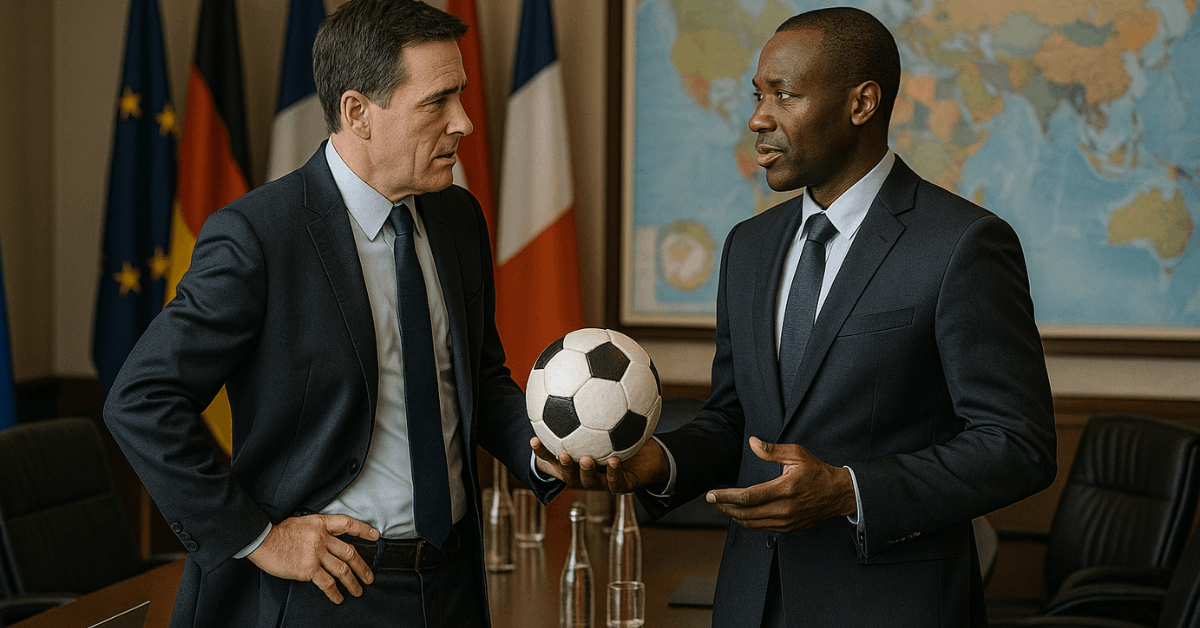
Football can bridge diplomatic gaps between rival states. Matches often serve as platforms for symbolic gestures and dialogue.
Leaders have used football encounters to reduce tensions. Diplomacy through football creates informal spaces for negotiations.
Football Diplomacy Examples
These examples show football’s ability to create symbolic openings in international relations.
- USA vs Iran in the 1998 World Cup was seen as a thawing moment in relations.
- North and South Korea used football matches to display unity in times of tension.
- African nations organized regional competitions to strengthen cooperation.
Football and Conflict
Football has also been tied to political conflicts. At times, it inflames rivalries and serves as a spark for violence.
Governments and movements have used football to mobilize nationalism. In certain contexts, it has intensified rather than resolved tensions.
The Football War
In 1969, a World Cup qualifying match contributed to conflict between El Salvador and Honduras. Tensions over migration and land disputes boiled over after football-related violence.
The war lasted 100 hours but highlighted football’s potential to amplify disputes. The event remains one of the clearest cases of football linked directly to war.
Football as Propaganda
Political regimes have used football to advance agendas. Authoritarian leaders often emphasize national team victories to distract from internal issues.
Football stadiums sometimes become venues for demonstrations or propaganda. Governments manipulate the sport to maintain legitimacy.

National Identity and Unity
Football often unites populations across divisions. Victories on the international stage create shared pride.
For communities in conflict, football can provide temporary solidarity. National teams embody collective aspirations.
Independence Movements and Football
Regions seeking independence often use football as a voice of identity. Catalonia and Kosovo have promoted their political identity through football.
Recognition in international football organizations is seen as symbolic legitimacy. Success on the pitch strengthens calls for independence.
Migrant Communities
For migrants, football serves as a way to preserve culture and identity. Diaspora communities support national teams to stay connected with heritage.
Football clubs abroad often reflect community values. This global phenomenon illustrates football’s role in identity preservation.
Football and Globalization
The global reach of football has made it a political and cultural force. International player transfers, media rights, and global tournaments shape perceptions.
Globalization has amplified football’s political relevance. The sport is now a tool for cultural exchange and influence.
Player Migration and Diplomacy
Player migration reflects larger political dynamics. Athletes crossing borders often symbolize integration and multiculturalism.
Global stars become ambassadors for their countries of origin. Diplomacy is advanced through the visibility of these players.
Multiculturalism in Football
Football promotes multicultural interaction through mixed teams and fanbases. International tournaments highlight diversity and cultural exchange.
This has political implications for acceptance and tolerance. The sport fosters understanding across nations.
Corruption, Governance, and Political Power
Football governance is deeply political. FIFA and continental federations hold significant power.
Corruption scandals have exposed the political nature of decisions. Governments often compete to influence these bodies.
FIFA and Political Influence
FIFA operates at the intersection of sport and politics. Bidding for World Cups involves intense lobbying by states.
Corruption cases have revealed how political alliances shape outcomes. FIFA’s influence makes football governance a political battleground.
Authoritarian Regimes and Football
Authoritarian governments frequently use football to consolidate power. National victories are framed as proof of leadership success.
Investments in football often distract from political or economic challenges. Such strategies exploit the emotional power of the sport.
Football, Human Rights, and Activism
Football increasingly highlights human rights concerns. Debates over hosting events in authoritarian states dominate discussions.
Activists and players use football as a platform for protest. The sport has become central to global rights debates.
Human Rights Debates
Controversies over Qatar and Russia hosting World Cups exposed migrant labor and political freedom issues. These debates forced international attention on domestic practices.
Boycotts and protests challenged the legitimacy of tournaments. Football remains at the center of human rights discourse.
Activism in Football
Players and clubs have spoken out on issues like racism and discrimination. Campaigns such as “Kick It Out” and gestures like kneeling highlight political engagement.
Football serves as a stage for activism reaching millions. This role continues to expand with social media influence.
Regional Case Studies
Football’s political role varies by region. Each context shows unique ways the sport interacts with politics. These case studies demonstrate football’s global political dimensions.
Europe
European football is tied to debates on migration, integration, and EU identity. Matches often spark political conversations about nationalism.
Clubs represent broader cultural values. Football remains intertwined with continental politics.
Africa
In Africa, football has symbolized post-colonial unity. Continental tournaments promote cooperation.
Victories have been used to strengthen governments. Football is also a source of pride for developing nations.
Latin America
Latin America links football to populism and political struggles. Leaders use football victories to reinforce their agendas.
Clubs hold cultural and political weight. Football continues to reflect social and political realities.
A Final Word on Football and Politics
Football remains the most powerful sport for shaping international narratives. The relationship between football in world politics highlights its dual role as a unifying and divisive force.
From diplomacy to conflict, identity to activism, football mirrors the global political landscape. As the sport grows further, its influence on world affairs will only deepen.