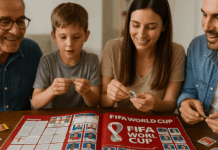
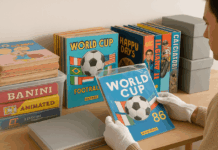
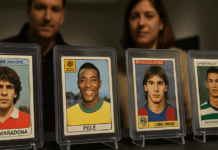
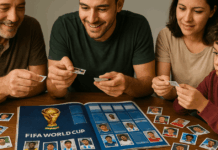
The World Cup was in a nation obsessed with football. You got massive street visibility, daily conversations, and organic swap hubs.
You remember the fever. Packs everywhere. Trades at school, work, and plazas.
The 2014 Panini FIFA World Cup Brazil sticker album became a global ritual. Here are five clear curiosities that explain why that edition still stands out.
1) The set wasn’t just “640 stickers.” It depended on where you lived
Officially, the base album carried 640 stickers and 72 pages. That’s the core configuration collectors usually cite.
Each packet typically included five stickers. In some markets, however, packaging and counts varied.
U.S. hobby info lists boxes of 50 packs with seven stickers per pack, a configuration different from Europe and Latin America.
This created small but real differences in collecting costs and duplication odds across countries.
2) National add-ons and promos pushed totals well beyond 640
Beyond the standard 640, Panini issued extra stickers in select countries.
Collectors in the USA, Brazil, and Switzerland saw additional stickers outside the base list.
This helps explain why databases track a total count far above 640 for the whole ecosystem.
A widely used database lists the album at 640 but shows a collection total of 782 when you include regional and promotional inserts.
Effects
That “hidden” complexity is why someone who “completed the album” in one country might still discover unfamiliar sticker codes from another.
Promotions also mattered. For example, Coca-Cola promo stickers circulated in Latin American editions, often cataloged separately by collectors and sellers.
They are not part of the base 640 but are part of the 2014 landscape and traded globally years later.
3) Panini issued a rare mid-tournament roster update
Coaches finalized squads after Panini had already printed and shipped albums. In response, Panini created an official roster update in July 2014.
The update featured 72 total stickers: 71 new player stickers plus one album sticker, sold as a boxed set and shipped starting July 23.
Collectors mark these as “x” variants after the number and use them to replace players who didn’t go to Brazil or who got injured.
You will see sellers and guides list this as the “71/72 update set”. Germany was among the first countries where the full update surfaced.
4) The craze went mainstream
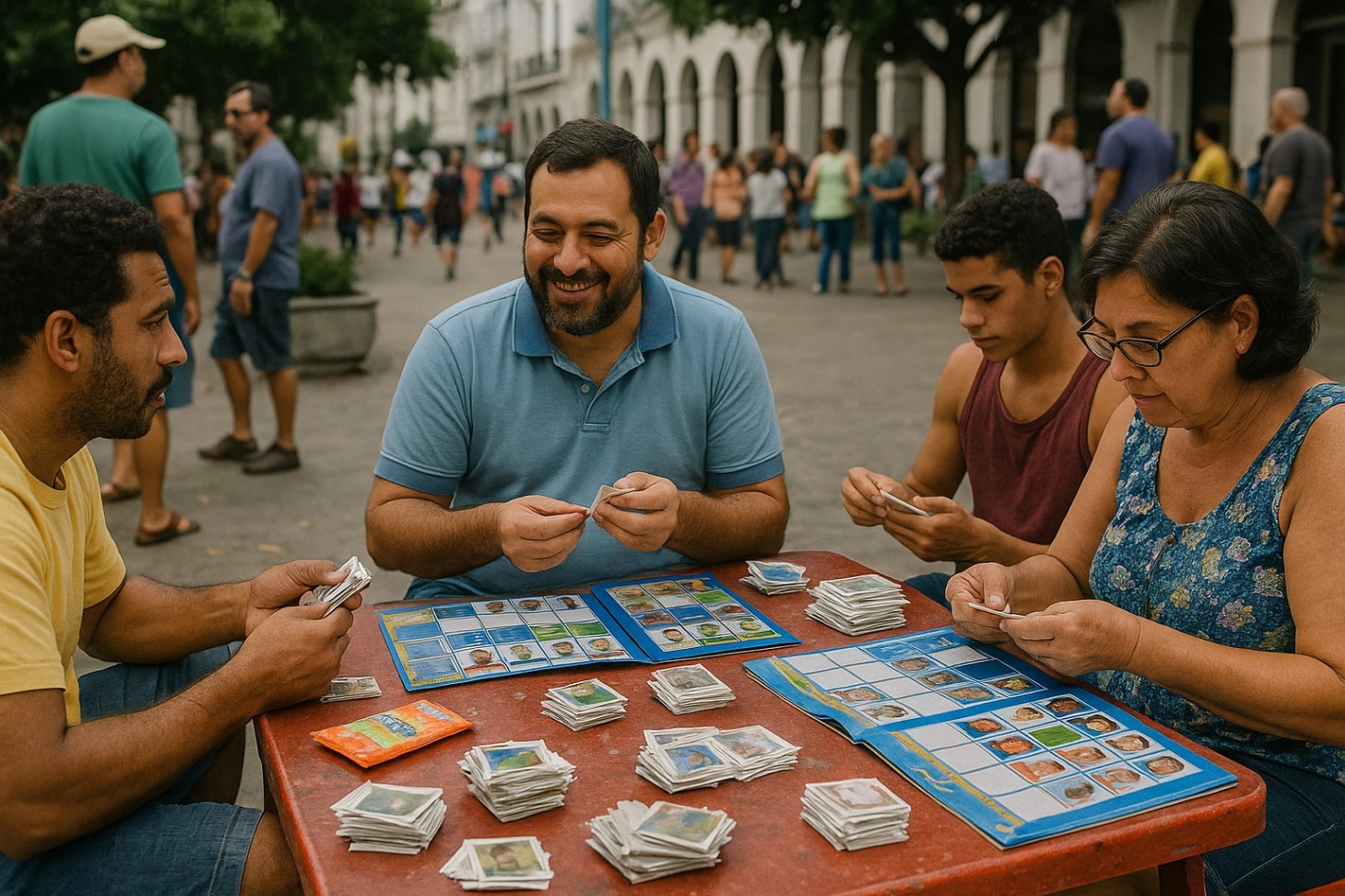
In June 2014, major outlets documented a worldwide swapping boom fueled by social media and by organized meetups.
The tone was simple: adults and kids showed up with numbered lists and kept the traffic flowing.
Rio’s city center
Reports described more than a thousand people frequenting the busiest swap spot daily, with most participants trading for themselves, not for children.
The media also highlighted the Panini factory serving South America, giving readers an inside look at printing and packaging under peak demand.
Photo essays documented the production lines, packaging pallets, and scale of operations behind the craze.
London
In London, the cultural phenomenon reached galleries.
A photo series accompanied an exhibition of Panini World Cup stickers, while newspapers ran picture features on the 2014 mania.
The hobby had crossed into pop culture and art.
5) Completing the album had “official” help—and strict limits.
Panini’s missing sticker service allowed you to order singles you couldn’t pull or trade for, but with caps to keep collecting fair.
For the 2014 line, there was a maximum of 70 stickers per order, and a maximum of five orders per person.
If you were stuck on the same three numbers for weeks, this policy often decided when you finally declared the album “done.”
These limits shaped collecting behavior
You had to plan your orders, coordinate trades first, and save the service for true gaps.
Many collectors also split orders among friends to maximize coverage without breaking rules.
The policy remains one of the most practical details that defined how people finished 2014.
What do these five points mean now?
The 2014 cycle modernized the Panini World Cup experience.
- Completion is a moving target. If you completed the base 640, you own the canonical album. If you chase regional promos or the 72-sticker roster update, your “complete” definition expands. That is normal for 2014 and explains why total counts differ across guides.
- Market differences matter. Five-per-pack regions produced different duplication patterns than seven-per-pack boxes listed in U.S. hobby channels. If you’re buying a sealed product today, confirm the pack size before you estimate odds or cost to complete.
- The cultural footprint was huge. From Rio swap hubs to London exhibitions and global media coverage, the 2014 album was more than a checklist. It was a shared event that traveled with the tournament’s narrative.
- There was an “official” path to finish. The missing sticker service and its caps kept scarcity meaningful while preventing dead ends. For many, that policy turned frustration into a plan and set a template they used again in 2018 and 2022.
- The update set is a historical marker. Panini’s mid-tournament update was unusual and documented in real time. It captured last-minute squad realities in a way earlier albums rarely attempted and left a specific collectible trail for 2014.
Why in 2014?
2014 sat at the intersection of Brazil’s host effect, social media scale, Panini’s wider distribution, and a unique roster-update decision.
Brazil 2014 generated human-interest stories: swap meets, factory photo essays, and city-center trading scenes.
By 2014, WhatsApp, Facebook groups, and Instagram were already mainstream. You could organize swaps fast, post needs, and close trades the same day.
Those forces aligned in that year, which is why the craze peaked the way it did.
Conclusion
You saw why the 2014 album still matters: scope, regional extras, a rare roster update, a global swap culture, and clear completion rules.
These factors shaped how you collected, traded, and defined “complete.” If you revisit the set, decide whether you stop at 640 or include updates and promos.
Build a plan, track variants, and finish the album your way. It is up to you.