Club football is more than results. Symbols—especially crests and anthems—encode a team’s origins, values, and communal memory.
Badges, colors, chants, and songs are shared signs that mark belonging and differentiate rivals.
These signs are learned, repeated, and sometimes contested over time, helping transform a club into a living community.
Crests: Portable History on a Shirt
A crest compresses a club’s story into a single, repeatable image. That ties the team to its place while asserting a distinct playing identity.
Research on football logotypes shows how visual elements—shields, animals, and civic emblems—operate as socio-semiotic markers of collective identity.
Wearing the crest signals allegiance; altering it can feel like rewriting the group’s narrative.
That is why redesigns, however well-intentioned, often trigger debate: supporters weigh heritage against modern brand needs.
Governance: Identity is Regulated, Not Incidental
Crests and other identity assets are not mere decoration in elite competitions; they sit within formal licensing and governance frameworks.
Competition rules and national association manuals typically require clubs to register their official name, visual identity, and legacy markers.
The intent is straightforward: protect continuity, prevent confusion in the marketplace, and uphold public trust.
Treating the crest as part of a club’s “identity, history, and legacy” recognizes that symbols are strategic assets, not optional extras.
Anthems: When Sound Becomes a Ritual
If crests are portable history, anthems are living ritual.
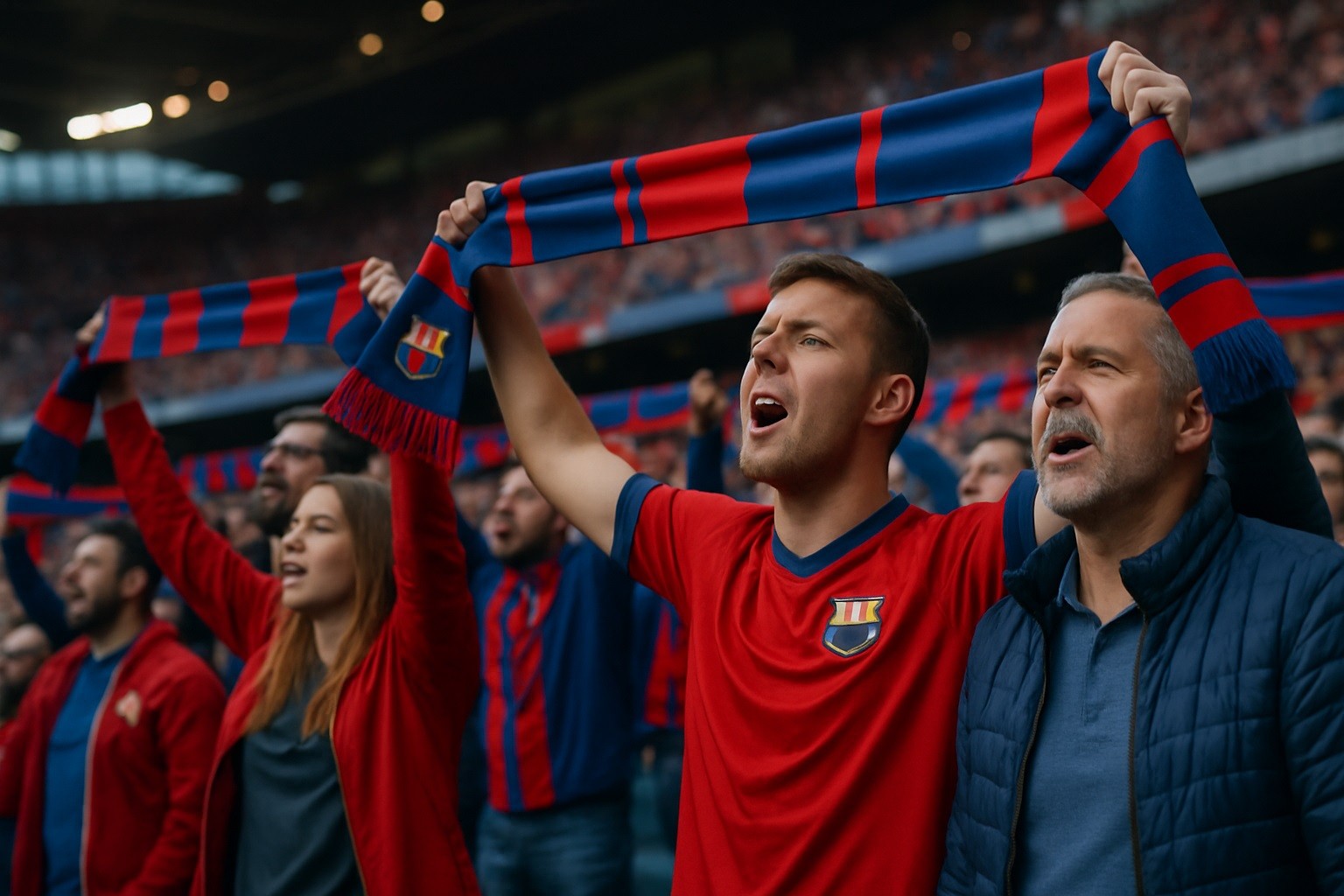
They organize matchday emotion, synchronize thousands of voices, and mark key transitions—team walkouts, kickoff, or moments of remembrance.
Supporters’ cultures place chants and songs alongside flags, colors, and nicknames as core symbolic practices that set a team apart.
Over time, repetition turns a pop song or local hymn into a near-sacred moment of unity.
Origins
Few traditions illustrate this better than stadium-wide sing-alongs that began in the 1960s and spread across Europe.
The song binds the crowd, signals belonging, and welcomes players into a common story.
In some clubs, the anthem’s most famous line even migrates into visual identity—appearing on gates, scarves, and sometimes the badge itself.
How Symbols Shape Behavior and Memory
First, they aid recognition and continuity in commercial settings—broadcast graphics, kits, and retail—where a stable emblem reduces ambiguity.
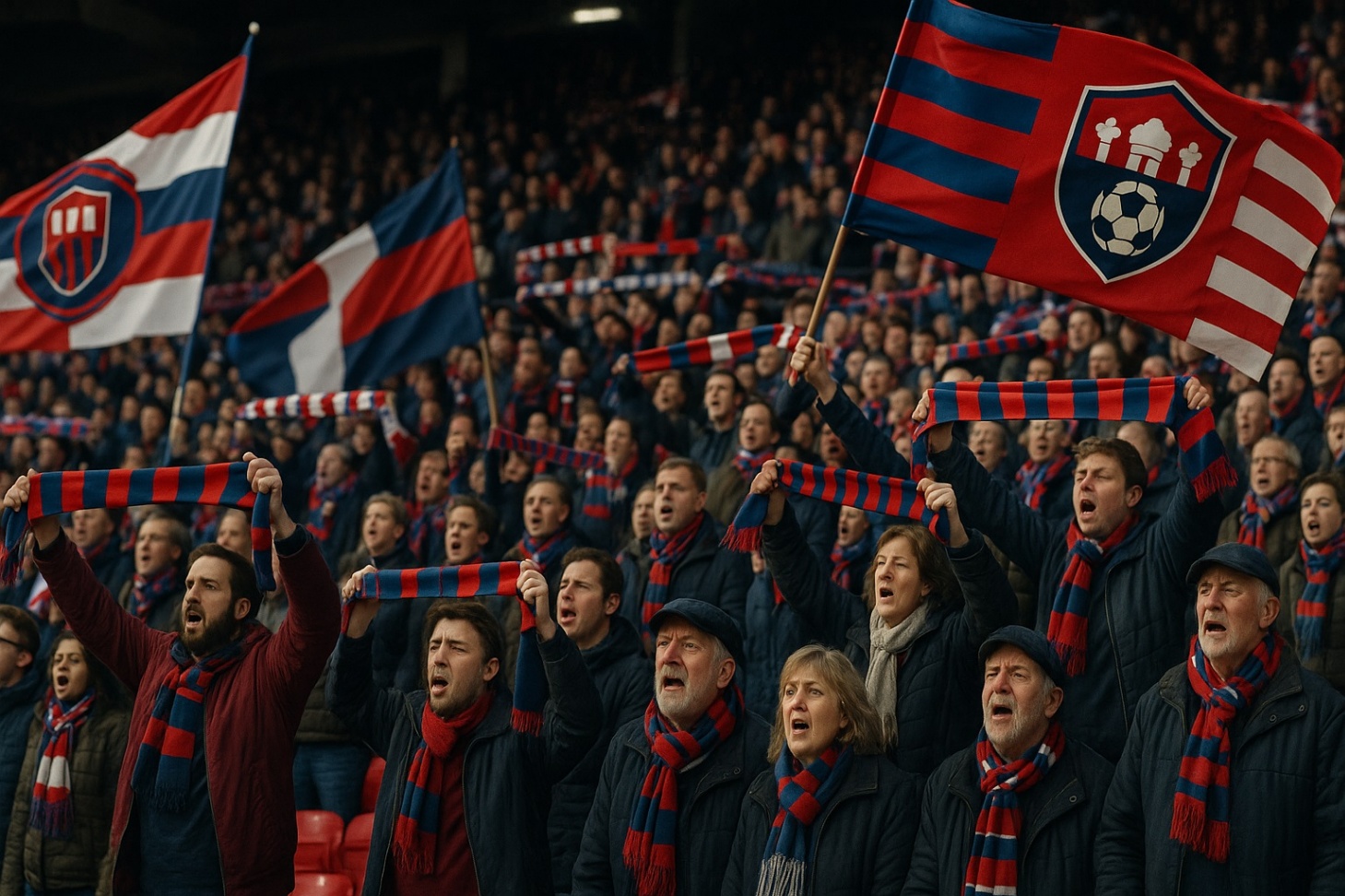
Second, they coordinate behavior inside stadiums: a crest on a scarf signals in-group membership; an anthem cues when to stand, raise banners, or fall silent.
Third, they encode collective memory. After tragedies or milestone victories, the same song or badge motif becomes a mnemonic device.
In a globalized, commercially driven game, these symbolic anchors help sustain local identity and supporter attachment.
Change and Contention: Why Redesigns Spark Heat
Because symbols carry accumulated meaning, changing them—especially abruptly—invites scrutiny.
Clubs modernize badges for readability, digital use, or anniversary programs, but reception depends on whether supporters perceive continuity.
Decisions about shield shapes, typography, and color tones become proxies for larger questions: Is the club honoring its roots? Is it listening to its fans?
Official consultations, heritage statements, and supporter ballots accompany redesigns, not as public relations ornament but as legitimacy work.
Ethics and Inclusion: Who Is Represented?
A badge dominated by municipal or national emblems foregrounds civic pride; a song rooted in local culture centers particular histories.
What feels representative to one group may feel distant to another, especially in clubs with global fanbases.
Transparent storytelling—explaining origins, acknowledging tensions, and inviting participation—helps reconcile these dynamics.
The most resilient symbols are those that speak clearly to local supporters while welcoming distant ones into the narrative.
Best Practices For Clubs
Each club must take care of its crests and anthems in its own way.
- Protect heritage in plain sight: Document what each element of the crest means, when it entered the design, and why the colors were chosen. Make that explanation accessible in museum spaces, match programs, and youth materials. Knowledge strengthens attachment.
- Treat changes as chapters, not resets: When modernizing, anchor the new badge in recognizable cues—shield silhouette, founding year, or city iconography—so fans read continuity rather than rupture. Provide visual timelines that show the family resemblance across eras.
- Codify rituals responsibly: Anthems thrive when they are owned by supporters rather than choreographed top-down. Clubs can honor the song’s history and amplify it on official channels without freezing it. Ritual stays authentic when it retains room to evolve.
- Educate new generations: Junior memberships, school partnerships, and digital explainers help global fans learn the club’s “grammar” of symbols and songs. For many, the first encounter is a stream, not a stadium; clear, welcoming storytelling brings them into the fold.
- Integrate identity into governance: Embed visual and musical traditions into handbooks, licensing disclosures, and partner guidelines. Clear rules reduce misuse, safeguard trademark value, and support consistent presentation across broadcasters, sponsors, and retail.
- Design for digital without erasing the past: A badge must read at favicon size and on high-definition boards. Solve for clarity with thoughtful simplification, not amnesia. Test across contexts—shirts, apps, social avatars, and stadium LED—before final approval.
- Measure sentiment, not just sales: Merch numbers matter, but so do supporter surveys, fan forum analyses, and season-ticket renewal behavior. Track whether identity updates change how fans feel about the club and whether rituals are strengthening or thinning out.
Why Does It All Endure
Crests and anthems persist because they solve a human problem: how to recognize ourselves in a crowd and pass that recognition across time.
The governance layer treats identity as an asset to be safeguarded; the cultural layer treats it as a ritual to be renewed.
When supporters point to the badge or raise their voices in song, they enact a shared language that keeps a community coherent through change.
That is why a well-kept crest and a well-loved anthem are not extras; they are the core of what a club is.
Conclusion: Holding a Club Together
Crests and anthems are the simplest, strongest threads in a club’s fabric.
The crest gives fans something to wear, display, and protect; the anthem gives them something to sing, remember, and pass on.
Together, they tie past to present, local streets to global screens, and individual voices to a chorus.