Pricing the worth of an old album collection comes down to the sum of individual records, not a blanket label. Value hinges on artist, pressing, scarcity, demand, and strict condition grading for both vinyl and sleeves.
Reliable figures come from recent, comparable sales rather than asking prices, using marketplaces and auction archives with documented histories. Discogs’ sales data and Popsike’s auction archive are two of the most practical sources for real numbers.
What Drives Value In A Collection
A clear view of the major drivers prevents guesswork and inflated expectations. Condition acts as the core filter because buyers pay for playback and preservation.
Scarcity and pressing details separate a common reissue from a significant first run. Demand shifts with genres, artists, and moments in culture, which can move prices quickly.
Artist And Genre
Soul, rock, blues, and jazz titles, especially mid-1960s through 1970s, often draw stronger demand than spoken-word or budget-label issues.
High-profile artists and cult favorites with limited early pressings tend to lead secondary-market interest, which shows up directly in verified sales histories.
Scarcity And Pressing
Specific pressings can dwarf later reissues in price. Infamous examples include the A&M 1977 7″ of “God Save the Queen,” which has achieved five-figure results, and the withdrawn U.S. picture sleeve for “Street Fighting Man.”
These cases illustrate how label decisions and tiny runs drive premiums.
Condition And Packaging
Grading follows the Goldmine grading scale (Mint through Poor).
Even small defects can cut value materially, and missing picture sleeves, inserts, or hype stickers reduce desirability. Discogs also uses Goldmine as its marketplace standard, aligning buyer and seller expectations globally.
Demand And Timing
Observed demand shows up in completed sales, not in active listings. Checking a release’s Sales History on Discogs reveals low/median/high outcomes across time, which is far more reliable than headline asking prices.
How To Value Your Albums Step-By-Step
Careful process beats hunches. Work methodically so each record gets a defensible number and the collection total reflects reality. This approach also exposes a few outliers worth special handling at auction.
Inventory And Identification
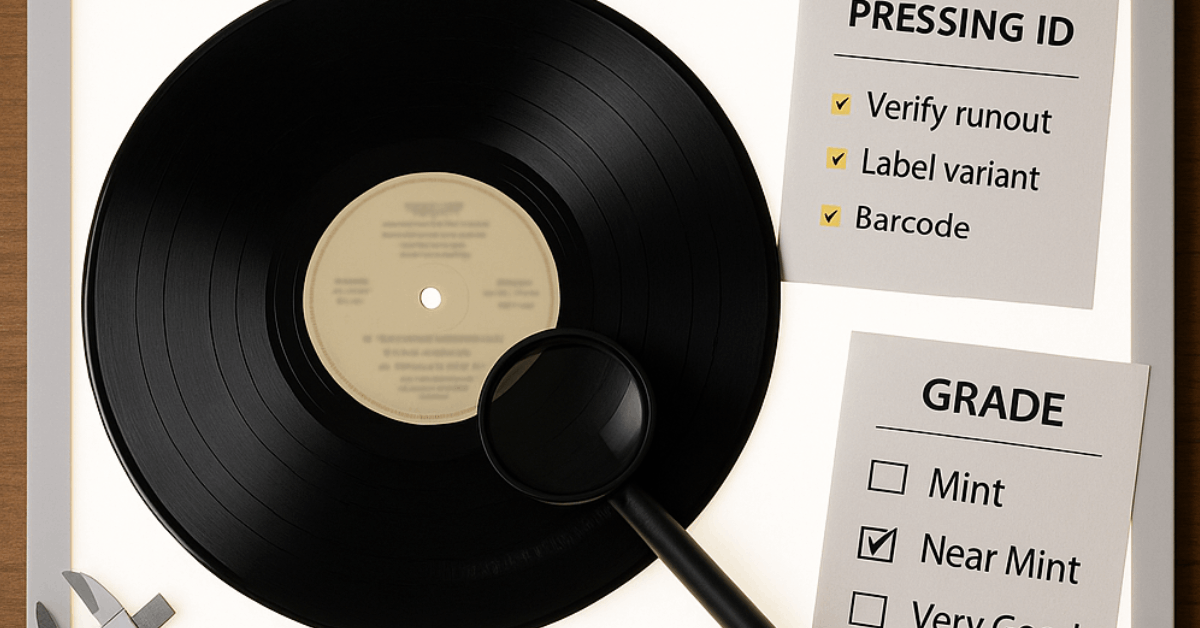
Log each title, artist, label, catalog number, and any runout/matrix etchings, then attach clear photos of labels and sleeves.
Use Discogs to match exact pressings, including country, label variation, and runout text, key for first pressing identification.
Barcodes appeared in retail from 1974 and became common later, so presence can hint at a later issue, but always verify with the database entry and photos.
Grade Accurately
Apply Goldmine grades to both vinyl and sleeve, and be conservative. Play-test any borderline items for noise, warps, and skips.
Because Discogs sellers grade to Goldmine standards, staying aligned makes your pricing and buyer expectations realistic.
Research Comparable Sales
Start with Discogs’ Sales History for the exact pressing, then cross-check auctions in Popsike to catch high-end results and timing.
When searching beyond Discogs, rely on completed/sold filters rather than live listings to avoid inflated anchors; this is the essence of Discogs sold listings and auction comps working together.
Judge Rarity And Special Attributes
Limited runs, withdrawn sleeves, early mono issues, misprints, autographs with provenance, and complete ephemera can all add premiums.
The Sex Pistols A&M “God Save the Queen” single and the withdrawn “Street Fighting Man” sleeve illustrate how extraordinary scarcity drives outcomes far above standard copies, use such benchmarks cautiously and only when your copy’s details truly match.
Add It Up And Choose A Sale Path
Total the individual valuations to reach a collection figure, then decide between piecemeal selling or a bulk disposition.
Significant outliers and rarities generally merit individual sale or specialist auction; mid-tier titles can be grouped by artist or genre to save time while preserving value. Popsike helps confirm whether a lot contains any stealth high-flyers before bundling.
What To Expect In Dollar Terms
Common LPs and 45s in average shape frequently trade in the low single digits unless tied to desirable artists, clean condition, or notable pressings.
For shellac, 78 RPM records value skews low for typical big-band, classical, and easy-listening titles; collector resources note that ordinary 78s often fetch under a few dollars, with exceptions for scarce blues, R&B, and early jazz sides.
At the opposite end, documented auction histories show rare pressings and sleeves reaching hundreds or thousands when condition and provenance align.

Where To Sell And What Suits Your Goals
Channel fit matters as much as price. Reach, fees, shipping risk, and speed all vary, so align the route with the records on hand and the time you can invest.
| Channel | Best For | Pros | Considerations |
| Discogs Marketplace | Exact pressings, international buyers | Deep database, Sales History, global reach | Requires precise grading, shipping logistics |
| eBay (sold filter) | Broad demand testing, auctions | Large audience, auction or BIN | Fees and returns; careful shipping needed |
| Popsike-tracked auction houses | High-end rarities | Established collector traffic | Consignment fees; longer timelines |
| Reputable local record stores | Quick cash, bulk lots | Instant payment, no shipping | Lower offers; speed trade-offs |
| Fairs/collector shows | Mid-tier duplicates | Face-to-face negotiation | Time intensive; variable turnout |
At-Home Appraisal Checklist
A short, disciplined checklist reduces misses and keeps numbers consistent across dozens or hundreds of records.
- Confirm the exact pressing on Discogs, including runout text and label variants; this underpins rare LP valuation.
- Grade vinyl and sleeve strictly to the Goldmine grading scale, adding brief notes for any defects.
- Pull Discogs sold listings plus Popsike results to establish a realistic range (low/median/high).
- Flag anomalies: promos, misprints, withdrawn sleeves, autographs with proof, or unusual formats.
- Decide sale route per item: premium copies individually; common titles in curated bundles for speed.
Tips To Protect Value While Listing
Clean records properly, photograph labels, matrices, and all inserts, and disclose flaws clearly to avoid returns. Pack with stiffeners, corner protection, and a poly sleeve outside the jacket to prevent seam splits in transit.
For rare items, consider insured shipping and signature confirmation, or consignment with a specialist if time and risk tolerance are limited; a professional record collection appraisal can make sense before consigning high-value pieces.
Conclusion
Old album collections rarely have a single price because each record’s details carry the real weight.
Accurate identification, conservative grading, and verifiable comps transform a pile of titles into a credible figure and a practical sale plan.
Significant rarities benefit from targeted venues, while ordinary titles move best through database-driven marketplaces and sensible bundles. Follow a consistent process and the worth of an old album collection becomes defensible, repeatable, and easier to convert into cash.