Authenticity checks fail when inspection skips fundamentals, so start with clear verification steps that scale.
Most brands now add layered security to packaging, labels, and seals, making quick checks reliable when done systematically.
Use the following guidance to identify counterfeit stickers across products and regions without specialist tools, then escalate to lab-grade methods if results remain unclear.
What Counterfeit Stickers Are And Why They Matter
Counterfeit stickers imitate inspection, authentication, or brand labels to deceive buyers or bypass regulations. These fakes often copy logos and colors but miss precision in fonts, materials, coatings, and covert features.
Misuse of trademarks on such labels violates intellectual property laws and can enable unsafe products to circulate. Public safety risks extend beyond brand harm.
Fake inspection or compliance stickers may keep unfit vehicles or electronics in service, while phony medicine labels can mask dangerous products. International law-enforcement agencies warn that counterfeiting puts consumers at risk and undermines entire markets.
How Holographic Authenticity Stickers Work
Authenticity stickers rely on specialized security printing, not simple holographic foil. High-security labels use micro- and nanostructures that control light, color density, and texture to produce complex visual effects.
Manufacturers add features through laser etching and embossing, creating patterns that remain hard to replicate with commodity printing.
The sticker itself does not trigger store alarms or provide physical protection. It functions as a visual authenticator that integrates overt elements (seen with the naked eye) and covert elements (revealed under tools such as UV light or magnification).
Identify Counterfeit Stickers: A Practical Checklist
High confidence comes from structured checks that combine digital verification, visual inspection, and simple tool-based tests.
Start with brand-provided systems when available, then confirm physical features under good lighting. Finish by reviewing packaging quality and purchase channel integrity before accepting an item as genuine.
Use Digital Verification
Scan the QR code using the manufacturer’s app or camera to reach an official domain for QR code verification.
Pages that fail HTTPS, redirect suspiciously, or request personal data unrelated to authentication deserve caution.
When a code is present, perform a serial number lookup on the brand’s portal or through customer support before using or reselling the item. Interpol advises buying only through trusted sources and validating authenticity claims, especially for higher-risk categories.
Inspect Visual Details
Check trademarks and typography carefully, since misaligned logos, uneven kerning, and spelling mistakes remain common.
Evaluate color richness and hologram motion depth; dull, grainy, or flat appearances suggest a low-grade copy. Examine finishes for bubbles, rough edges, or seams that indicate weak manufacturing controls.
Identify Security Features
Look for layered features rather than one shiny element. A genuine hologram exhibits crisp switching or color-shift behavior when tilted, while a flat print often mimics shine without depth.
Use a UV light to reveal UV-reactive ink patterns or taggants that remain invisible under ambient light, a standard technique in secure labels and documents.
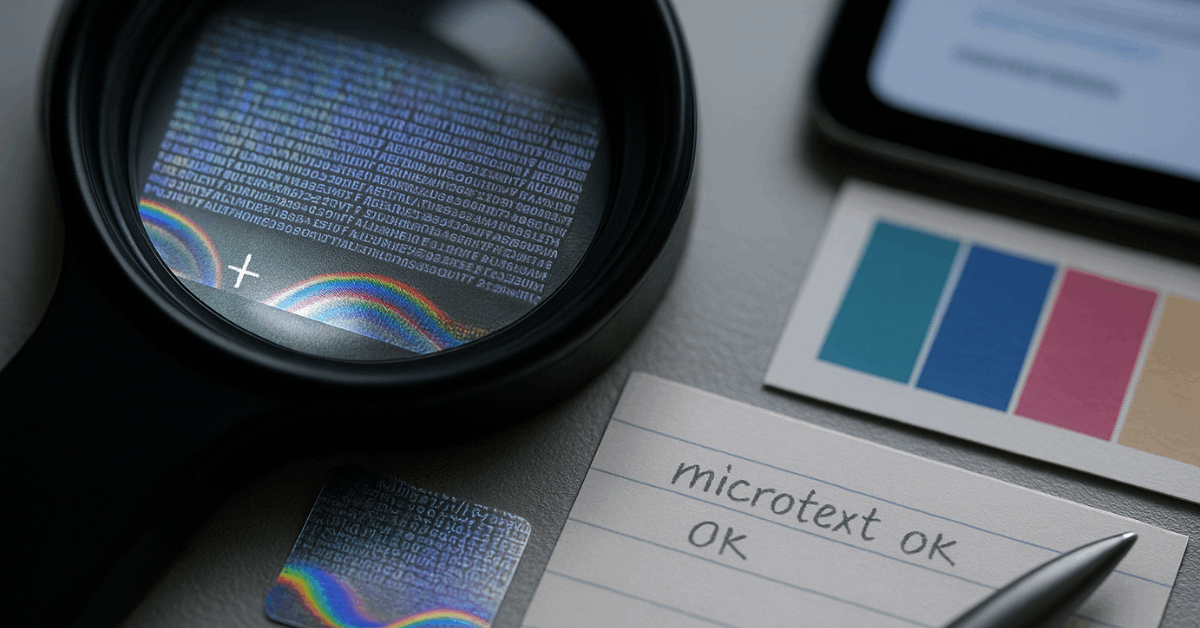
Micro-scale text or lines, known as a microprinting security feature, should resolve cleanly under a loupe, similar to features used on banknotes.
Evaluate Packaging And Materials
Inspect outer packaging, inserts, and barcodes for print clarity, paper quality, and consistent branding.
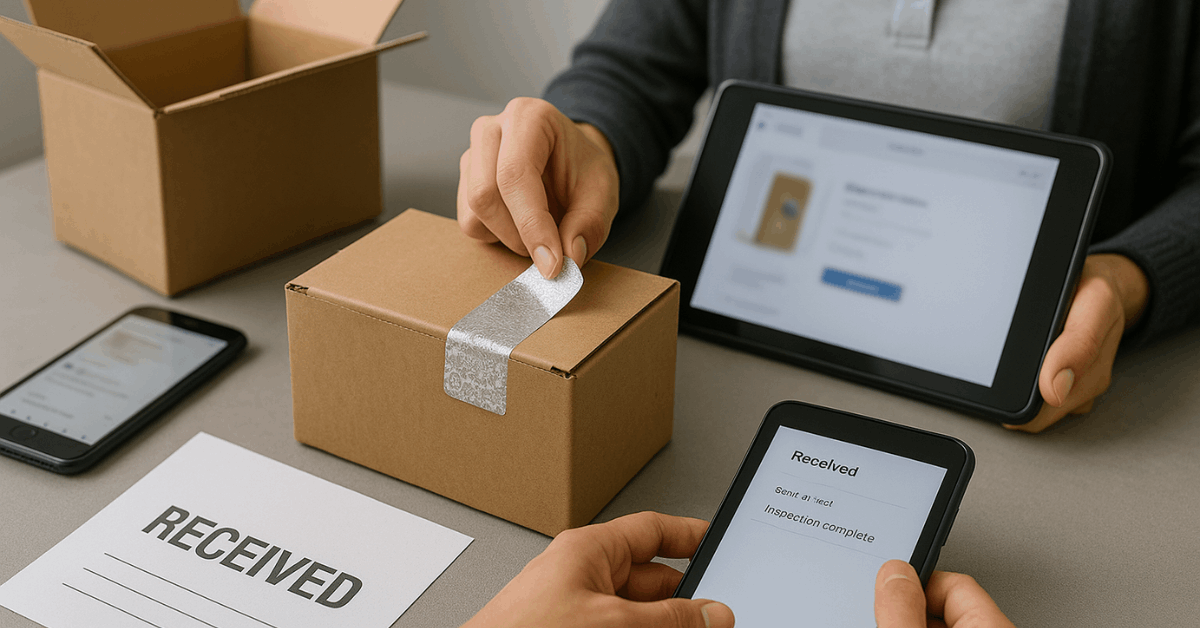
Review tamper points around lids, closures, or seams; a high-quality tamper-evident label should fracture, delaminate, or leave residue when disturbed. Poor substrates and flimsy adhesives frequently accompany counterfeit sticker applications.
Purchase Channel Confirmation
Perform an authorized dealer check when purchasing premium or safety-critical goods. Interpol recommends sticking to official retailers and verified platforms to reduce exposure to counterfeit labels and unsafe products.
Holographic Vs. Authenticity Stickers: Key Differences
Layered security labels differ substantially from decorative holographic decals. Many shoppers equate shine with security, which leads to false confidence during quick inspections.
Distinguish decorative effects from engineered features before relying on a sticker to prove origin.
The matrix focuses on properties visible during routine checks and simple tool use. The table below clarifies the most relevant contrasts for field checks.
| Aspect | Decorative Holographic Sticker | Security-Grade Authenticity Sticker |
| Production Method | Printed foil or film using standard inks | Laser etching, embossing, and engineered micro/nanostructures |
| Feature Layers | Mostly overt, aesthetic motion and shine | Overt plus covert (UV, microprinting, taggants, serials) |
| Copy Difficulty | Moderate; replicable with commodity processes | High; aligned to performance criteria such as ISO 12931 |
| Validation Flow | Visual only; no backend systems | Visual plus QR code verification and serial number lookup |
| Tamper Evidence | Typically none | Designed to show opening or removal attempts |
Sources outline performance frameworks and layered feature sets for product authentication.
Use Cases Across Industries
Security stickers support authentication across fashion, electronics, cosmetics, collectibles, and government documents. Luxury or limited editions benefit from serialized seals that link units to a controlled database.
Official papers such as passports and certificates use combinations of holography, UV features, and microstructures to deter forgery and enable rapid field checks.
Placing a destructible seal across a carton flap reveals interference immediately, improving perceived quality assurance even though the label itself does not stop theft. Industry bodies continue to expand feature ecosystems, combining holography with micro-lenses, nano-gratings, and color-shift materials.
Legal And Safety Risks Of Counterfeit Stickers
Illegal labels enable trademark infringement, consumer deception, and evasion of safety regimes. Fake inspection or certification stickers can place hazardous products on shelves or keep unsafe vehicles in circulation.
Law-enforcement guidance highlights the broader harm caused by illicit goods, including tax loss, unfair competition, and direct threats to consumer safety.
Consequences vary by jurisdiction but often include fines, confiscation, and criminal charges for manufacturing or distributing counterfeit labels. Businesses that knowingly apply counterfeit stickers risk civil action from rights holders and regulatory penalties.
Simple Tools And Tests At Home
A pocket UV flashlight reveals covert marks, threads, or inks on many modern security labels.
A 10× loupe helps confirm line quality and microtext legibility that cheap prints cannot reproduce. Gentle peel tests, when permitted, should trigger residue, void patterns, or irreversible damage on proper tamper seals.
Combining two or three quick tools produces strong counterfeit sticker detection without specialized training. Guidance on UV inks and microprinting across secure documents supports these simple checks.
Quick Red Flags To Spot Fast
Fast triage reduces time wasted on suspicious items during receiving or returns. Use the following signals to prioritize deeper checks or rejection.
- Mismatch between the QR result and the brand’s official domain or product page.
- Hologram that looks flat, shows no motion depth, or repeats a crude tiled pattern.
- Missing microtext, ragged fine lines, or jagged edges under 10× magnification
- Seal that lifts cleanly without residue or fracture when peeled at a corner.
- Packaging with blurry text, off-brand color tones, or inconsistent barcodes.
Conclusion
Robust outcomes come from combining digital checks, layered feature inspection, and channel verification.
Decorative foil alone never proves origin; engineered security plus backend validation closes the loop.
Keep a UV light and loupe in the kit, confirm sellers, and escalate uncertain cases to brand support or accredited labs aligned to recognized frameworks such as ISO 12931.