Fans once relied on newspapers or word of mouth to follow games. The rise of radio broadcasts that changed the way fans cheer reshaped how people connected to sports and events.
Commentary, sound effects, and shared listening created new rituals. Cheering at home became as powerful as cheering in the stadium.
The Early Days of Radio in Sports and Events
Radio transformed sports in the 1920s and 1930s. Fans who had never seen stadiums could now follow play in real time.
Broadcasters described every pitch, punch, or goal with vivid energy. These early transmissions built the foundation for modern cheering culture.
First Experiments and Milestones
The earliest broadcasts were experimental, often scratchy and hard to follow. Despite poor audio quality, they created excitement and a new way to connect.
Baseball and boxing became the most common sports transmitted. Fans quickly adjusted to cheering based only on the commentator’s descriptions.
Announcers as Translators of Action
Announcers became the bridge between the field and the living room. Their ability to turn visual action into sound was key.
Skilled commentary allowed fans to react instantly with cheers. The broadcaster’s tone often dictated how the crowd at home responded.
Creating the Shared Fan Experience
Listening to radio was never a solitary activity. Families and communities gathered around to experience sports together.
This made cheering from home a social act. The living room often echoed like a miniature stadium.
Community and Rituals
Communities organized listening sessions during major events. Everyone reacted in unison to plays and outcomes.
This collective cheering built loyalty and identity. Fans often remembered the broadcast setting as much as the event itself.
Emotional Connections
Commentators used tone, pauses, and emphasis to heighten emotions. Fans learned when to cheer based on these cues.
The absence of visuals strengthened the focus on sound. Radio became not just information but also emotion.
Radio Commentators as Influencers of Cheering
Commentators did more than describe events; they shaped how fans reacted. Their energy often determined the crowd’s intensity.
Signature phrases turned into chants. Commentators themselves became part of fan traditions.
Famous Voices of Sports
Some voices became inseparable from the sport itself. Iconic announcers were trusted by fans and guided their cheering.
Their style—fast, slow, or dramatic—set the tone. Many fans mimicked these calls when cheering at home or in stadiums.
From Phrases to Chants
Catchphrases often spread from radio to stadium crowds. These repeated lines became rallying points.
Simple calls became memorable and easy to echo. Fans carried them into songs, banners, and chants.
Global Expansion of Radio Sports Broadcasting
Radio expanded beyond borders and cultures. Sports became accessible to fans worldwide.
Nations adopted broadcasts and integrated them into fan rituals. This created international cheering traditions.
Soccer’s Worldwide Impact
Soccer benefited heavily from radio’s reach. Commentators’ dramatic voices mirrored stadium energy.
Fans in remote areas joined the action through sound. Many famous chants grew directly from radio phrasing.
Olympic Games and National Cheering
The Olympic Games highlighted radio’s global role. Whole nations paused to listen and cheer together.
Victory or defeat became collective experiences. Radio united people across geography through sport.
Impact on Specific Sports
Each sport adapted differently to radio commentary. Baseball, boxing, soccer, and American football developed unique radio cultures.
These differences shaped how fans expressed support. Cheering patterns grew sport-specific and culturally distinct.
- Baseball: Fans relied on descriptive play-by-play for every pitch.
- Boxing: Short bursts of commentary drove sudden reactions.
- Soccer: Long stretches of buildup made collective cheers dramatic.
- American Football: Tactical explanations made fans smarter and louder.
Cheering in Wartime and National Moments
Radio became essential during global conflicts and crises. It offered unity and emotional release.
Fans not only cheered for sports but also for morale. Victories on the field symbolized larger victories in life.
Radio as Morale Booster
During World War II, broadcasts lifted spirits at home. Soldiers and civilians tuned in when possible.
Games became symbols of hope and endurance. Cheering reflected more than sport—it reflected survival.
National Pride in Cheering
Fans used radio as a way to express national identity. Hearing victories through commentary united divided populations.
National pride often fueled stronger and louder cheering. Sports served as a safe outlet for emotion during difficult times.
Technology and Broadcasting Innovations
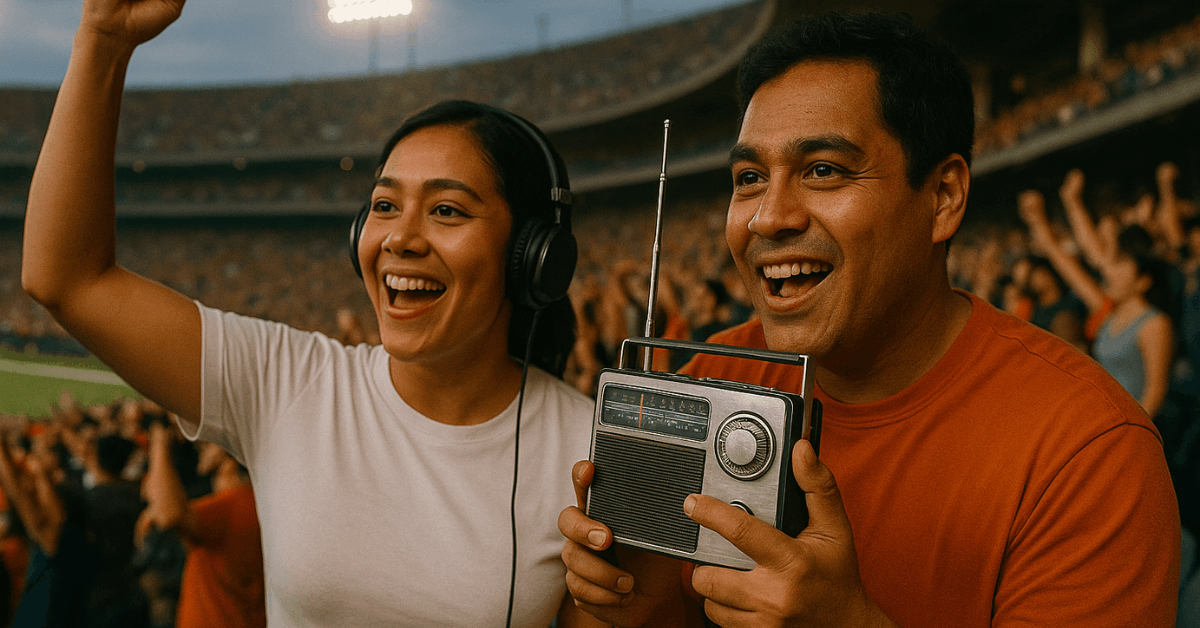
Improvements in radio changed how fans experienced games. Clarity, portability, and sponsorship made cheering more accessible.
Fans could cheer in cars, workplaces, or outdoors. Broadcasting innovation made cheering more spontaneous and widespread.
- Early static gave way to clear sound.
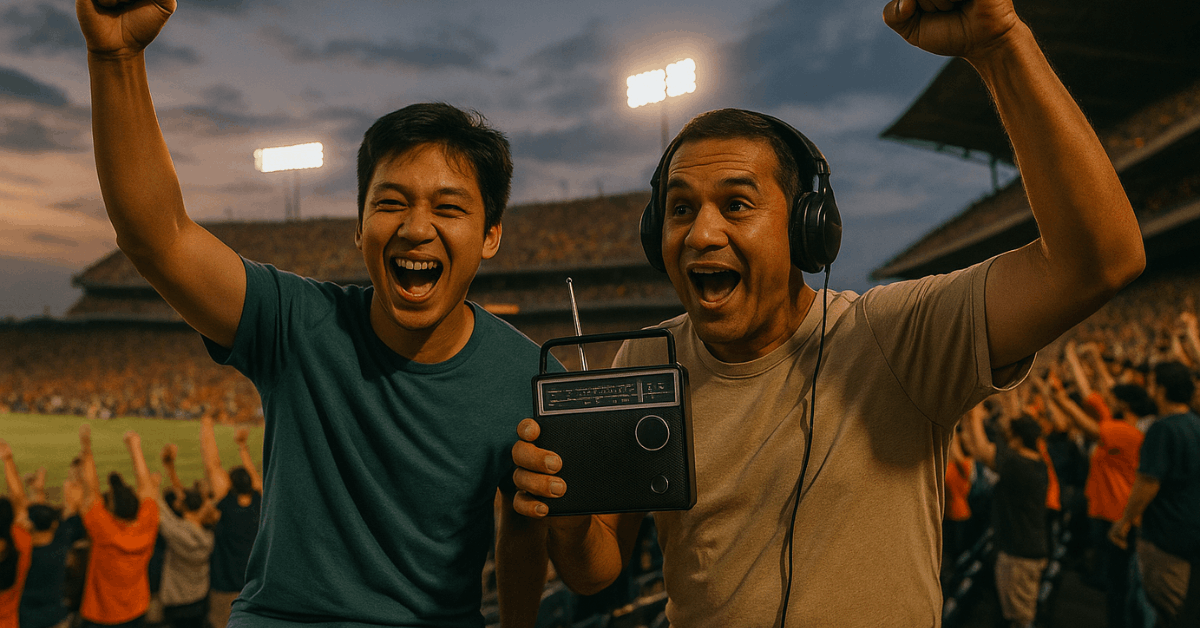
- Portable radios allowed fans to follow games anywhere.
- Color commentary added analysis alongside excitement.
- Sponsorship connected fans with brands through cheers.
The Cultural Legacy of Radio Cheering
Radio did not just report games; it created traditions. Many modern chants trace their roots back to radio broadcasts.
Commentators’ language influenced fan songs and slogans. The atmosphere of stadiums was often rehearsed at home first.
Stories of Fans Repeating Calls
Fans often echoed announcers’ lines word-for-word. These repetitions turned into rituals passed through generations.
Entire groups cheered in unison using radio cues. Radio taught fans how to celebrate victories collectively.
Transition from Radio to Television and Beyond
Television reduced radio’s dominance but not its impact. Cheering habits built through radio carried into TV culture.
Even today, radio remains strong in cars, rural areas, and workplaces. The cheering tradition remains tied to radio roots.
Ongoing Presence of Radio
Radio still broadcasts key games worldwide. Fans without screens rely on radio to stay connected.
Nostalgia also keeps radio alive. The sound of live commentary remains powerful and familiar.
Modern Comparisons and Radio’s Survival
Radio’s influence remains visible in today’s digital age. Podcasts, live streaming, and commentary apps mirror old formats.
Fans continue to cheer in ways first taught by radio. The “ear-based” experience has never disappeared.
Nostalgia and Digital Blending
Nostalgia drives many fans to prefer radio over screens. Digital platforms combine commentary with traditional audio styles.
Younger fans discover old cheering traditions through new media. The blend keeps radio culture alive and relevant.
The Bottom Line – The Lasting Voice of Cheering
The story of radio broadcasts that changed the way fans cheer is about transformation. Fans moved from silence to shared voices, guided by commentary.
Technology and tradition merged to create new cheering rituals. Today’s fan celebrations still carry the imprint of radio’s legacy.