Contested calls shape football’s memory as much as moments of genius. Fans still debate stories of controversial refereeing because single judgments can tilt tournaments, rewrite careers, and ignite reforms.
Modern tools such as VAR reduced certain errors, yet high-stakes decisions continue to spark arguments when communication or protocol breaks down.
Clear context and consistent standards help you judge what truly changed matches rather than merely irritated supporters.
How This Ranking Was Built
Rating controversial decisions requires transparent criteria that anyone can scrutinize later. Tournament stage and stakes amplify consequences, while cultural aftershocks keep incidents alive years after the final whistle.
Method here weighs three factors and orders cases primarily on competitive importance and enduring impact.
- Influence: Degree to which the decision changed the match or qualification path.
- Context: Competition level, stage, and rivalry heat surrounding the fixture involved.
- Impact: Longevity of debate, rule changes, apologies, or disciplinary follow-ups.
Ten Stories Of Controversial Refereeing
Historical range matters because outrage repeats across eras, technologies, and leagues. Cases below keep the original match order used in many fan debates, counting down toward the most cited flashpoint.
Each entry clarifies the incident, names the referee, and explains why the fallout persisted. Personal recollection will differ, yet the essentials remain consistent across credible match reports.
10. Tottenham vs Liverpool, 2023/24 Premier League — Goal Ruled Offside Despite VAR
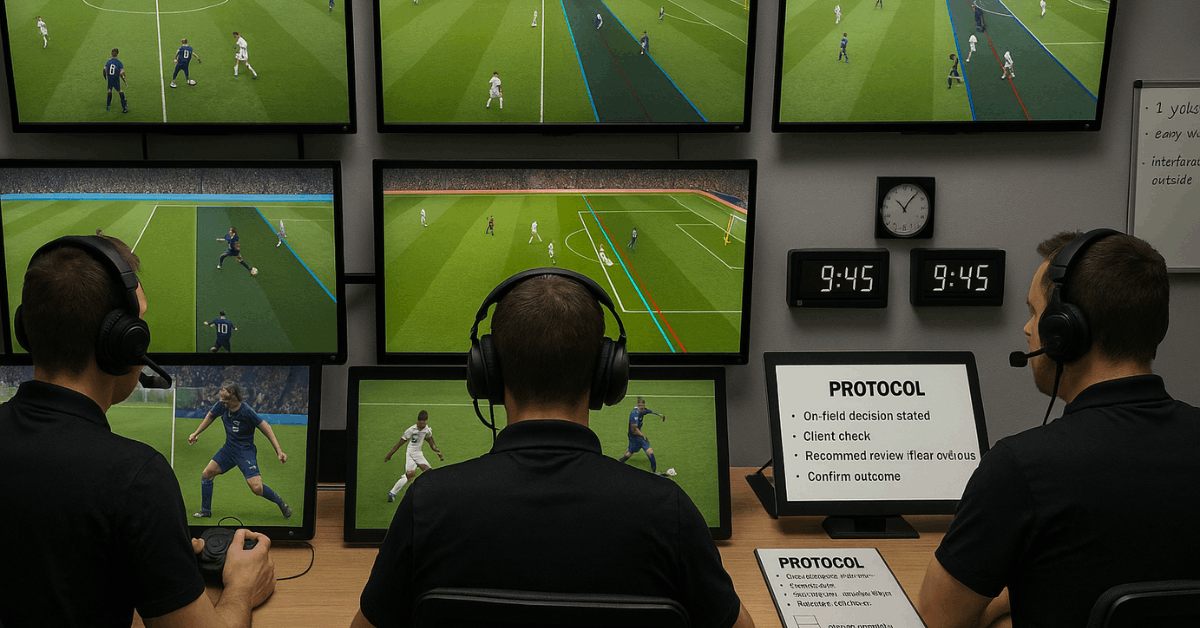
Miscommunication inside the VAR booth nullified Luis Díaz’s opener despite onside positioning. PGMOL later apologized for VAR human error, confirming a check completed without realizing the on-field call required intervention.
Tottenham capitalized and won, while neutral viewers gained another cautionary tale about protocols rather than technology itself.
Referee: Simon Hooper (England)
9. Manchester City vs Portsmouth, 2006/07 Premier League — Ben Thatcher’s Elbow
A forearm smash on Pedro Mendes left the Portsmouth midfielder requiring oxygen on the sideline.
Disciplinary response during the match looked lenient as only a yellow card appeared. The FA imposed a longer suspension afterward, acknowledging the incident’s severity amid concerns about player safety.
Referee: Dermot Gallagher (Ireland)
8. Chelsea vs Barcelona, 2008/09 UEFA Champions League Semi-Final — Penalty Uproar
Multiple strong penalty shouts for Chelsea went unawarded during a tense second leg at Stamford Bridge.
Outrage crested after Andrés Iniesta’s late away goal sent Barcelona through. The phrase Chelsea Barcelona Ovrebo still evokes that night’s fury, encapsulating disputes over advantage, handball interpretation, and foul thresholds.
Referee: Tom Henning Øvrebø (Norway)
7. Ankaragücü vs Beşiktaş, 1986/87 Turkish Süper Lig — Referee Deflection Counts
A rare sequence saw the referee deflect a shot into the net, and the goal stood under the rules of the day.
Home supporters viewed the ricochet as intolerable, while officials pointed to law wording then in force. Persistent discussion later informed clarifications about dropped balls and interference.
Referee: Ahmet Akçay (Türkiye)
6. France vs Republic of Ireland, 2010 World Cup Play-Off — Extra-Time Handball
Control from Thierry Henry preceded the decisive cross, and assistants failed to detect the handling.
The Thierry Henry handball became a diplomatic dispute as the FAI sought remedies beyond a replay. FIFA acknowledged the controversy while emphasizing the absence of replay authority under competition rules.
Referee: Martin Hansson (Sweden)
5. West Germany vs France, 1982 World Cup Semi-Final — Battiston Knocked Unconscious
Collision between Harald Schumacher and Patrick Battiston fractured ribs and damaged vertebrae without even a foul.
The Harald Schumacher challenge remains a benchmark for debates on excessive force and goalkeeper protection. France ultimately lost on penalties, multiplying the sense of sporting injustice.
Referee: Charles Corver (Netherlands)
4. Tunisia vs Mali, 2021 AFCON Group Stage — Final Whistle Before Ninety
Regulation time had not elapsed when the referee ended the match, then tried restarting minutes later. Heat stress and dehydration were cited afterward, but tournament optics suffered badly.
The phrase Janny Sikazwe AFCON now shorthand for timing errors that undermine competitive integrity.
Referee: Janny Sikazwe (Zambia)
3. FC Nantes vs Paris Saint-Germain, 2017/18 Ligue 1 — Referee Trips Player, Then Sends Him Off
Accidental contact with Diego Carlos preceded a visible leg flick from the official, followed by a red card.
Suspension arrived soon after, and the dismissal was rescinded, yet reputational damage lingered. The episode fueled long-running calls for clearer accountability mechanisms.
Referee: Tony Chapron (France)
2. Croatia vs Australia, 2006 World Cup Group Stage — Three Yellow Cards
Administrative confusion allowed Josip Šimunić to receive three cautions before the dismissal finally appeared.
Missed penalty appeals compounded frustrations for Australia supporters. The shorthand Graham Poll three yellows captures how paperwork lapses can become tournament folklore.
Referee: Graham Poll (England)
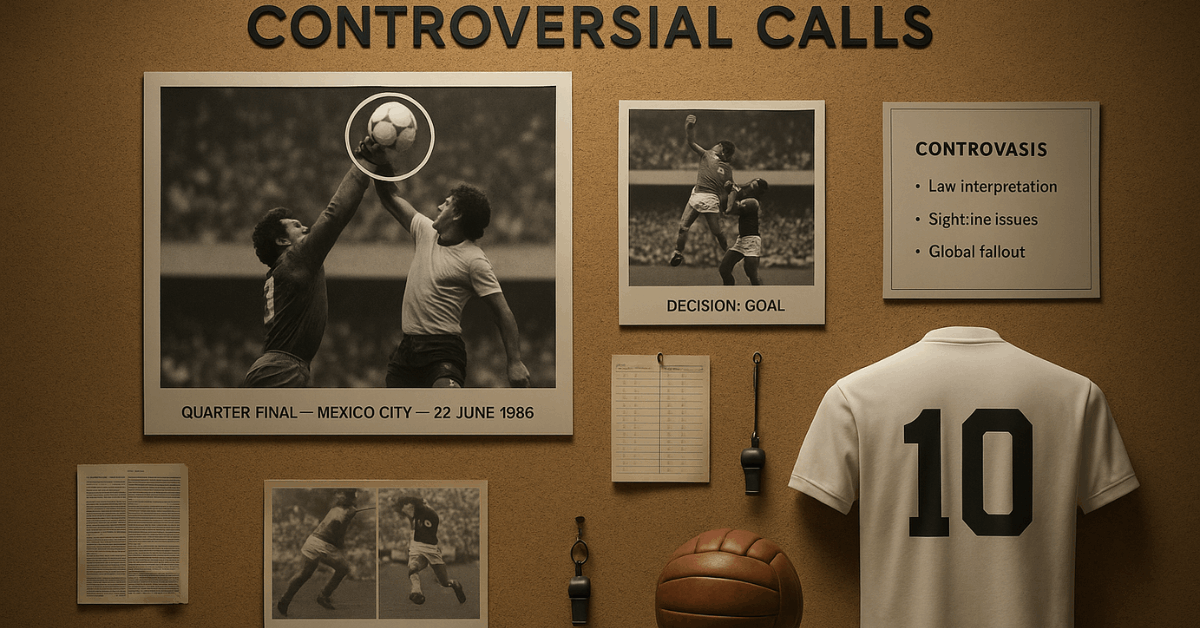
1. Argentina vs England, 1986 World Cup Quarter-Final — “Hand Of God”
Diego Maradona punched the ball past Peter Shilton, and the goal stood amid chaotic sightlines.
The Hand of God controversy later shared space with Maradona’s breathtaking solo strike in the same match. World Cup mythology grew precisely because artistry and rule-bending collided on one unforgettable afternoon.
Referee: Ali Bin Nasser (Tunisia)
What Controversy Teaches About Officiating
High-pressure matches compress time, obscure angles, and challenge communication even for elite crews.
Decision quality improves when officials rehearse rare scenarios, share voice protocols, and escalate uncertainty rather than guessing.
Fans gain fairer outcomes when competition organizers publish guidance that clarifies thresholds for handball, advantage, and excessive force. Emotional investment remains inevitable, yet rules literacy helps you separate misapplication from legitimate discretion.
Honorable Mentions
Consistency demands noting two widely cited cases that sit just beyond the primary list. Each example illustrates a different failure mode, ranging from law exploitation to outright corruption.
- Ball Boy Awarded Goal (Brazil): A ball boy returned the ball into play, and confusion ended with a “goal.” Stadium procedures and officiating teamwork later received scrutiny to prevent unauthorized participants affecting outcomes.
- Robert Hoyzer Scandal (Germany): The Robert Hoyzer scandal revealed match manipulation for financial gain, prompting investigations, bans, and structural reforms around referee oversight and betting monitoring.
Safeguards And Improvements Since
Goal-line technology eliminated phantom goals by turning binary judgments into objective measurements. VAR reduced unseen fouls and offsides when communication remains disciplined and on-field calls are clearly stated.
Semi-automated offside tools now quicken complex line decisions, though calibration and interface clarity still matter. Transparent reports, open audio reviews where policy allows, and targeted training address exactly the failure types highlighted above.